
Highlights
- China is targeting quantum computing, embodied AI, brain-computer interfaces, and 6G communications as strategic “future industries,” using the same industrial policy playbook that helped it dominate EVs and solar panels.
- Beijing is building innovation centers and pilot production platforms to commercialize breakthrough technologies, backed by over 100 national innovation initiatives in AI, hydrogen energy, and quantum systems.
- China’s emphasis on “future materials,” including rare earth magnets and advanced semiconductors, reinforces its structural supply-chain advantage in robotics, electric motors, and next-generation computing hardware.
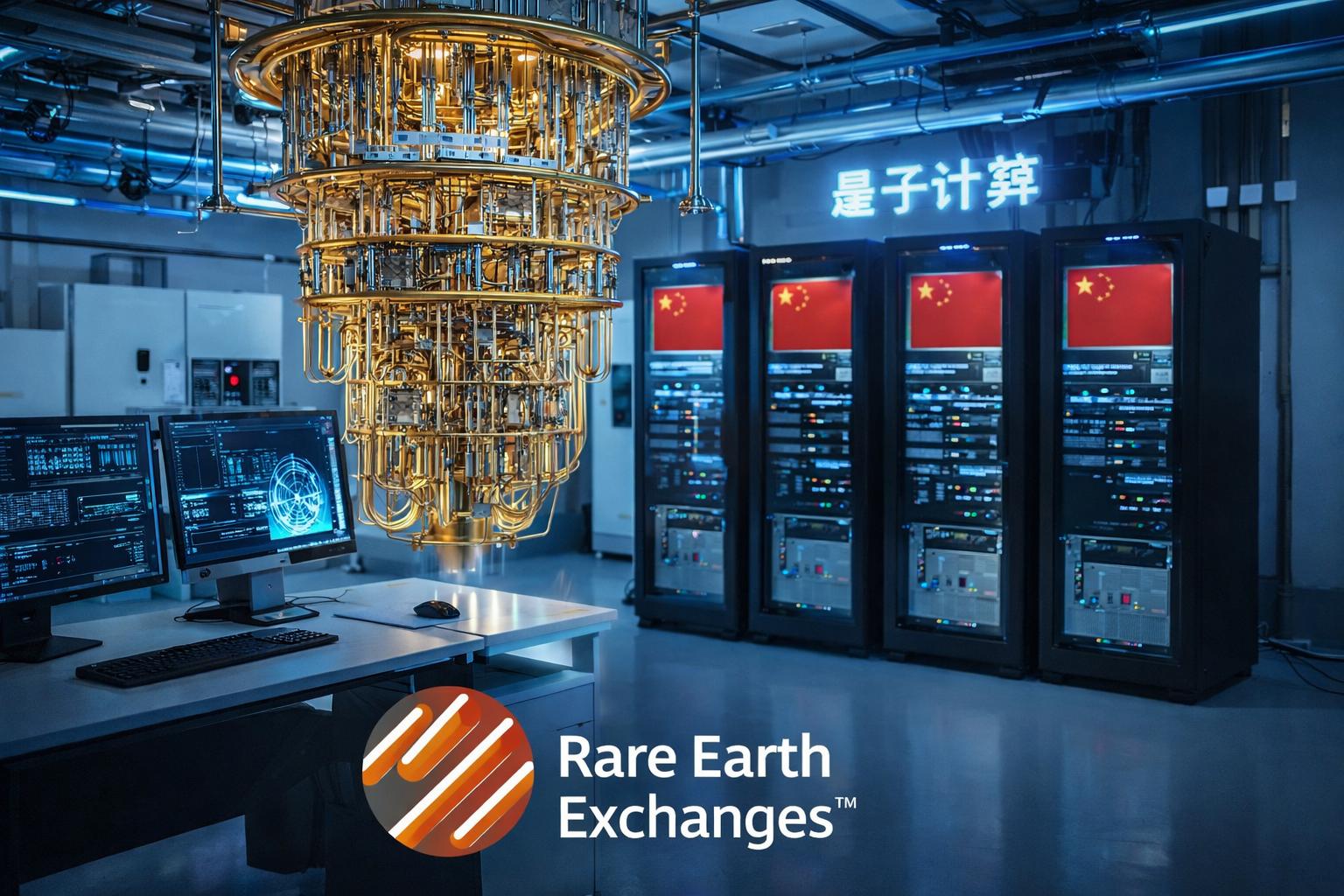
China is doubling down on what it calls “future industries”—a strategic group of technologies including quantum computing, embodied AI, brain–computer interfaces, and 6G communications. At the 2026 Two Sessions political meetings, Beijing’s Government Work Report highlighted these sectors for the third consecutive year, signaling sustained national focus. For investors and policymakers, the message is clear: China intends to extend the industrial policy playbook that helped it dominate electric vehicles and solar panels into the next generation of advanced technologies.
Beijing’s Blueprint for the Next Technology Wave
At the 2026 National People’s Congress, the Government Work Report called for accelerating development across several frontier sectors:
- Future energy systems
- Quantum technologies
- Embodied artificial intelligence
- Brain–computer interfaces
- 6G communications
Officials from China’s Ministry of Industry and Information Technology (MIIT) described these sectors as key drivers of what Beijing calls “new productive forces”—a concept emphasizing advanced manufacturing, scientific innovation, and high-value industrial capacity.
China enters this phase with considerable momentum. Officials noted that the country has remained the world’s largest producer of electric vehicles for 11 consecutive years, while investment in aerospace and other advanced manufacturing sectors continues to post double-digit growth.
Turning Laboratory Breakthroughs Into Industrial Scale
Chinese policymakers increasingly frame the next stage of global competition as one driven by technology breakthroughs rather than low-cost manufacturing. According to MIIT officials, China has built substantial technical foundations in several emerging fields, including:
- Superconducting and photonic quantum computing
- Laser-based advanced manufacturing
- Biomanufacturing technologies
- Atomic-scale manufacturing systems
Government programs have launched more than 100 national innovation initiatives targeting frontier technologies such as artificial intelligence, hydrogen energy, and quantum systems.
To accelerate commercialization, China is building innovation centers, pilot production platforms, and regional “future industry zones” designed to move discoveries from laboratory research into scalable industrial production.
The Hidden Signal: “Future Materials”
One of the most important—yet easily overlooked—elements of the policy framework is Beijing’s emphasis on “future materials.” In Chinese industrial planning, “future materials” typically refers to advanced functional materials required for next-generation technologies, including:
- rare earth permanent magnets
- advanced semiconductors
- high-performance alloys
- quantum materials and superconductors
This matters because several of the highlighted sectors—particularly embodied AI, robotics, electric vehicles, and renewable energy systems—depend heavily on rare earth magnets and specialty materials.
Rare earth elements such as neodymium, praseodymium, dysprosium, and terbium remain essential for:
- high-efficiency electric motors
- industrial robots and automation systems
- wind turbines
- advanced defense electronics
China already dominates rare earth mining, separation, and magnet manufacturing, meaning expansion of these “future industries” could reinforce its structural supply-chain advantage.
Quantum computing itself may not require large volumes of rare earth elements, but the broader ecosystem surrounding advanced computing—cryogenic systems, sensors, and quantum materials—could drive demand for specialized materials and precision manufacturing inputs.
Challenges Beijing Acknowledges
Chinese officials acknowledge that many of these sectors remain in early commercialization stages. Challenges include:
- incomplete technology maturity
- duplicated projects across regions
- shortages of high-end technical talent
- limited long-term investment capital
Rare Earth Exchanges™ notes in the Great Powers Era 2.0 thesis other threats, including militarization of certain supply chain chokepoints such as oil production zones (e.g., Venezuela and Iran), as well as less deep and dynamic financial markets, as is found in the USA or the UK, for example.
Despite these hurdles, Beijing is pursuing what it describes as a “first-mover strategy” aimed at establishing leadership before global markets fully mature.
Why the West Should Pay Attention
China’s strategy closely resembles the policy framework that helped it dominate solar panels, lithium-ion batteries, and electric vehicles. If Beijing successfully scales these new sectors, it could gain structural advantages in next-generation computing, robotics, AI hardware, and advanced manufacturing—industries tightly linked to critical mineral supply chains.
For Western policymakers attempting to build independent rare earth and critical mineral supply chains, the strategic implication is straightforward: China is not only planning the next industrial ecosystem—it already controls many of the materials needed to build it.
Source: Ministry of Industry and Information Technology commentary during China’s 2026 Two Sessions, published via Chinese state-affiliated media.
Disclaimer: This report relies on information published by the Chinese government and state-linked media outlets. The claims and interpretations should be independently verified before being used for investment or policy analysis.


0 Comments
No replies yet
Loading new replies...
Moderator
Join the full discussion at the Rare Earth Exchanges Forum →