
Highlights
- China has emerged as Laos's largest investor, transforming the country's economic, political, and environmental landscape through strategic mineral and land investments.
- Chinese firms now control key sectors including mining, agriculture, infrastructure, and special economic zones.
- There is a particular focus on rare earth mineral extraction.
- The report reveals China's comprehensive strategy to build a mineral empire in Laos.
- This could potentially challenge Western mineral supply chain diversity efforts.
In a revealing new report titled “Chinese Investment in Laos: Agrarian Change and Authoritarian Environments,” researchers Jessica DiCarlo, PhD, (opens in a new tab) University of Utah, and Juliet Lu, PhD (opens in a new tab), University of British Columbia deliver a comprehensive and data-rich account of China’s growing grip over Laos’ land and resource economy—offering critical insights into the geopolitical chessboard of rare earth and critical mineral supply chains, of course topics relevant for Rare Earth Exchanges™ (REEx).
A New Southeast Asian Resource Outpost
Over the past two decades, China has emerged as Laos’s largest investor, top bilateral creditor, and second-largest trade partner, reshaping not only economic flows but also Laos’s political and environmental governance. Drawing from government reports, on-the-ground interviews, and cross-border trade data, the report details how Chinese firms now dominate four key land-intensive sectors:
- Agriculture and Tree Plantations
- Mining and Mineral Extraction
- Infrastructure and Energy Projects
- Special Economic Zones (SEZs)
Critically, the study maps both the geographic spread and institutional mechanics of China’s expansion. This includes how Chinese actors leverage Belt and Road Initiative (BRI) capital, land concessions, and elite political connections to gain access to high-value minerals—including clay-hosted heavy rare earths.
Relevance for Rare Earth Supply Chains
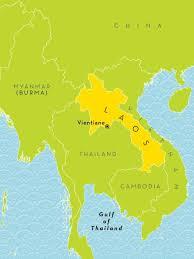
Laos is increasingly seen as China’s “next Myanmar” in the rare earth world. With environmental scrutiny tightening on Myanmar’s toxic rare earth operations, several Chinese firms are relocating heavy rare earth (HREE) extraction and separation into northern Laos, often within quasi-private SEZs with minimal oversight. An important point REEx is tracking.
The map on page 15 of the report shows major Chinese-operated zones overlapping with mineral-rich areas like Oudomxay, Luang Namtha, and Phongsaly—regions known for ion-adsorption clay deposits similar to those in southern China.
For Western stakeholders looking to diversify from China, the message is clear: Laos is not a neutral third-party producer. Its mineral flows are deeply enmeshed in Chinese capital, policy, and logistics.
Key Findings with Strategic Implications
- More than 30 Chinese mining concessions exist across Laos, many in regions adjacent to the Chinese border (p. 20).
- Chinese infrastructure projects (hydropower, roads, rail) facilitate extraction and export—tightening China’s logistical control.
- In the SEZs, Chinese state and private actors operate with de facto extraterritorial authority, making Western investment and regulation nearly impossible.
- The Chinese-controlled China-Laos Railway (p. 23) has become a critical vector for cross-border shipment of minerals—including rare earths.
What This Means for the West
China isn’t just securing critical minerals—it’s building an entire mineral empire by embedding itself deep into Laos’s land, politics, and extraction networks. This report makes one thing clear: if the U.S. and its allies don’t build ex-China refining and upstream alliances soon, China’s dominance will harden—not weaken.
About the Report
Chinese Investment in Laos: Agrarian Change and Authoritarian Environments (July 2025) is co-authored by Jessica DiCarlo and Juliet Lu. The report draws on 20 years of fieldwork and policy analysis and is one of the most granular reviews of China’s strategic investments in Southeast Asia to date.
Published for the Lao Land for Life (LFL) project, funded by the Swiss Agency for Development and Cooperation (SDC). It combines insights from research conducted as part of the predecessor projects Lao DECIDE info and Knowledge for Development (K4D). The authors are grateful for the support provided by the Centre for Development and Environment (CDE) of the University of Bern as part of the authors’ research collaborations in Laos for a combined two decades now.
DiCarlo, Jessica, and Juliet Lu. 2025. “Chinese Investment in Laos.” Lao Land for Life project, Vientiane.
Read the full report: Chinese Investment in Laos – Agrarian Change and Authoritarian Environments (2025) (opens in a new tab)


0 Comments