
Highlights
- Gansu Rare Earths 205 Workshop awarded Worker Pioneer title for exceptional production and innovation in rare earth polishing powders.
- Achieved 58% output increase in 2024, with 3.5-fold per capita productivity growth and 67.65% processing cost reduction.
- Developed a breakthrough wet HF process, solving industry uniformity issues and expanding into advanced optical and semiconductor markets.
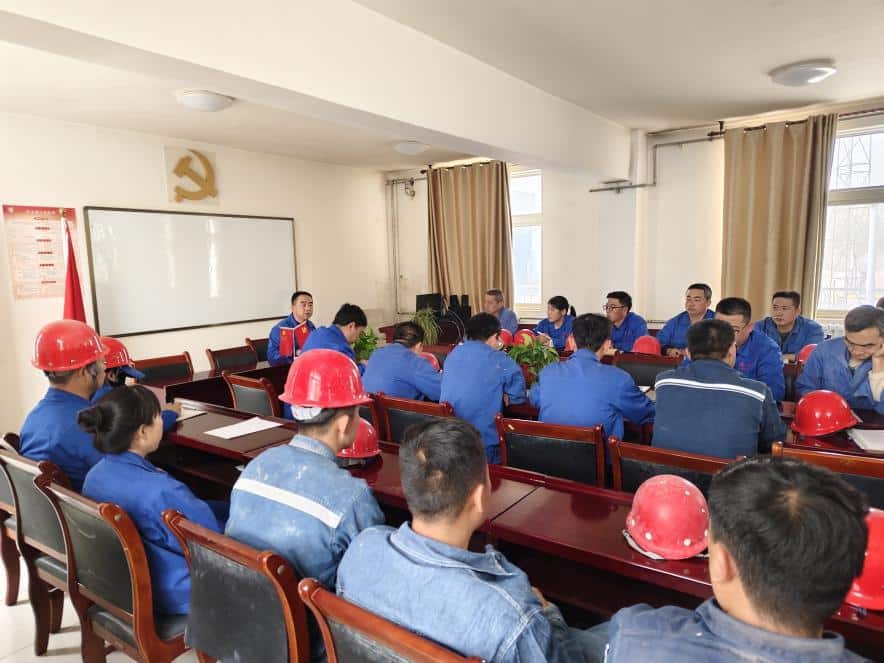
In late July, Gansu Rare Earth’s 205 Workshop (opens in a new tab) was awarded Northern Rare Earth’s coveted “Worker Pioneer” title, recognizing exceptional production results, management innovation, and team cohesion. The unit, a core producer of the company’s “Panda” brand rare earth polishing powders, now stands out as one of China’s leading R&D and manufacturing bases in the sector, with an annual capacity of 8,000 tons covering five product series and 36 specifications.
The 46-person team is highly skilled—71% hold technical certifications—and runs a tightly organized operation split into pre-processing (fluorination, ball milling, drying, calcining) and post-processing (classification, mixing, packaging). Serving applications from LCD glass to high-end optical components, the workshop commands a dominant domestic market share.
Performance Breakthroughs: In 2024, output soared 58% over 2023 to a record high, while per capita productivity jumped 3.5-fold from 2020 levels. A systematic “efficiency revolution” drove the gains:
- Fine-tuning the fluorination process lifted key throughput metrics, boosting flash-drying capacity by 77%.
- A “quantified calcination loading” method improved product uniformity, raising jet-mill output by 150% with 100% classification pass rates.
- End-to-end cost control cut processing costs by 67.65% since 2020, sharpening competitiveness in global markets.
Quality & Safety Leadership
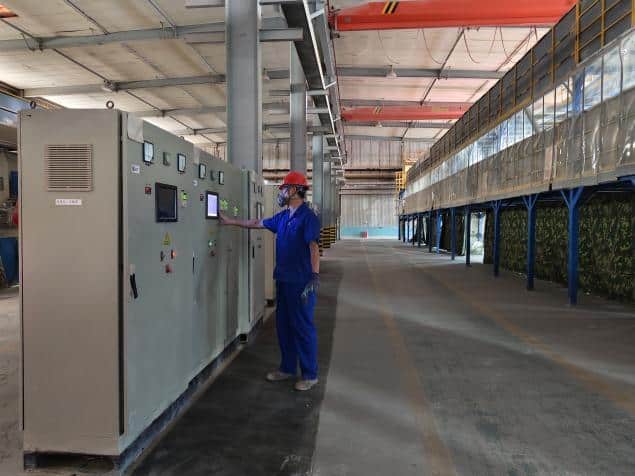
The workshop enforces a full-process traceability system, integrates real-time quality alerts into shift meetings, and runs a QC group to resolve process variability. In 2024, the first-pass qualification rate hit 100%, with zero customer complaints. Safety innovations such as “snap-a-hazard” reporting have delivered three consecutive years of zero accidents, while environmental facilities operate at 100% uptime.
R&D & Product Innovation
The shift from traditional dry fluorination to a wet HF process solved long-standing industry uniformity issues, enabling precise control of crystal phase and particle size. Output of the 739 series doubled to 2,000 tons; GF-1 series climbed from 700 to 1,300 tons. Co-developed with the Rare Earth Research Institute, a TFT polishing powder—fast-acting yet glass-safe—filled a provincial technology gap, selling over 200 tons annually and earning a Gansu provincial tech award. New products for small-diameter, soft optical glass expanded the portfolio into smart device and optical communications markets. Incremental process improvements in 2024 alone saved 224 kWh and 43 m³ of gas per ton, cutting costs by over ¥1.5 million.
Strategic Implications for the West/USA
- Polishing powder dominance: These materials are critical for precision optics, semiconductors, and display manufacturing—industries where U.S. supply is limited.
- Process-driven cost advantage: Large efficiency gains and cost cuts could challenge Western suppliers on both price and quality.
- Technology leap in uniformity: The wet HF breakthrough strengthens China’s control over high-end optical materials, potentially impacting global sourcing for advanced manufacturing.
Buoyed by the “Worker Pioneer” title, the 205 Workshop pledges to raise standards further—keeping the banner of operational excellence flying and reinforcing China’s grip on rare earth-based precision materials.


0 Comments
Discuss this article