
Highlights
- Aldoro Resources uncovered a 520 million tonne rare earth deposit in Namibia with high-grade 2.9% TREO core.
- The Kameelburg project contains over 1 million tonnes of NdPr oxides, positioning it as a strategically significant ex-China rare earth resource.
- While promising, the project remains at the inferred stage and requires significant funding, technical expertise, and partnerships to advance to production.
ASX-listed Aldoro Resources (opens in a new tab) has indeed uncovered a massive rare earth deposit at its Kameelburg project in Namibia (opens in a new tab). The company’s new mineral resource estimate jumped 85% to 520 million tonnes of inferred resource grading 2.49% total rare earth oxides (TREO). Within that lies an impressive high-grade core of 271 Mt at 2.9% TREO. These numbers, reported under official resource standards, are factual and significant. Kameelburg’s resource now contains over 1 million tonnes of NdPr (neodymium-praseodymium) oxides plus niobium pentoxide – a huge cache of critical magnet metals. Notably, the NdPr content is about 21% of the TREO, placing Kameelburg at the high end of global rare earth deposits in magnet metal richness. Geologically, Aldoro’s find is a carbonatite system akin to Quebec’s Niobec/Saint-Honoré deposit, lending some credence to its touted world-class potential. All told, the data confirms a genuinely large, high-grade discovery by industry standards.
Big Boasts vs. Big Data – Parsing the Promotion
While the resource figures are real, Aldoro’s public statements warrant a closer look. Recent news media (opens in a new tab) echoes the “world-class deposit capable of delivering stable, long-life supply” trope straight from the company. This is forward-looking speculation – Kameelburg is still at the inferred stage, far from proven production. Claims that it’s “the largest rare earths and niobium project in Africa, and among the top three globally” come directly from Aldoro’s own release. Indeed, Kameelburg is enormous, but “top three globally” is debatable marketing spin (China’s Bayan Obo deposit, for example, still dwarfs all others in rare earth reserves). The article’s uncritical repetition of such superlatives reveals a positive bias – there’s no mention of the early-stage nature of the find or the hurdles ahead. Phrases like “world-class” are subjective and often used to hype significant discoveries. Rare Earth Exchanges readers should note that, while the geology is promising, talk of a guaranteed “long-life supply” is premature until feasibility studies, processing tests, and economic viability have been demonstrated.
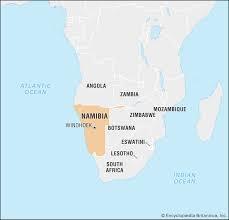
Namibia
Global Stakes – Rare Earth Supply Implications
Why does this Kameelburg news matter? In the rare earth supply chain, size and NdPr content translate to strategic importance. Neodymium and praseodymium are vital for EV motors and wind turbine magnets, and any large deposit outside China grabs attention. If Kameelburg advances to production, it could bolster non-Chinese supply and attract strategic partners for offtake. Namibia’s supportive stance heightens the significance, as cited by Reuters, (opens in a new tab) the country recently banned exports of unprocessed rare earth minerals to encourage local value-add, and it inked an agreement to supply rare earths to the EU to reduce reliance on China.
A world-scale project on Namibian soil aligns with these geopolitical moves, potentially giving automakers and governments a new source of critical minerals. However, turning an inferred resource into a producing mine is a long game. Aldoro, a junior explorer (~A$108 million market cap), will require substantial funding, technical expertise, and possibly a major partner to realize Kameelburg’s potential. In short, the find is notable for global rare earth diversification – but investors should separate the tangible resource from the promotional shine when gauging its true impact on the supply chain.
The Company
Aldoro Resources (ASX: ARN) has turned heads with its Kameelburg project in Namibia, reporting an inferred resource of 520Mt @ 2.49% TREO with a 21% NdPr ratio—numbers that place it among the richest NdPr carbonatites worldwide. On paper, it’s a geological prize, potentially rivaling Quebec’s Niobec/Saint-Honoré and offering tantalizing leverage to a world desperate to build ex-China magnet supply chains. The stock has soared 545% in 12 months, insiders control 57%, and a market cap of ~A$112m signals investor faith. But the reality is less flattering: Aldoro has no revenue, under A$1m cash, and losses topping A$20m annually, surviving on equity issuance and speculation. Its touted “top three globally” claim is more promotion than proof—JORC-verified, yes, but still at the inferred stage with metallurgy, processing, and feasibility yet to be validated.
Namibia itself is strategically important, banning raw REE exports and securing EU supply chain deals, making Kameelburg geopolitically relevant. But scale alone doesn’t equal production. Who funds the billion-dollar capex? Which OEMs or governments will sign off-takes? And can processing on an industrial scale even be proven? Until those questions are answered, Aldoro is a high-risk junior trading on a very real global narrative. For retail investors, ARN is pure leverage to NdPr diversification—if, and only if, validation, funding, and partnerships align. Until then, it remains a geological giant with corporate feet of clay.
Aldoro Resources' top shareholders as of late 2025 include Lizeng Pty Ltd (opens in a new tab) (16.2%), Quinn Lee (opens in a new tab) (14.9%), and Edwin Bulseco (opens in a new tab) (7.36%), with other entities like Tell Corporation (opens in a new tab) and Papillon Holdings (opens in a new tab) also holding significant stakes, according to Simply Wall Street. Quinn Lee (Ms. Li) is also the company's Executive Chairwoman and a major shareholder.
Sources: Aldoro ASX release (Sept. 26, 2025); MiningWeekly/Engineering News coverage; Reuters on Namibia’s export ban and EU deal; shareholder snapshots (Simply Wall St; MarketIndex)
©!-- /wp:paragraph -->


0 Comments
Discuss this article