
Highlights
- China's State-owned Assets Supervision and Administration Commission is strategically merging state enterprises to boost efficiency and competitive edge in critical sectors.
- SOE-controlled listed firms now hold a market capitalization of ¥22 trillion.
- Significant investments are being made in emerging industries like semiconductors, AI, and new energy vehicles.
- The consolidation represents a geopolitical maneuver to strengthen China's control over strategic supply chains and advanced technological sectors.
China’s State-owned Assets Supervision and Administration Commission (opens in a new tab) (SASAC) announced sweeping plans to accelerate strategic mergers and restructuring of central state-owned enterprises (SOEs), aiming to boost efficiency, consolidate industries, and sharpen the country’s competitive edge in key sectors.
An alert to the U.S. Trump administration. Beijing isn’t just shuffling paper—it’s welding its state-owned giants into sharper weapons of industrial policy, and rare earths are right at the center of the forge. The consolidation of strategic mineral assets, explicitly named alongside steel and satellites, signals that China is doubling down on its grip over the upstream supply chains that the West desperately needs for EVs, wind turbines, and defense systems. This is not a quiet bureaucratic exercise; it’s a geopolitical maneuver that magnifies China’s leverage at the very moment Washington and Brussels are scrambling to stand up their own rare earth supply chains. For Rare Earth Exchanges (REEx) readers, the message is blunt: while the West debates roadmaps and subsidies, and does a deal here and a deal there, Beijing is already reorganizing the machinery of state to lock in dominance.
People’s Republic of China
Deputy Director Li Zhen (opens in a new tab) emphasized that the next phase will focus on “systematic, forward-looking, and innovative” consolidation to strengthen core functions, improve capital allocation, and expand the role of state capital as a stabilizer for the economy.
China’s State-owned Assets Supervision and Administration Commission
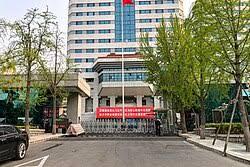
Consolidation Highlights
During the current 14th Five-Year Plan (2021–2025), six groups involving ten enterprises have already merged, creating nine new SOEs in areas ranging from cruise operations to electrical equipment. Examples include:
- Satellite Internet: Formation of China StarNet to accelerate Beijing’s push for an independent satellite broadband network.
- Strategic Minerals: Integration of resources to secure supply of critical minerals, echoing U.S. and EU concerns over rare earth and battery material access.
- Steel: The merger of Anshan Steel with Benxi Steel created a north-south dual powerhouse alongside Baowu, boosting industrial concentration.
- Energy Infrastructure: Consolidation of power transmission equipment manufacturing into China Electrical Equipment to backstop grid reliability.
These moves, officials say, not only eliminate redundant investment but also create “1+1>2” synergies across value chains.
Market Scale and Capital Returns
SOE-controlled listed firms now hold a combined market capitalization exceeding ¥22 trillion ($3.0 trillion USD), up nearly 50% since 2020. Over the past four years, they have issued ¥2.5 trillion ($340 billion USD) in dividends, underlining their weight in stabilizing China’s equity markets.
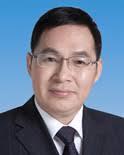
Zhang Yuzhuo, SASAC Chief
Strategic Emerging Industries
SASAC chief Zhang Yuzhuo said annual SOE investment in “strategic emerging industries” has grown more than 20%, with cumulative investment surpassing ¥8.6 trillion ($1.2 trillion USD) since 2021. Key areas include:
- Semiconductors and Biotechnology
- New Energy Vehicles and Materials
- Humanoid Robots and Quantum Computing
Notably, China has built 1,854 smart factories and rolled out over 800 AI application scenarios, including large-scale domestic AI models such as Jiutian, Xingchen, and Yuanjing.
Implications for the West
For U.S. and allied policymakers, these developments underscore how Beijing is marrying SOE restructuring with massive, state-backed bets on advanced industries and AI. Consolidation in strategic minerals and AI-enabled manufacturing could sharpen China’s control over supply chains that Western economies are racing to secure. The sheer scale of investment—outpacing most Western industrial policy—raises urgent questions: Can the U.S. and EU keep pace in AI, green tech, and resource security without similar state-led coordination?
Disclaimer: This news article originates from Chinese state media. Information should be independently verified before being used for investment or policy decisions.
©!-- /wp:paragraph -->


0 Comments
Discuss this article