
Highlights
- India seeks rare earth samples from Kachin Independence Army in Myanmar's contested territory.
- This move challenges China's near-monopoly on rare earth processing.
- The Chipwe-Pangwa belt is ranked as the world's largest known source of heavy rare earth elements.
- The Chipwe-Pangwa belt is currently controlled by a rebel group.
- The potential deal highlights the geopolitical desperation of major economies to secure critical minerals.
- There are complex political and logistical challenges involved in securing these resources.
Reuters reports that India’s Ministry of Mines (opens in a new tab) has engaged state-owned IREL (opens in a new tab) and private firm Midwest Advanced Materials (opens in a new tab) to explore sourcing rare earth samples from mines in Myanmar’s Kachin State—territory under the control of the Kachin Independence Army (opens in a new tab) (KIA). The reporting is credible: the KIA seized the Chipwe-Pangwa belt, the world’s largest known source of heavy rare earths such as dysprosium and terbium, after Myanmar’s 2021 coup. Rare Earth Exchanges’ own Heavy Rare Earth Project/Deposit Database currently ranks the Kachin-held operations as #1 globally, underscoring the stakes.
Business or Battlefield?
The coverage presents India’s outreach as pragmatic resource diplomacy. But framing it as “commercial cooperation” underplays the political risks: Delhi is effectively negotiating with a rebel army. That is no minor detail. The KIA is locked in conflict with Myanmar’s China-backed junta, while still maintaining sales into China’s refining networks. The notion that India could quickly redirect this flow ignores logistics—mountain passes, rudimentary roads—and the absence of non-Chinese separation capacity.
Myanmar Heavy Rare Earth Mining
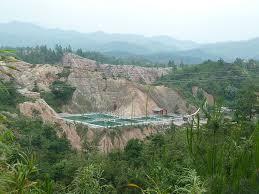
Our own Rare Earth Exchanges (REEx) frontline report with an individual from Kachin State revealed community desperation, broken promises, environmental disasters, and profound danger—hardly the foundation for a stable export deal. The Chinese presence is ubiquitous.
Where Bias Creeps In
Reuters rightly highlights Beijing’s near-monopoly on magnet processing, but the implication that India could readily counterbalance China by engaging the KIA leans toward speculative optimism. The KIA may well diversify customers, but without processing infrastructure, Indian labs will only receive raw samples, not a supply chain solution. Suggesting a “long-term deal” glosses over the fact that even China, with entrenched influence, struggles to maintain stable arrangements with KIA leadership.
Why This Matters to the Supply Chain
The significance is twofold: first, it reveals the geopolitical desperation of major economies to secure heavy rare earths, with India openly considering rebel intermediaries. Second, it underscores the fragility of supply chains built on contested territories.
Investors should take note: while the KIA-controlled deposits top global rankings, neither India nor the West has yet built the midstream processing muscle to capitalize on such sources. Until that changes, China’s grip on HREE refining remains unshaken. And right now, China controls about 98% or more of the refining and ultimate magnet production of the heavies.
Why did China, with nearly endless amounts of capital, in good faith invest in the border region, matching its talk of sustainability and green future? How about U.S. involvement? REEx has pondered the possibility of American and rebel discussions, but would such a move likely be disruptive to Sino-American trade talks?
Citation: Reuters (opens in a new tab), Sept. 2025; Rare Earth Exchanges HREE Database; Rare Earth Exchanges Kachin frontline report.
©!-- /wp:paragraph -->


0 Comments
Discuss this article