
Highlights
- China Rare Earth Society Chairman Li Bo visited China Rare Earth Group to strengthen collaboration between academic and industrial sectors.
- The meeting emphasized strategic cooperation focused on:
- Innovation
- Scientific outreach
- Talent development
- Sector modernization
- China's integrated governance model aims to maintain and expand its leadership in:
- Rare earth technology
- Supply chain development
In a move highlighting China’s coordinated approach to rare earths, Li Bo, Chairman of the China Rare Earth Society, led a delegation to the headquarters of China Rare Earth Group on September 10. The visit underscores Beijing’s effort to align academic institutions with state-owned industry giants in shaping the future of the sector.
At the roundtable, Liu Leiyun, Party Secretary and Chairman of China Rare Earth Group, welcomed the delegation and stressed the Society’s role as a “critical social force” in advancing national rare earth science and technology. He urged both sides to deepen cooperation to meet national strategic goals, with a focus on innovation, education, and talent development.
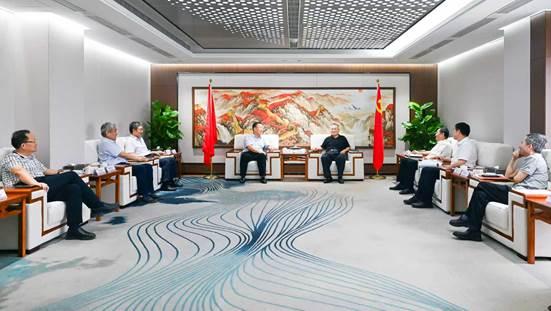
Li Bo expressed gratitude for the Group’s longstanding support, briefed the executives on the Society’s recent initiatives, and presented the newly published History of China’s Rare Earth Discipline, a book compiled by the Society. Discussions centered on how the Society’s academic leadership and China Rare Earth Group’s industrial scale can work in tandem across four themes:innovation, collaboration, scientific outreach, talent cultivation, and sector-wide modernization.
Why This Matters
This meeting signals more than ceremonial goodwill. It reflects China’s playbook of integrating research, industry, and state strategy—a model designed to accelerate rare earth technological progress while strengthening the supply chain. For the United States and its allies, the update is noteworthy: while Western firms often operate in silos, China is actively institutionalizing collaborative governance between academia and state-owned enterprises.
Such coordination could help China maintain or even expand its lead in rare earth refining, recycling, and advanced applications. For U.S. and European stakeholders, the message is clear: competing will require not just investment in mining but also strategic partnerships across universities, industry, and government.
Disclaimer
This report is based on information published by the China Rare Earth Society, a media channel tied to state-owned entities. The content should be independently verified.
©!-- /wp:paragraph -->


0 Comments