
Highlights
- Northern Myanmar's ionic-clay rare earths are critical for China's magnet complex.
- There is tree-cover loss and rising heavy rare earth oxide imports in the region.
- The Kachin Independence Organization (KIO) is asserting control over mining sites.
- This control by KIO could potentially disrupt China's rare earth supply chain.
- Environmental and governance risks could trigger policy responses and price volatility.
- These risks might accelerate Western efforts in recycling and alternative rare earth sourcing.
Northern Myanmar’s ionic-clay rare earths (notably Dy/Tb) are key to China’s refining and magnet complex. A recent piece (opens in a new tab) in Mongabay cites data points consistent with prior NGO and customs analyses: ~32,720 ha tree-cover loss (2018–2024) in mining townships; China’s imports of heavy RE oxides from Myanmar rising from ~19,500 t (2021) to ~41,700 t (2023), with trade value near $1.4B; and a rapid post-2021 expansion of leaching sites. The article also captures a real governance shift: the Kachin Independence Organization (KIO) asserting control and “renegotiating” terms—material for supply continuity.
Where the Story Leans Hard (“Edges and Overreach”)
Several claims mix correlation and causation. Flooding/landslide and river-toxicity narratives rely on local reports and selective sampling; those are red flags for inference without basin-wide hydrology or longitudinal water-quality datasets. “All elements extracted … end up exclusively at magnet manufacturers in China” is directionally right but absolute wording overstates certainty—leakage, stockpiling, and intermediary blending can blur provenance. Tree-cover loss via Global Forest Watch may include plantation cycles; “deforestation” should be parsed from “tree cover” to avoid inflation.
Kachin State, Myanmar
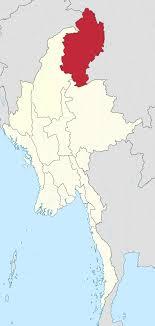
What’s Missing (“The Voices Not Quoted”)
There’s minimal engagement with Chinese SOEs/traders, on-the-ground operators, or independent geochemists validating reagent pathways and runoff loads. No price context (Dy/Tb oxide volatility) or market-share splits among China’s Big Six. Little scrutiny of KIO “regulations” beyond intention—no text, enforcement budget, or third-party audit. Of course, to be fair, as Rare Earth Exchanges (REEx) has learned, on the ground, conditions can be very dangerous.
Why This Matters to the Supply Chain (“Follow the Magnets”)
If KIO tightens control or pauses sites, China’s heavy-rare-earth feedstock tightens—raising a Dy/Tb risk premium across NdFeB supply. OEMs touting “ESG magnets” face traceability exposure: Myanmar feed blended into Chinese oxides can permeate EVs, turbines, robotics, and defense. Expect: (1) policy heat (U.S./EU disclosure or import conditions), (2) price volatility for Dy/Tb, and (3) faster Western moves on recycling, substitution (Dy-lean designs), and non-Myanmar feed.
Note the article is NGO-forward and conservation-framed, which can underweight supply-security and economic-survival tradeoffs for local communities. That doesn’t nullify the environmental toll; it does call for fuller balance: independent sampling, transparent KIO rules, and Chinese/refiner responses.
Bottom Line: The reporting rightly flags a concentrated, conflict-exposed Dy/Tb artery into China’s magnet industry. For investors and policymakers, Myanmar risk is not a headline—it’s already in your motors. And as REEx has reported, the Kachin held mines are number one on the REEx Heavy Rare Earth Deposit/Project Database.
Citation: Mongabay, “Satellite data show burst of deforestation in Myanmar rare earth mining hotspots,” Sept. 16, 2025.
©!-- /wp:paragraph -->


0 Comments
Discuss this article