
Highlights
- China's Inner Mongolia initiates AI-powered mineral exploration project targeting copper, lead, zinc, and lithium resources.
- Project aims to develop a multi-modal AI model with over 10 billion parameters to accelerate mineral discovery.
- Strategic initiative seeks to deliver 35 new mineral prospecting zones by 2027.
- Potentially transforming resource exploration methodologies.
Inner Mongolia has officially launched (opens in a new tab) a high-profile project to harness artificial intelligence and big data for mineral exploration, signaling a shift in China’s resource strategy from “experience-driven” exploration to AI-powered decision-making.
Theproject, formally titled “R&D and Demonstration of Key Technologies for Big-Data-Driven Intelligent Mineral Resource Prediction”, kicked off in Hohhot under the banner of the region’s “Science & Technology Breakthrough” initiative. It is backed by a ¥10 million (approx. $1.4 million USD) grant from the Inner Mongolia Department of Science and Technology and prioritizes exploration for copper, lead, zinc, and lithium—all critical strategic minerals. Not a lot of money from American standards, but often such projects have myriad other subsidies often directly or indirectly from the state.
AI Project Team Led by State-Owned Inner Mongolia Geological & Mineral Resources Group
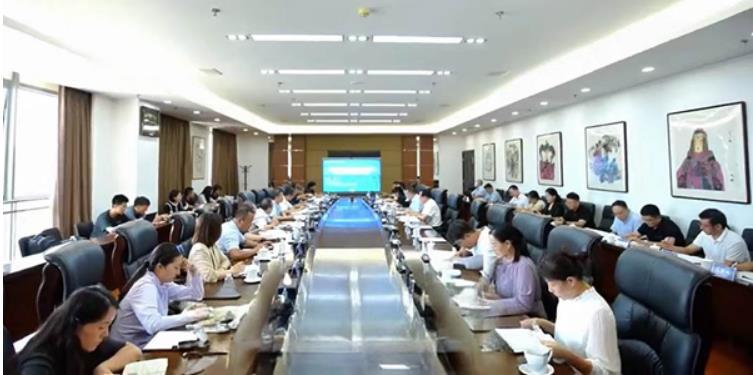
At the launch, heavyweight experts assembled: Mao Jingwen, academician of the Chinese Academy of Engineering; Chen Jianping, foreign academician of the Russian Academy of Engineering; and Xiao Keyan, also a foreign academician of the Russian Academy of Natural Sciences. They emphasized that Inner Mongolia already holds decades of geological, geophysical, and remote-sensing data—prime input for AI systems to process, classify, and convert into precise exploration targets.
What’s New Here?
- Develop a multi-modal AI model with over 10 billion parameters, integrating data- and knowledge-driven methods.
- Deploy a proprietary AI mineral prospecting software system with fully independent Chinese intellectual property.
- Demonstrate early applications in the southern-central Greater Khingan Range, targeting strategic deposits.
- Deliver 3–5 new mineral prospecting zones by 2027, with resources on the scale of large deposits.
Why does it matter for the West/USA?
This initiative underscores China’s determination to secure long-term dominance in critical minerals exploration and supply chains. If successful, China could cut discovery timelines, reduce exploration costs, and accelerate development of domestic reserves of copper and lithium—minerals vital to electric vehicles, renewable energy, and defense. For the U.S. and allies, it signals the need to invest in comparable AI-driven exploration platforms and accelerate domestic permitting to avoid deeper dependency.
Inner Mongolia Geological & Mineral Resources Group (opens in a new tab) (IMGMRG), which leads the effort, already controls 27 national patents and 18 tech-focused subsidiaries. The group plans to turn its geologic big-data platform into an industry benchmark while pushing technology commercialization across China’s traditional mining sector. Note IMGMRG is 90% owned by State-owned Assets Supervision and Administration Commission of the State Council (SASAC).
Disclaimer: This news item originates from the media of a Chinese state-owned entity; the information should be verified by an independent source.
©!-- /wp:paragraph -->


0 Comments