
Highlights
- Astron Corporation's Donald mineral sands project threatens the sixth-generation Trotter family farm in Victoria's Wimmera region.
- The project represents a strategic U.S.-Australia effort to build non-China rare earth supply chains for defense and EV industries.
- Australia aims to become the world's second-largest rare earth producer by 2030.
- Significant challenges face Australia in balancing land use and mineral extraction.
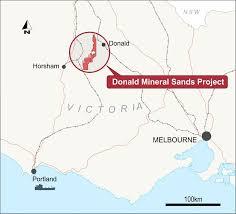
SBS News, the news service of the Special Broadcasting Service in Australia, today spotlighted a clash in Victoria’s Wimmera region: the Trotter family, sixth-generation farmers, face displacement as Astron Corporation’s Donald (opens in a new tab) mineral sands project—backed by U.S.-based Energy Fuels—gears up to become the world’s fourth-largest rare earth project outside China. It’s a story pitched as “The Castle” meets critical minerals policy, and it deserves closer scrutiny.
An example of how local community interests in the land can clash with multinational demands for minerals or rare earth elements, for example.
The Bedrock of Truth
The facts stack up: Astron’s Donald project spans 1,140 hectares and has received Victorian government approval. On full build-out, it could deliver Australia’s second-largest rare earth output. Both China and the United States have financial stakes—China through Astron’s Hong Kong base, the U.S. via Energy Fuels’ $183 million investment. Against the backdrop of Chinese dominance (70% of mining, 90% of refining), this project clearly matters.
The Land
The Tilt Toward Tragedy
The SBS article frames the Trotters as unwilling casualties—dust, noise, and 42 years of disruption. That lens is not inaccurate, but it risks oversimplifying. Compulsory acquisition powers under Victoria’s Mineral Resources Act (opens in a new tab) are real. Past rehabilitation failures, such as Iluka’s Douglas mine, add weight to community fears. Still, the narrative prioritizes emotion over detail: for example, environmental baselines, soil surveys, and compensation frameworks receive little attention. Investors should note this is less about misinformation than about selective framing.
What the Story Misses
The bigger rare earth angle—the strategic play—is buried. The Donald project isn’t just another mine: it’s part of a coordinated U.S.-Australia effort to build non-China supply chains. This is precisely the kind of project the Pentagon and Canberra want fast-tracked to feed defense and EV demand. That context is far more relevant to global markets than a local family-vs-corporation trope.
Why Investors Should Care
For markets, the takeaway is stark: Australia is on track to become the world’s second-largest rare earth producer by 2030, but growth is colliding head-on with concerns over farmland, water security, and social license. Such scenarios can be found in most places during the rare earth rush. If projects like Donald stall, the West’s “China hedge” frays. If they succeed, community pushback could reshape regulatory frameworks—and timelines. Either way, the rare earth supply chain runs through paddocks like the Trotters’, and investors should price that social risk.
Citation: SBS News (opens in a new tab), Sept. 1, 2025.
©!-- /wp:paragraph -->


0 Comments
Discuss this article