
Highlights
- Chile's new President José Antonio Kast is restructuring mining policy by merging the Ministry of Mining with Economy, raising concerns about technical expertise; the sector accounts for 11–12% of GDP directly and over 20% including related industries.
- Chile's $105 billion mining project pipeline through 2034 is threatened by a permitting bottleneck requiring over 500 approvals; copper production fell 2% in 2025 and could decline to 4.4 million tonnes by 2034 without reforms.
- Chile is expanding beyond copper and lithium with a 14-mineral critical minerals strategy (including rare earths and cobalt), positioning itself amid rising global demand for energy transition materials and U.S.-led supply chain security efforts.
Will policy shifts reshape copper, lithium and critical mineral supply chains? Chile’s mining sector is entering a period of policy uncertainty following the inauguration of President José Antonio Kast (opens in a new tab), a conservative leader who replaces outgoing president Gabriel Boric. According to industry coverage cited by According to a Mining.com (opens in a new tab) report, investors and mining companies are watching closely for regulatory reforms, faster project approvals, and improved security in the world’s largest copper-producing country.
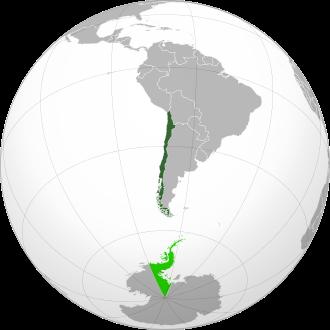
Mining is the backbone of Chile’s economy. The sector directly accounts for about 11–12% of GDP, and more than 20% when related industries are included, making policy changes in Santiago highly consequential for global commodity markets.
A Surprising Structural Change
One of the new administration’s first moves was to merge the Ministry of Mining with the Ministry of Economy, appointing agronomist Daniel Mas (opens in a new tab) to lead the combined department. The decision has drawn mixed reactions.
Could these moves improve economic coordination? Some industry leaders worry that technical mining expertise may be diluted in policymaking.
Chile’s Mining Chamber has been more direct in its criticism, arguing that the country’s most important economic sector risks being treated as a secondary priority.
The Permitting Bottleneck
Chile’s mining industry faces a massive pipeline of potential investment—roughly $105 billion in projects through 2034, but companies say regulatory complexity threatens to stall development.
Industry leaders complain that the current permitting system can require more than 500 separate approvals before a project can begin construction.
Investors are now watching whether the Kast government can streamline environmental and licensing procedures, which analysts say will determine whether Chile can maintain its competitiveness.
Copper Dominance Under Pressure
Chile still produces about one-quarter of global mined copper, but output growth has stalled due to declining ore grades, aging mines, and regulatory complexity.
According to Chile’s National Copper Commission (Cochilco), copper production fell 2% in 2025, with declines recorded in every month of the year.
Some political figures have suggested copper output could rise 20% within one or two years, but analysts say that target is likely unrealistic given long development timelines and geological constraints.
Without new projects, Cochilco forecasts Chile’s copper production could peak soon and fall to around 4.4 million tonnes by 2034.
Lithium and the Critical Minerals Expansion
Chile is also trying to diversify its mining economy beyond copper and lithium.
A recently announced national critical minerals strategy expands focus to 14 additional minerals, including rare earth elements, cobalt, molybdenum, antimony, gold, silver, iron ore, and boron.
At the same time, lithium policy remains controversial. Chile remains the world’s second-largest lithium producer, but a state-centric lithium strategy introduced in 2023 has raised concerns among private investors.
Several projects—including Codelco’s partnership with SQM and a potential Rio Tinto collaboration in the Maricunga salt flat—could shape future lithium supply.
Mining Meets Geopolitics
Chile’s resource policy now sits at the intersection of global geopolitics. As the United States and its allies seek secure supply chains for energy transition materials, demand for copper, lithium, and other strategic minerals is rising sharply.
Some analysts argue Chile could strengthen its position by moving further downstream—refining copper domestically instead of exporting large volumes of concentrate to China.
Security concerns in mining regions and shifting geopolitical alliances may also influence the investment climate.
For investors, the central question remains whether the new government can turn policy signals into real regulatory reform that unlocks exploration and production.


0 Comments
No replies yet
Loading new replies...
Moderator
Join the full discussion at the Rare Earth Exchanges Forum →