
Highlights
- Kazakhstan claims 2.6 million tons of rare earth reserves with over 1,000 exploration licenses issued.
- Potential emergence as a non-China rare earth resource node amid growing global demand for critical minerals.
- Significant opportunities for exploration, joint ventures, and processing partnerships.
- Independent verification remains crucial.
Astana’s English-language daily reports (opens in a new tab) that Kazakhstan’s geology agency pegs national rare-earth reserves at 2.6 million tons, alongside a digital licensing push that has already issued 1,000+ exploration licenses and put 60,000+ geological reports online. The story aligns with prior government briefings and coverage of a large discovery in Karaganda (Kuirektykol) and the rollout of a unified subsoil-use platform. It also tracks with the IEA’s 2025 outlook: REE demand grew 6–8% in 2024, underscoring why Kazakhstan’s finds matter.
Where the Math Gets Fuzzy
“2.6 million tons” is presented as “estimated reserves”—but there’s no mention of internationally recognized reporting standards (JORC/NI 43-101), REO vs. ore tonnage, grades, metallurgy, or economics. Earlier claims around ~800,000 tons at Kuirektykol were preliminary; talk of doubling with more drilling is still speculative. Treat the national figure as an inferred, policy-level number, not bankable tonnage.
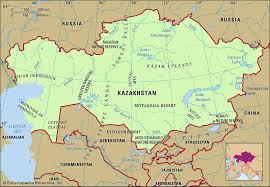
Kazakhstan
Spin Check: Digital Dashboards Don’t Replace Flow Sheets
Kazakhstan’s minerals.gov.kz and e-licensing are meaningful transparency steps—useful for due diligence and faster access to legacy data. However, a modern platform doesn’t address processing gaps; Kazakhstan still requires proven separation/refining capacity and off-take pathways to convert geology into magnets. (The IEA’s broader warning about concentrated refining and rising trade restrictions remains the backdrop.)
Why This Matters for Supply Chains
If even a slice of the 2.6 Mt becomes economically mineable REO, Kazakhstan could emerge as a non-China resource node at the same time demand climbs for EVs, wind, robotics, and defense systems. The near-term investable angles: (1) Exploration JVs to lift resource confidence; (2) Pilot processing partnerships to prove metallurgy; (3) Tolling/alliances with established refiners while domestic plants ramp; (4) Policy risk hedging as global export controls and licensing tighten.
What’s Probably PR (for Now)
Implied timelines for “industrial development” appear optimistic, lacking published scoping studies, pilot results, or capex plans. Until credible technical reports appear, assume multi-year lead times and financing hurdles—especially for hydromet and separation.
Investors should demand independent verification before underwriting scale.
Source: The Astana Times, Sept. 2, 2025; IEA Global Critical Minerals Outlook 2025; Kazakh government releases on the unified subsoil platform.
©!-- /wp:paragraph -->


0 Comments
Discuss this article