
Highlights
- Myanmar's Kachin region controls critical heavy rare earth deposits, with devastating environmental and human consequences.
- Chinese and Myanmar junta-linked operators exploit rare earth resources.
- The local Kachin Independence Army struggles to protect communities.
- The rare earth mining narrative extends beyond U.S.-China geopolitics to a critical story of indigenous survival and environmental destruction.
Asia Times (opens in a new tab) claims Trump’s rare-earth push “hits a Chinese wall” in Myanmar. Parts ring true; parts are theater. What matters more—and is too often missing—is the human cost buried under these mountains of minerals. Myanmar’s rebels now control the most important rare earth mining operations in the world—see the Rare Earth Exchanges (REEx) Heavy Rare Earth (HREE) Projects/Deposits Database.
BedrockRealities
Yes—Kachin has become the world’s grim workhorse for heavy rare earths (dysprosium, terbium). These metals are the DNA of defense and clean tech, but they are pried loose through in-situ leaching that hollows mountains, poisons rivers, and buries villages in toxic mud. Independent investigations—and REEx’ own field reporting—confirm that Kachin’s rebel-controlled lands rank at the very top of the global heavy rare earth deposit database.
Myanmar
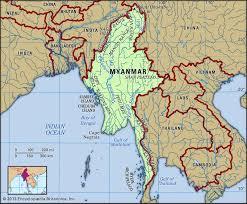
The U.S. envoy’s August trip to Myitkyina deliberately avoided both the junta and the Kachin Independence Army (KIA), underscoring how hard engagement is on the ground. Meanwhile, Chinese-linked operators continue to run deposits in Shan and Kachin under militia protection, hauling billions in ore across the Yunnan border. As Richard S. Ehrlich reports, America is sidelined; China is entrenched.
The Asia Times Lens
Ehrlich frames the issue as geopolitics: Trump’s frustration, Beijing’s near-monopoly, Myanmar’s fractured mines, and the transactional dance between junta generals and KIA insurgents. His narrative stresses how China bankrolls both sides to keep the flows moving. The U.S. appears boxed out—dependent on China’s processing and unable to chart a path into rebel-held territory. It is a top-down story: America versus China, resources as pawns. Environmental devastation is mentioned, but in passing.
What Rare Earth Exchanges Brings to Light
Our frontline reporting tells a different truth. In our August 7, 2025 interview, Kachin environmental advocate Zung Ting described the lived cost: mountains hollowed, arsenic-laced rivers, landslides erasing farms, and communities displaced. Death and environmental destruction are the norm---driven by junta funded by China and apparently Russia.
He told us the KIA has frozen new Chinese mining licenses and is struggling to impose environmental controls—an inconvenient reality ignored in the binary U.S.-China framing. Kachin’s fight is not just for territory, but for autonomy promised in the 1947 Panglong Agreement, betrayed for decades. Christianity, civil society, and grassroots environmental movements shape this resistance. A reminder that the ethnic groups fighting for their land and rights are majority Christian.
And today? In September call Zung warns conditions are even more dangerous. Villages are caught between junta bombs, Chinese-backed miners, local mafias, and a world still hungry for heavy rare earths.
Why This Matters
Kachin’s rare earths are not just chess pieces in Washington and Beijing’s rivalry. They are the lifeblood of a people who have endured betrayal, war crimes, and ecological collapse. If the global clean energy transition and defense buildup continue to lean on these mountains, the question is stark: will the world repeat the cycle of extraction and abandonment—or finally listen to the communities whose land, rivers, and futures are on the line?
Citation: Richard S. Ehrlich, Asia Times, “Trump’s rare earth push hits a Chinese wall in Myanmar,” Sept. 6, 2025; Rare Earth Exchanges, “We Never Got What Was Promised: A Rare Earth Frontline Report from Kachin State,” Aug. 7, 2025.
©!-- /wp:paragraph -->


0 Comments