
Highlights
- India has extended permission for EV truck and bus manufacturers to import rare-earth magnet traction motor subassemblies until September 2026, temporarily relaxing localization requirements under its $1.3B PM E-Drive program.
- Permanent magnet synchronous motors using NdFeB magnets are essential for heavy EVs, with China controlling 90%+ of global magnet manufacturing—highlighting a critical supply chain vulnerability for India’s electrification goals.
- Electric buses and trucks contain 3–5+ kg of NdPr magnets per vehicle, significantly amplifying demand and tying EV deployment success directly to the stability of the mine-to-magnet supply chain.
Rare Earth Exchanges™ suggests that sometimes the most revealing industrial policy decisions are the quiet ones. And now India has extended permission for electric truck and bus manufacturers to import rare-earth magnet traction motor subassemblies until September 2026, according to reporting (opens in a new tab) by Manas Pimpalkhare in Mint today--15 March 2026. The move temporarily relaxes localization requirements under the ₹10,900-crore ($1.3b USD) PM E-Drive incentive program, designed to accelerate electric vehicle adoption across the country.
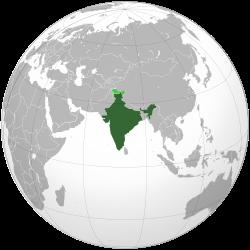
For a lay reader, thestory is simple: India wants more electric buses and trucks on theroad—but domestic supply chains cannot yet produce the critical motor components required to power them. At the center of that challenge sits the rare-earth permanent magnet traction motor, the dominant architecture in modern EV drivetrains.
The Magnet at the Center of the Machine
The article highlights a fundamental engineering reality.
Heavy electric vehicles—buses and trucks—typically rely on permanent magnet synchronous motors (PMSM) built around neodymium-iron-boron (NdFeB) magnets. These magnets deliver:
- high torque density
- superior efficiency
- compact motor design
While some smaller EVs experiment with magnet-free motors such as induction or switched-reluctance designs, heavy-duty vehicles still overwhelmingly depend on rare-earth magnets.
And this is where geopolitics enters the drivetrain.
China controls roughly 60–70% of global rare earth mining, about 85–90% of separation and refining, and over 90% of NdFeB magnet manufacturing. That dominance makes China the gravitational center of the EV magnet supply chain.
India’s policy relaxation effectively acknowledges that reality.
A Policy Bridge — Not a Supply Chain Solution
The Mint article correctly frames the move as pragmatic policy support for early EV deployment. Without imported motor assemblies, manufacturers could struggle to deliver vehicles under India’s electrification programs.
But the policy also exposes a deeper structural issue:
EV industrial policy without magnet supply is an incomplete industrial policy.
India faces three familiar constraints:
- Limited domestic rare-earth separation capacity
- Minimal NdFeB magnet manufacturing
- EV volumes are still too small to anchor large magnet factories
India is hardly alone. The United States, Europe, and Japan face the same mine-to-magnet gap.
Why Traction Motors Quietly Drive Rare Earth Demand
For investors watching the rare earth market, the deeper signal lies inside the motor itself. Permanent-magnet traction motors concentrate rare-earth use in a single critical component of the EV drivetrain, typically containing 1–2 kg of NdPr magnets in passenger vehicles and 3–5 kg or more in buses and heavy trucks. Because magnets represent the highest value rare-earth application in electrification, every new EV fleet program translates directly into structural NdPr demand.
India’s electric bus rollout—already 4,408 units sold in 2025 with thousands more planned under the PM E-Drive scheme—illustrates how quickly magnet demand can scale. Multiply similar electrification programs across Europe, China, and North America, and the result is a powerful demand engine for NdPr oxides and NdFeB magnets. In short, traction motors act as rare earth demand amplifiers, quietly tying the future of EV deployment to the stability of the global mine-to-magnet supply chain.
What Investors Should Notice
The real signal in this story is not EV demand—it is magnet demand.
Rare Earth Exchanges points out that electric buses and trucks are magnet-intensive machines and the unanswered strategic question remains: If geopolitical tensions tighten magnet supply again, where will the magnets come from? Until countries build full mine-to-magnet supply chains, policies like this will remain temporary bridges across a structural industrial gap.


0 Comments
No replies yet
Loading new replies...
Moderator
Join the full discussion at the Rare Earth Exchanges Forum →