
Highlights
- Meteoric Resources submitted an Installation License application for its Caldeira Rare Earth Ionic Clay Project in Brazil, advancing to the second stage of the country's three-stage regulatory approval process.
- While Brazil hosts significant undeveloped rare earth resources, the true bottleneck remains midstream chemical processing capacity, which is still heavily concentrated in China.
- The Caldeira project represents an incremental but strategically important step in diversifying rare earth supply chains, particularly for heavy rare earth elements critical to magnets and defense systems.
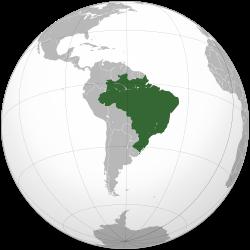
Rare earth headlines often arrive with the drama of geopolitical rivalry. The latest development from Brazil is quieter but still important. Australian developer Meteoric Resources has submitted an application for an Installation License (LI) for its Caldeira Rare Earth Ionic Clay Project in Minas Gerais. If approved, the permit would allow construction of the mine, processing plant, and supporting infrastructure for what the company hopes will become a major rare earth operation in South America.
In plain terms: the company has advanced one rung further up Brazil’s regulatory ladder—but production remains several steps away. According to the company’s regulatory filing, the installation license follows approval of the Preliminary Environmental License (LP) in December 2025 and represents the second stage of Brazil’s three-stage licensing system (LP → LI → Operating License) required before a project can begin operations.
The Permitting Reality Behind the Headlines
The LI submission includes environmental and engineering documentation covering open-pit mining plans, infrastructure design, and processing facilities. The filing also references an Environmental Control Plan comprising 27 socio-environmental programs designed to mitigate environmental impacts during construction and operations.
This is a meaningful milestone, but investors should understand what it is—and what it is not.
An installation license does not guarantee project construction. It merely allows regulators to review whether the project may proceed to the building phase. The final step—the Operating License (LO)—must still be secured before any commercial mining or processing can begin. Mining history is littered with projects that reached this stage yet never entered production due to financing, permitting delays, or market conditions.
Brazil’s Rare Earth Potential: Real, but Often Overstated
The article also highlights Brazil’s enormous rare-earth potential, citing estimates that the country's reserves could be worth more than its GDP. The underlying point is directionally correct: Brazil hosts some of the largest undeveloped rare-earth resources outside China, including ionic adsorption clay deposits similar to those mined in southern China for heavy rare-earth elements.
But resource-value comparisons to GDP are economic thought experiments, not economic reality. Resource value calculations typically assume full extraction at current prices—an assumption that rarely survives the complexities of mining economics, processing costs, environmental regulation, and commodity cycles.
The Supply Chain Bottleneck: Few Headlines Mention
Even if Caldeira advances smoothly, the strategic question for investors lies beyond the mine itself.
Rare-earth supply chains are not primarily constrained by geology. They are constrained by midstream chemical processing.
Miningionic clay ore is only the first step. The true industrial challenge lies in separating individual rare earth elements—an intricate process that still relies overwhelmingly on large-scale solvent extraction plants, the only proven method for industrial rare earth separation.
Today, that capability remains heavily concentrated in China.
Why This Story Still Matters
Despite the caution, the Caldeira project is strategically significant. Brazil is emerging as one of the few jurisdictions capable of hosting large ionic clay rare earth deposits outside China. If projects like Caldeira advance to production and are paired with downstream separation capacity, they could gradually reshape supply diversification efforts for heavy rare earth elements critical to magnets, defense systems, and electric mobility.
For now, the news is best understood not as a supply revolution, but as another incremental move in the long global chess match over rare-earth supply chains.


0 Comments
No replies yet
Loading new replies...
Moderator
Join the full discussion at the Rare Earth Exchanges Forum →