
Highlights
- China's SASAC is mobilizing central SOEs to accelerate major industrial projects, expand investment in critical sectors, and strengthen control over strategic materials including rare earths.
- SASAC's directive signals supply chains will be managed for national strategy rather than market forces, with capital following strategic priorities over ROI—reinforcing China's coordinated execution advantage.
- The push for consolidation and discipline across China's 'national team' enterprises translates to fewer players, stronger coordination, and greater pricing power in critical mineral markets.
China’s top state asset regulator is sending a clear message: more control, more investment, and more strategic execution.
The State-owned Assets Supervision and Administration Commission (SASAC)—the powerful body overseeing China’s largest state-owned enterprises—has directed central companies to accelerate major projects, expand investment, and strengthen control over critical sectors. For Western readers, this is not bureaucratic noise. It is industrial policy in motion.
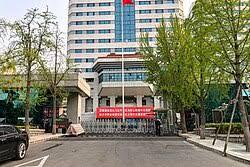
What Is SASAC—and Why It Matters
SASAC is effectively China’s shareholder-in-chief for its most strategic companies—spanning energy, metals, infrastructure, and increasingly, critical minerals.
It:
- Oversees and evaluates central state-owned enterprises (SOEs)
- Directs capital allocation into priority sectors
- Aligns corporate strategy with national objectives
In practical terms, SASAC is where policy meets execution—especially in sectors like rare earths, where China already dominates.
From Policy to Projects: The “National Team” Mobilizes
The latest meeting emphasized:
- Launching major and “landmark” industrial projects
- Expanding effective investment
- Accelerating technology self-reliance
- Scaling AI and digital transformation across SOEs
Central enterprises are explicitly framed as:
“The national team” for building China’s modern industrial system
That includes upstream resources, midstream processing, and downstream manufacturing—the entire rare earth value chain.
Three Signals Western Investors Should Not Miss
1. Supply Chains Will Be Managed—Not Market-Driven
SASAC is prioritizing price stability and supply security of key materials.
That implies continued active management of rare earth output and pricing behavior. Given America’s reprieve with rare earth element access expires in November, this could be a material signal.
2. Capital Will Follow Strategy, Not ROI Alone
China is directing investment into:
- Core technologies
- Industrial bottlenecks
- Strategic materials
This reinforces a key asymmetry:
China invests for control. The West often invests for return.
3. Consolidation and Discipline Will Tighten
The push for “three concentrations” (capital, industry, and control) signals:
- Further consolidation
- Tighter oversight
- Higher execution discipline
In rare earths, that typically translates into fewer players, stronger coordination, and greater pricing power.
Bottom Line: The System Is the Strategy
This is not a single announcement—it’s a system reinforcing itself.
SASAC is aligning China’s industrial base to:
- Control critical inputs
- Stabilize domestic supply
- Strengthen global leverage
For Rare Earth Exchanges™ readers, the implication is clear:
China’s advantage is not just resources—it is coordinated execution at scale.
And that remains the hardest thing for the West to replicate.


0 Comments
No replies yet
Loading new replies...
Moderator
Join the full discussion at the Rare Earth Exchanges Forum →