
Highlights
- Africa supplies over 70% of global cobalt and holds vast lithium and copper reserves, but resource ownership doesn't equal market control—China refines 85–90% of rare earths and dominates battery processing.
- Real value capture requires Africa to build midstream capacity in refining and manufacturing; until then, the continent remains a price taker despite supplying critical minerals for the global energy transition.
- Investors should focus on processing infrastructure build-out, offtake agreements, and stable fiscal regimes rather than exploration headlines—execution gaps in power, rail, and capital remain material risks.
Africa holds vast reserves of critical minerals—cobalt, copper, lithium, and rare earth elements—placing the continent at the center of the global energy transition. Demand is accelerating, but the real contest is not over rocks in the ground. It is over who controls processing, pricing, and supply chains. This analysis separates grounded fact from narrative inflation so investors can see where real leverage—and real risk—reside.
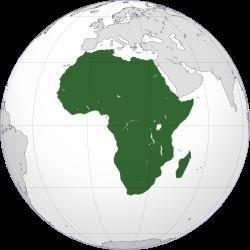
A Continent Repriced by the Periodic Table
Africa is no longer a frontier story—it is a strategic one per Africa Briefing (opens in a new tab). The article’s central premise is broadly sound: demand for critical minerals is rising sharply, driven by electrification, batteries, and digital infrastructure. Forecasts of roughly 3–4x demand growth by 2040 are consistent with estimates from the International Energy Agency. Likewise, the Democratic Republic of Congo’s position—supplying over 70% of global cobalt—is well established.
But investors should anchor on a harder truth: resource endowment alone does not equal market power.
Ownership Is Not Control
The narrative suggests Africa is reshaping global power. That is directionally—but structurally incomplete.
Control sits downstream:
- China refines roughly 85–90% of rare earths globally
- Battery materials processing (precursors, cathodes) remains heavily concentrated in Asia
- Much of Africa’s output still exists as raw or minimally processed material
This is the core asymmetry. Mining is upstream. Pricing power is midstream.
Until Africa scales separation, refining, and manufacturing capacity, it largely remains a price taker in global markets.
Where Narrative Outruns Reality
Several claims lean toward overstatement:
- “Untapped reserves” do not equal economically recoverable supply
- Exploration activity does not equal near-term production
- “Geopolitical power” assumes execution capacity that is still emerging
Meanwhile, constraints are material and immediate: infrastructure gaps, regulatory volatility, power shortages, and financing complexity. These are not footnotes—they determine timelines and returns.
Signals That Separate Hype from Traction
Investors should focus on indicators of real value capture:
- Build-out of processing and refining capacity
- Long-term offtake agreements tied to midstream assets
- State-backed investment in rail, ports, and power
- Stable, durable mining and fiscal regimes
Projects like Simandou (Guinea) and Zambia’s copper expansion are significant—but remain capital-intensive, execution-sensitive developments.
From Dirt to Leverage
Africa is not yet reshaping global power—but it is being repositioned within it.
The inflection will not come from discovery. It will come from industrialization and value capture.
Until that shift occurs, Africa will continue to supply the world’s critical minerals—without fully pricing them.


0 Comments
No replies yet
Loading new replies...
Moderator
Join the full discussion at the Rare Earth Exchanges Forum →