
Highlights
- China and Turkmenistan are reinforcing their comprehensive strategic partnership, expanding beyond natural gas into AI, digital economy, clean energy, and infrastructure to diversify economic ties.
- The partnership prioritizes land-based energy security through Central Asian pipelines, reducing China's reliance on maritime chokepoints vulnerable to U.S. naval disruption.
- Turkmenistan's strategic location and neutral status position it as a key buffer corridor for China, offering proximity to Iran while anchoring inland supply networks across underexplored mineral-rich Central Asia.
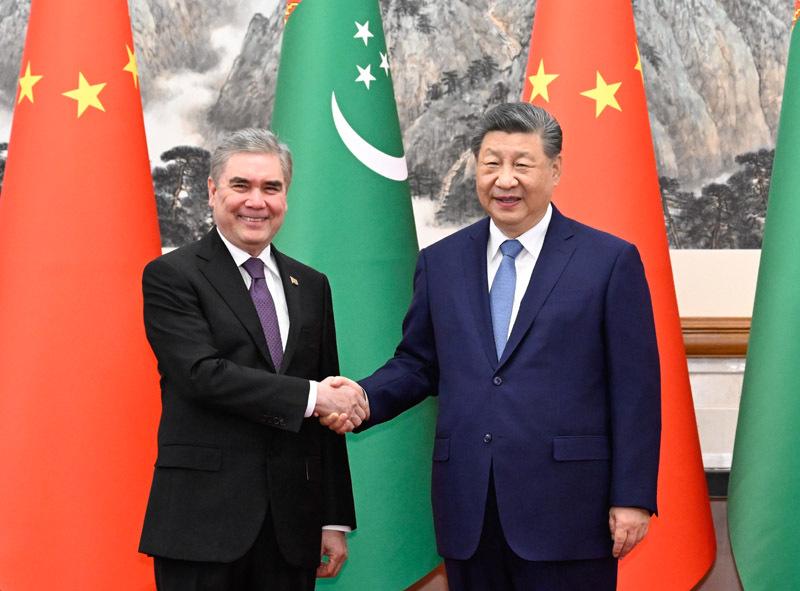
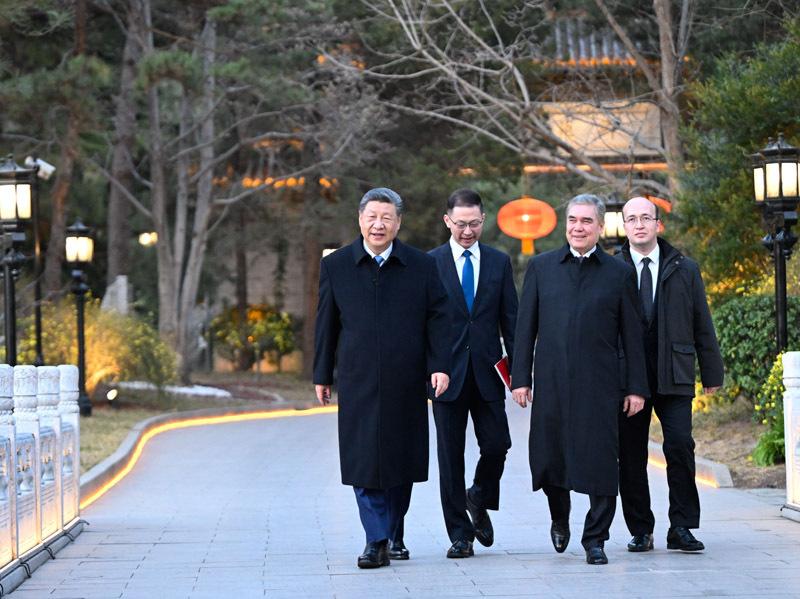
A recent Beijing meeting and a broader signal suggest Rare Earth Exchanges.™ A March 18 meeting involved Chinese President Xi Jinping and Turkmenistan’s national leader Gurbanguly Berdimuhamedov (opens in a new tab) in Beijing: reaffirming a “comprehensive strategic partnership.” While the official readout stresses continuity, the substance points to deeper coordination across energy, infrastructure, and emerging technologies. China also signaled alignment between its forthcoming “15th Five-Year Plan” and Turkmenistan’s development trajectory—anchored within the Belt and Road framework and aimed at scaling bilateral integration.
Energy First—Gas Anchors the Relationship
Natural gas remains the foundation. China called for expanded cooperation in the sector, underscoring Turkmenistan’s role as a major pipeline supplier via Central Asia. For observers in the West, the implication is straightforward: China continues to prioritize overland energy corridors, reducing reliance on maritime routes exposed to geopolitical risk. As Rare Earth Exchanges has elucidated in the Great Powers Era 2.0, the risk of the U.S. deploying naval power to disrupt supply chain choke points markedly rises.
Beyond Gas—Expanding the Economic Footprint
Both sides emphasized diversification into non-resource sectors, including artificial intelligence, the digital economy, agriculture, clean energy, and infrastructure. This signals a broader strategy: China is not just sourcing inputs—it is embedding across Turkmenistan’s economic architecture, from industrial systems to digital layers.
Turkmenistan: Neutral State, Strategic Node
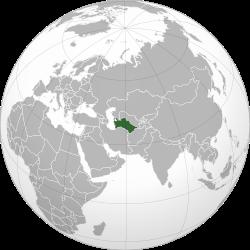
Turkmenistan sits in Central Asia, bordering Iran, Afghanistan, Kazakhstan, and Uzbekistan, with access to the Caspian Sea. Its doctrine of “permanent neutrality” avoids formal alliances while enabling economic engagement with major powers.
That positioning carries strategic weight:
- Proximity to Iran: Offers China geographic adjacency without direct exposure to Middle East conflict dynamics
- Energy corridor: Anchors pipeline networks that bypass maritime chokepoints
- Emerging resource potential: While gas dominates, Central Asia remains underexplored for rare earths and strategic minerals
In a heightened Iran conflict scenario, Turkmenistan could serve as a buffer corridor—neutral, contiguous, and already integrated into China’s inland supply network.
Security and System Alignment
References to combating terrorism, separatism, and extremism reflect China’s priority: stability along inland trade and energy routes. Both sides also reaffirmed coordination in multilateral forums, signaling alignment with non-Western governance frameworks.
What Matters Now
No discrete breakthrough was announced, but the trajectory is clear:
- China is reinforcing land-based energy security
- Expanding into AI and digital infrastructure layers
- Deepening its position in Central Asia as a long-term strategic corridor
For the U.S. and allies, the implication is structural: China is not just securing resources—it is engineering integrated corridors that combine energy, infrastructure, and technology across politically flexible partners.
Disclaimer: This news item is based on reporting from Chinese state-affiliated media (Xinhua) and China’s Ministry of Industry and Information Technology (opens in a new tab). The information should be independently verified, as official communications may reflect policy positioning and strategic messaging rather than fully transparent operational outcomes.


0 Comments
No replies yet
Loading new replies...
Moderator
Join the full discussion at the Rare Earth Exchanges Forum →