
Highlights
- China announced a major mineral discovery at the Maoniuping mine in Sichuan, tripling rare earth reserves to 9.67 million metric tons, making it the world’s second-largest producing light rare earth mine after Bayan Obo.
- The discovery also includes other strategic industrial minerals: 27.13 million tons of fluorite (used in refrigerants and coatings) and 37.22 million tons of barite (used in drilling fluids and medical imaging).
- This development expands China’s critical minerals advantage over the West, which remains reliant on Chinese processing capacity despite some domestic rare earth production, affecting EV, defense, and advanced manufacturing supply chains.
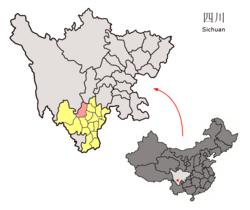
As Rare Earth Exchanges™ reported, China says it has made major new mineral discoveries in Sichuan and Gansu, with the headline development centered on the Maoniuping rare earth mine in Mianning County, Sichuan. According to the report, total rare earth oxide resources there have climbed to nearly 9.67 million metric tons, more than tripling prior identified reserves. Chinese officials now describe Maoniuping as the world’s second-largest producing light rare earth mine, behind only Bayan Obo in Inner Mongolia.
More Than Rare Earths: A Broader Minerals Package
According to multiple accounts, the Sichuan discovery also includes 27.13 million tons of fluorite and 37.22 million tons of barite as associated resources. That matters because this is not just a story about magnets. Fluorite feeds fluorine chemistry used in refrigerants and coatings. Barite remains important in drilling fluids and medical imaging. In other words, China is signaling strength not just in rare earth mining, but in a wider suite of industrial minerals tied to manufacturing, energy, and defense-adjacent supply chains.
Why the West Should Pay Attention
For American and European readers, the real takeaway is strategic. The report reinforces China’s already formidable advantage in critical minerals, especially in a market where the West still struggles with processing and refining bottlenecks, not just mining. The article explicitly contrasts China’s position with the United States, noting that although the U.S. produces rare earths, it still depends heavily on Chinese processing capacity. That is the real pressure point.
What Stands Out
One intriguing detail is that geologists reportedly first misidentified the deposit as a conventional lead-zinc occurrence before unusual lanthanum and yttrium readings changed the picture. The report also highlights unusually deep drilling, with more than 60,000 meters drilled in a year.
Bottom Line
This is relevant news, but it needs more validation. It suggests China may be extending its lead in the raw materials base that underpins EVs, wind power, electronics, advanced manufacturing, and precision weapons. For Western policymakers and manufacturers, the message is uncomfortable but clear: China’s resource depth may be getting stronger even as diversification efforts accelerate elsewhere.


0 Comments
No replies yet
Loading new replies...
Moderator
Join the full discussion at the Rare Earth Exchanges Forum →