
Highlights
- Hangzhou-based rare earth innovation hub backed by China Northern Rare Earth Group achieved official designation in just 622 days—the fastest among comparable state-backed enclaves in Inner Mongolia.
- The institute employs a “Hangzhou R&D, Baotou Scale” model, integrating PhD-led research teams with industrial infrastructure to compress innovation timelines from lab to commercial production.
- Early outputs include AI-accelerated materials discovery, rare earth wear-resistant coatings, and cost-reduced aluminum alloys, demonstrating China’s systematic approach to maintaining midstream market dominance through speed and integration.
In a notable signal of China’s accelerating rare earth strategy, a Hangzhou-based innovation hub backed by China Northern Rare Earth Group has secured official designation as part of Inner Mongolia’s second batch of “science and technology enclaves.”
From legal entity registration to government approval, the project was completed in just 622 days—reportedly the fastest rollout among comparable state-backed “innovation enclaves” in the region.
At its core, the kechuang feidi model is designed to compress innovation timelines by linking geographically separate strengths into a unified R&D-to-commercialization pipeline.
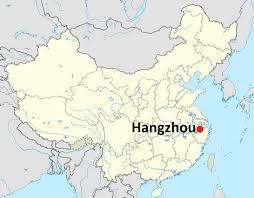
A New Playbook: “Hangzhou R&D, Baotou Scale”
This Hangzhou branch extends Baotou’s industrial rare earth base into the innovation-rich Yangtze River Delta. The model is deliberate: conduct R&D in Hangzhou, industrialize in Baotou, distribute through Zhejiang, and scale globally.
The institute has assembled a PhD-led research team from top universities, including Zhejiang University and Northeastern University, targeting advanced processing, functional materials, and downstream application technologies—areas critical to maintaining China’s midstream dominance.
Early Gains: Applied Materials + AI Acceleration
Initial outputs point to incremental—but commercially relevant—progress. The institute reports advances in rare earth wear-resistant coatings and lower-cost rare earth aluminum alloys, with applications spanning communications, transportation, and energy systems.
More strategically, the integration of “AI + materials science” workflows signals an effort to accelerate discovery cycles and improve R&D efficiency—potentially shortening the path from lab to scaled production.
Why It Matters: Speed Is the Competitive Advantage
For U.S. and Western stakeholders, the takeaway is structural, not sensational. China is not relying on a single breakthrough—it is engineering faster systems.
By integrating talent, capital, and industrial infrastructure across regions, this model reduces friction between research and manufacturing. Over time, that speed advantage compounds—particularly in sectors like rare earth materials where scale, consistency, and cost discipline determine market leadership.
What Comes Next
The Hangzhou enclave is expected to deepen its role as a commercialization bridge, advancing key technologies while serving as a replicable template for cross-regional innovation within China’s rare-earth ecosystem.
Disclaimer: This report is based on information published by media affiliated with a Chinese state-owned entity. All claims should be independently verified before forming investment, policy, or commercial conclusions.


0 Comments
No replies yet
Loading new replies...
Moderator
Join the full discussion at the Rare Earth Exchanges Forum →