
Highlights
- Iranian missile strikes on Qatar's Ras Laffan in March 2026 eliminated one-third of global helium supply overnight, doubling spot prices and threatening MRI operations and semiconductor manufacturing worldwide.
- Helium is a finite, non-renewable resource that escapes Earth's atmosphere permanently when released, yet decades of cheap prices and privatization discouraged investment in recovery systems and alternative sources.
- The crisis has accelerated adoption of helium-free MRI technology, closed-loop recovery systems capturing 90% of used helium, and primary helium exploration projects in Tanzania and Minnesota decoupled from volatile natural gas markets.
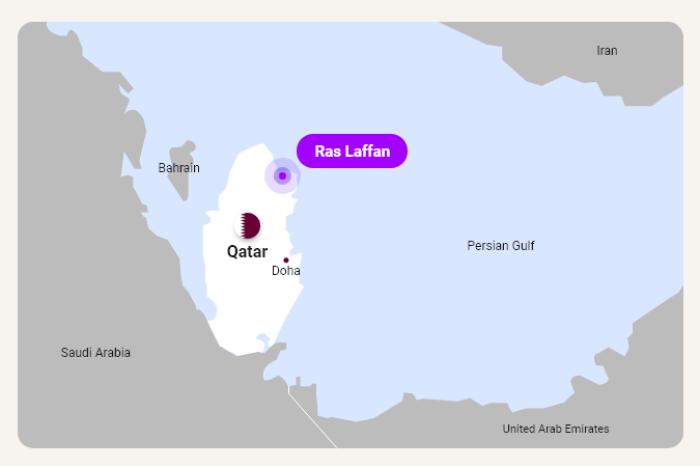
For decades, the world treated helium as a given, the gas that fills birthday balloons and makes voices squeak. It was cheap, apparently inexhaustible, and too trivial for strategic attention. Then, in early March 2026, Iranian missiles struck Qatar’s Ras Laffan Industrial City, and about one-third of the world’s helium supply vanished overnight. Spot prices doubled within days. Semiconductor fabs in South Korea began drawing down emergency stockpiles. Hospitals faced the prospect of shutting down MRI machines they could no longer afford to keep cold.
The helium crisis is not a freak accident. It is the predictable result of treating a finite, non-renewable resource, one produced over billions of years by the radioactive decay of uranium and thorium deep underground, as though it were as free as the air we breathe.
The Physics of Scarcity
Helium is the second most abundant element in the universe, but vanishingly rare on Earth in usable form. Its atoms are so light that any helium released into the atmosphere reaches escape velocity and drifts into space. Unlike nitrogen or oxygen, it does not cycle back. Every liter vented is a liter lost to the cosmos, permanently.
The helium we use commercially is not manufactured; it accumulates over geological time as a byproduct of alpha decay in uranium- and thorium-bearing rock. These helium atoms (⁴He) migrate upward and collect in natural gas reservoirs—but only where the overlying geology provides an adequate seal. We recover helium as a secondary product of liquefied natural gas (LNG) processing, using cryogenic separation to isolate it from methane and nitrogen.
This creates a structural dependency that is easy to overlook: the world’s helium supply is coupled to the fossil fuel industry. When gas production drops, helium supply drops with it. When a processing facility skips helium capture, because the separation infrastructure is expensive and the margins are slim, helium is vented and irretrievably lost. There is no helium OPEC, no strategic tap to open. The supply chain is, by its nature, fragile and inelastic.
The MRI Crisis: When Hospitals Lose Their Coolant
The most immediate human consequence of helium scarcity is in healthcare. A modern MRI scanner is, at its core, a superconducting magnet. To generate the intense magnetic fields required for non-invasive diagnostic imaging, its coils must be cooled to approximately 4 Kelvin (−269°C). Liquid helium is the only substance with a boiling point low enough to sustain this temperature. A standard clinical MRI system contains roughly 1,500 to 2,000 liters of liquid helium, and even when idle, the helium slowly boils off and must be periodically replenished.
If a hospital cannot secure a refill, the magnet warms. Once the temperature rises above the critical threshold, the coils lose their superconductivity in a violent event called a quench. During a quench, the helium boils off explosively and must be vented through a dedicated exhaust pipe, itself a safety event that can endanger staff if containment fails. The magnet’s delicate internal structures can sustain permanent damage, and recommissioning requires not only costly repairs but months of lead time for helium delivery, magnet re-cooling, and field homogeneity calibration. A single quench can cost hundreds of thousands of euros and take a scanner out of service for the better part of a year.
Helium prices have surged dramatically. In the first quarter of 2025, prices reached approximately $97,200 per metric ton in the United States, $114,200 in Germany, and $117,660 in France—increases of over 400% in recent years. Hospitals, particularly in developing nations and rural settings, face an impossible calculus: which machines to keep cold and which to let die. For patients awaiting stroke evaluation, tumor staging, or cardiac imaging, the shortage is not an abstraction. It is a diagnostic blackout.
The Ras Laffan Shock: March 2026
Qatar, a small peninsula in the Persian Gulf, had become the fulcrum of global helium supply. Its North Field gas complex at Ras Laffan Industrial City housed several of the world’s largest helium refinery trains, producing roughly one-third of global output, approximately 5.2 million cubic meters per month.
On the evening of March 2, 2026, as part of a broader Iranian retaliatory campaign targeting energy infrastructure across the Gulf, drone and ballistic missile strikes hit Ras Laffan. QatarEnergy (opens in a new tab) declared force majeure on LNG shipments. Because helium is recovered during natural gas liquefaction, the halt in LNG production simultaneously shut down helium output. Subsequent strikes on March 18–19 caused further damage to the Pearl GTL facility and additional LNG infrastructure, reinforcing that Qatari production would remain offline for the foreseeable future.
The effect was immediate and severe. One-third of the world’s helium disappeared from the market. Helium is notoriously difficult to store as it leaks through seals that would contain any other gas, and most industrial users maintain only weeks of inventory. The effective closure of the Strait of Hormuz compounded the logistics, blocking not only Qatari supply but also shipments transiting from other Gulf producers. Spot prices surged by 70–100% within the first two weeks, according to industry consultant Phil Kornbluth. Analysts began describing the event as “Helium Shortage 5.0,” the fifth major supply-side crisis in two decades and, by consensus, the worst.
A partial saving grace: the helium market had been in oversupply for roughly two years heading into the crisis, with storage facilities in Germany and Texas absorbing excess production. That buffer bought time. But as Kornbluth noted, even after a ceasefire, it would take at least five weeks to restart production, and with physical damage to Ras Laffan infrastructure, restart timelines could extend well beyond the duration of the conflict itself.
Semiconductors and the AI Bottleneck
The crisis rippled far beyond hospital basements. In the advanced semiconductor fabrication facilities of Taiwan and South Korea, helium is classified as a critical process gas. It is used for cooling silicon wafers during etching, as a carrier gas in chemical vapor deposition, for leak detection in vacuum systems, and critically for cooling the optics in extreme ultraviolet (EUV) lithography systems, the bottleneck technology that enables production of chips at 3-nanometre nodes and below.
The scale of consumption is striking. A single advanced TSMC fab reportedly uses roughly 500,000 cubic feet of helium per year. Across the industry, semiconductor and electronics demand has grown from approximately 6% of global helium consumption in 2015 to an estimated 21–25% in 2025, driven almost entirely by the proliferation of EUV lithography and the AI-fueled demand for high-performance chips. With 42 new fabrication facilities scheduled to come online by 2026 under the CHIPS Act and equivalent programs worldwide, semiconductor helium demand is projected to grow 15–20% annually through the end of the decade.
The geographic exposure is acute.
South Korea—home to Samsung and SK Hynix, which together produce roughly two-thirds of the world’s memory chips—sourced nearly 65% of its helium from Qatar in 2025. Taiwan sourced 69% from Gulf Cooperation Council countries. The Ras Laffan shutdown sent immediate shockwaves through both countries’ chip-making ecosystems. South Korea’s Ministry of Trade launched a supply exposure investigation across 14 semiconductor materials. Samsung disclosed stockpiles estimated to last approximately six months; smaller manufacturers had far less runway.
The lesson is uncomfortable: the entire digital revolution from smartphones to the neural networks training generative AI depends on a gas that passes through a single waterway, produced in a handful of facilities, with no viable substitute at an industrial scale.
The Commodity Trap: How We Got Here
The roots of the crisis run back nearly a century. After World War I, the United States established the Federal Helium Reserve in Amarillo, Texas, recognizing helium as a strategic asset for military airships. Over the following decades, the reserve grew into a massive underground stockpile that dominated global supply and kept prices artificially low.
In 1996, Congress passed the Helium Privatization Act, mandating the sell-off of federal helium assets. The logic was straightforward: the government should exit commodity markets and let private industry manage supply. The Helium Stewardship Act of 2013 refined the timetable. After regulatory delays, the Bureau of Land Management completed the sale of the entire Federal Helium System, including the Cliffside Field, its wells, a 423-mile crude helium pipeline, and remaining reserves to Messer, the German industrial gas company, in June 2024. The sale price was $460 million. Messer was the only serious bidder.
The privatization achieved its stated goal: the government exited the helium business. But the unintended consequence was severe. For decades, the cheap, federally subsidized supply had suppressed private investment in helium recovery infrastructure and exploration of new, dedicated helium fields. The market that emerged was concentrated, brittle, and geographically exposed—dependent on just four major producing countries: the United States, Qatar, Algeria, and Russia. When Russia’s Amur gas processing plant (potentially 25% of global capacity at full output) was hobbled by explosions, technical failures, and Western sanctions, and when U.S. reserves dwindled to a fraction of their peak, the world became dangerously over-reliant on Qatar.
The parallel to China’s dominance of rare earth element processing is instructive. In both cases, a combination of low prices, concentrated production, and underinvestment in alternatives created a supply chain that appeared efficient but was, in fact, systemically fragile. The attack on Ras Laffan did not cause the crisis; it merely exposed the rot that had been building for years.
Quantum Computing and Helium-3: The Next Scarcity
The current crisis centers on helium-4, the common isotope. But a parallel scarcity is emerging for helium-3, an ultra-rare isotope essential to quantum computing. Dilution refrigerators, the cooling systems that bring quantum processors to their operating temperature of approximately 15 millikelvin, require helium-3 as a working fluid. There is no substitute.
Helium-3 is not found in commercial natural gas deposits. It is produced almost exclusively as a byproduct of nuclear weapons maintenance (specifically, the decay of tritium) and certain nuclear reactors. Global supply is measured in tens of thousands of liters per year. As quantum computing moves from laboratory curiosity toward commercial deployment, demand is expected to outstrip supply significantly.
In an unexpected development, Pulsar Helium’s Topaz project in Minnesota disclosed the presence of helium-3 in its gas stream in October 2025, valued at approximately $18.5 million per kilogram. If commercially recoverable, this would represent a terrestrial alternative to proposals for mining helium-3 on the Moon, a concept that has attracted serious government funding. The Topaz discovery is preliminary, but it illustrates the scale of value at stake in the broader helium economy.
The Path to Resilience
The Ras Laffan shock has forced a reckoning that was long overdue. The helium economy is beginning a transition from a linear model (extract, use, vent) to a more circular one. Three developments are critical.
Closed-loop recovery systems. Large-scale users, particularly research universities and semiconductor fabs, are investing in systems that capture boiled-off helium, compress it, and re-liquefy it on-site. Modern recovery systems can recapture up to 90% of used helium. The capital expenditure is significant, but the March 2026 shock has made the return on investment unarguable. Japan’s Ministry of Economy, Trade and Industry has implemented subsidy programs to encourage domestic recycling infrastructure, and the U.S. Department of Defense has set a target of maintaining a six-month helium reserve by 2026, up from an 83-day buffer.
Helium-free MRI. Philips has led the development of helium-free MRI technology since 2018. Its BlueSeal magnet uses only 7 liters of helium, permanently sealed in a closed cryogenic circuit, compared to the 1,500 liters in a conventional system. More than 2,000 BlueSeal 1.5T systems have been installed worldwide, saving an estimated 6 million liters of liquid helium. In November 2025, Philips unveiled BlueSeal Horizon, the world’s first helium-free 3.0T MRI platform—the most advanced field strength in mainstream clinical use. Siemens Healthineers has also received FDA clearance for a “virtually helium-free” 1.5T system. These technologies do not eliminate helium dependency across the installed base overnight, but they represent a fundamental shift in the economics of medical imaging.
Primary helium exploration. For the first time, companies are exploring for helium as a primary target rather than a byproduct of natural gas. The most advanced projects are in two regions. In Tanzania’s Rukwa Rift Basin, part of the East African Rift System, companies including Helium One and Noble Helium are developing what may be the world’s largest known primary helium resource, independently estimated at 138 billion cubic feet. In northern Minnesota, Pulsar Helium’s Topaz project has drilled five consecutive successful wells with helium concentrations of 8–10%, among the highest ever publicly reported. A resource update and first economic study are expected by mid-2026. Both projects are years away from large-scale production, but they represent the beginning of a supply chain decoupled from the volatile LNG market.
Who Benefits from Scarcity?
Every shortage creates winners. Industrial gas suppliers (Linde, Air Products, Air Liquide, and Messer) hold the distribution infrastructure and existing inventory that command premium pricing in a constrained market. Since the March 2026 crisis began, Linde’s share price has risen approximately 15%, and multiple Wall Street banks have issued upgrades for the sector, citing helium pricing power as a catalyst.
Primary helium explorers (Pulsar, Helium One, Noble Helium, Desert Mountain Energy) have seen surging investor interest, with private equity inflows into the helium sector reportedly reaching $4.8 billion in 2025 alone. Helium recycling technology providers and low-helium MRI manufacturers are similarly positioned to benefit from a structural shift in demand.
The question is whether this investment surge arrives in time. New helium production capacity takes years to develop. Recycling infrastructure requires upfront capital that smaller users cannot afford. And the installed base of helium-hungry MRI machines and legacy fab equipment will take a decade or more to turn over. In the interim, the allocation decisions sit with the merchant gas layer, which must decide how to distribute scarce supply across hospitals, fabs, laboratories, and aerospace customers.
The Lesson of the Second Element
Helium is a canary in the coal mine for our globalized economy. It demonstrates that our most advanced technologies are often built upon supply chains of extraordinary fragility that rely on materials formed over millions of years, concentrated in a few geographies, and vulnerable to disruption by a single military strike in a single afternoon.
We spent the last century optimizing helium supply for cost and efficiency, at the systematic expense of resilience. The Helium Privatization Act (opens in a new tab) was not irrational in 1996; it was catastrophically shortsighted by 2026. The same pattern, cheap commodity, concentrated supply, underinvestment in alternatives, sudden shock, has played out with rare earths, neon (during the Ukraine conflict), and now helium. The common thread is not bad luck but bad planning: the failure to treat finite, geographically concentrated inputs as the strategic vulnerabilities they are.
As we build a future defined by quantum computing, fusion energy, advanced medicine, and AI, all of which require helium, we can no longer afford to treat our resources as “given.” The gas that cools the magnetsthat detect cancer is the same gas that purges the lithography systems that build the chips that train our AI models. It is a finite, cosmic inheritance. If we continue to let it float away, we may find ourselves in a future where our most brilliant machines sit silent, not for lack of intelligence, but for lack of coolant.
This article reflects conditions as of 23 March 2026. The situation at Ras Laffan remains fluid; production restart timelines are uncertain and dependent on the resolution of the broader conflict. Market data and price movements cited are drawn from CNBC, Exiger, Gasworld, Kornbluth Helium Consulting, and USGS Mineral Commodity Summaries 2026.


0 Comments
No replies yet
Loading new replies...
Moderator
Join the full discussion at the Rare Earth Exchanges Forum →