
Highlights
- China reached $160B+ in patent-backed technology contracts in 2025, up 18.8% YoY, shifting from patent filing to commercial deployment with university commercialization rates hitting 10.1%.
- Over 1.46 million patent transactions recorded after authorities matched 680,000 viable patents with 460,000 companies, backed by $80B+ in state financing and IP-collateralized loans.
- China built 300 IP centers across strategic sectors like EVs and renewable energy, using fast-track approvals and state capital to dominate downstream applications and lock in technological advantage.
Is Beijing seeking to shift from invention to monetization—at scale? China is rapidly transforming its innovation system into a commercial engine as Rare Earth Exchanges™ has chronicled. According to reporting from state media, the total value of technology contracts involving patents reached 1.18 trillion yuan (~$160+ billion USD) in 2025, up 18.8% year-over-year. More notably, China is no longer just filing patents—it is converting them into industrial output, with commercialization rates rising to 10.1% for universities and 17.2% for research institutes. This marks a structural pivot: from quantity-driven patent accumulation to deployment, monetization, and industrial integration.
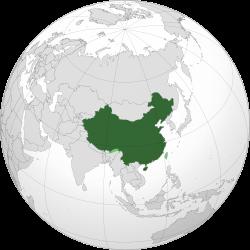
From Paper Patents to Industrial Power
A coordinated push to operationalize innovation
Over the past three years, Chinese authorities screened 1.35 million existing patents, identifying 680,000 with commercial potential, and matched them with 460,000 companies. The result: a surge in licensing, transfers, and industrial adoption, with 1.46 million patent transactions recorded—up nearly 50%.
More than 3,000 SMEs have been cultivated specifically around patent-driven “hard tech,” reinforcing China’s push to dominate applied innovation, not just discovery.
This aligns directly with Rare Earth Exchanges’ ongoing thesis: China is extending its control downstream—into applications, IP, and commercialization—well beyond raw materials dominance.
Industrial Strategy: Owning the Value Chain
Patents as weapons in EVs, energy, and advanced manufacturing
China has built nearly 300 intellectual property (IP) operation centers and 281 innovation consortia across 300+ industrial sub-sectors, targeting strategic industries like:
- Electric vehicles
- Renewable energy (solar, wind)
- Advanced manufacturing and materials
Fast-track patent approvals—cutting review time by over 50%—are accelerating this effort. Meanwhile, high-value patents in manufacturing are growing at >15% annually.
The implication for the U.S. and allies: China is systematically locking in technological advantage through patents, creating barriers to entry and future licensing leverage—similar to what has already occurred in solar and EV supply chains.
Financing the Patent Economy
State-backed capital fuels commercialization
China is underwriting this transformation with massive financial support:
- ~600 billion yuan ($80B+) in IP-backed loans
- 56 billion yuan in IP insurance coverage
- Expanding securitization of intellectual property assets
Banks alone issued nearly 300 billion yuan in IP-collateralized loans in 2025, up sharply since 2023.
This is not organic market evolution—it is state-directed capital deployment to industrialize innovation.
The Contradiction: Control vs. Market Reality
Overproduction risks meet centralized planning. And as such, tension is emerging. China’s system—highly coordinated and state-driven—faces an overproduction challenge, particularly in sectors like EVs and solar. The same mechanisms driving patent commercialization can also flood markets, compress margins, and distort global pricing, less appropriate market signaling, and consequent behavior. In short: China is building unmatched scale—but not always balanced demand.
Why This Matters Now
The real battle is downstream—and accelerating
There is no single “breakthrough” here. The breakthrough is systemic:
- Converting patents into industrial output at scale
- Embedding IP across strategic supply chains
- Using policy, finance, and coordination to dominate downstream value
For the West, this reinforces a critical reality: the competition is no longer about resources alone—it’s about who controls the applications, the patents, and ultimately the profits.
Source Transparency Disclaimer: This report is based on information published by Chinese state-affiliated media. The data and claims may reflect official policy narratives and should be independently verified before making investment or strategic decisions.


0 Comments
No replies yet
Loading new replies...
Moderator
Join the full discussion at the Rare Earth Exchanges Forum →