
Highlights
- Supra Elemental Recovery has developed cartridge-based technology using supramolecular chemistry to selectively bind and separate critical minerals like gallium, scandium, and cobalt from waste streams without harsh chemicals.
- The startup's modular approach could unlock previously uneconomic feedstocks like mine tailings and e-waste, potentially disrupting China's supply chain dominance through decentralized separation systems.
- While the UT Austin spinout's science is credible and DOE-backed, it faces the critical challenge of scaling from lab phase to industrial reality where many rare earth recycling innovations have failed.
There is a quiet truth in the rare earth economy: we are drowning in supply—just not the kind we can use. Mine tailings, industrial waste, e-scrap—vast reservoirs of critical minerals sit discarded because separating them is brutally hard. Enter Katie Ullmann Durham (opens in a new tab) and her startup Supra Elemental Recovery (opens in a new tab) which believes it has found a way in. And it doesn’t look like a refinery. It looks like a cartridge.
First profiled in Rare Earth Exchanges™ last month, the University of Texas Austin spinout’s CEO and founder joined our podcast (opens in a new tab).
Source: UT Austin
The Separation Problem Everyone Underestimates
Rare earth recycling has stalled at the same choke point for decades: separation. The lanthanides are chemically similar, notoriously difficult to isolate, and resistant to conventional methods like electrostatics. That’s why recycling rates hover in the low single digits.
According to Durham, Supra’s insight is simple, but disruptive: stop treating separation like a blunt-force industrial process. Start treating it like molecular recognition.
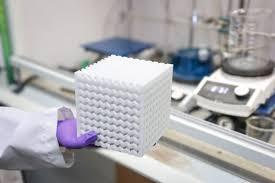
Using supramolecular chemistry, Supra embeds highly specific “receptors” into polymer cartridges—each tuned to bind a single element based on size, shape, and charge. Think less like a chemistry plant, more like a lock-and-key system.
How the Cartridge Changes the Game
Waste streams—mine tailings, industrial fluids, even e-waste—are pumped through these cartridges. The target metal binds. Everything else flows through.
Then comes the twist: instead of harsh acids, Supra releases the captured metals using a polarity shift with benign solvents, producing clean, reusable material streams.
This is not just elegant—it’s potentially economic. If it works at scale, Supra could unlock low-grade, previously uneconomic feedstocks, expanding supply without new mining. That’s the holy grail.
Mission: Reinvent the Supply Chain — Katie Ullmann Durham

Where It Stands—and What Comes Next
Supra is still in the lab phase at the University of Texas at Austin, testing real-world feedstocks and refining performance. Early targets include gallium, scandium, and cobalt—high-value, supply-constrained materials with strategic importance in semiconductors, aerospace, and energy systems.
The business model remains fluid: licensing cartridges for distributed deployment or building centralized refining operations. That flexibility is wise—but also signals uncertainty.
The Real Test: Scale, Not Science
The science is credible. The pedigree—rooted in leading supramolecular chemists—is strong. DOE-backed origins add legitimacy.
But rare-earth history is littered with elegant lab solutions that collapsed under industrial realities. Yet Supra’s bet is bold: that modular, cartridge-based systems can bypass the capital intensity and complexity of traditional solvent extraction.
And if Durham and the team are right, this isn’t just a recycling story. It’s a midstream disruption—one that could decentralize separation, expand access to feedstocks, and chip away at China’s dominance. If they’re wrong, it becomes another promising idea that never left the lab.
Either way, the industry should be watching closely, starting with the recent Rare Earth Exchanges podcast (opens in a new tab).


0 Comments
No replies yet
Loading new replies...
Moderator
Join the full discussion at the Rare Earth Exchanges Forum →