
Highlights
- Brazil is emerging as a critical physical host for AI infrastructure due to renewable energy reserves, land availability, and mineral resources—shifting the AI narrative from code to substrate.
- While community and environmental risks are legitimate, the analysis underweights Brazil's legal frameworks and the contested nature of development, leaning toward inevitability rather than complexity.
- The decisive constraint isn't resource presence but midstream processing capability—separation, refining, and metallization—where China retains dominance and true value capture occurs.
This Rare Earth Exchanges’™ analysis reviews reporting (opens in a new tab) from The Intercept Brasil (via Pulitzer Center) on Brazil’s role in the artificial intelligence buildout. The piece highlights tensions around land use, energy, and mineral extraction tied to data centers and mining, arguing that Indigenous and local communities risk being sidelined. That concern is credible. Yet the framing underweights a harder truth: Brazil is becoming strategically relevant in the global AI supply chain—not just as a place where projects happen, but as a country with the physical inputs (energy, land, minerals) that make AI possible. The real question is not whether development carries costs, but who captures value—and where the bottlenecks truly lie.
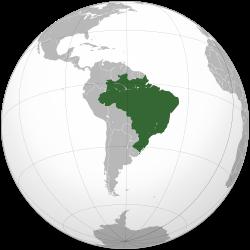
When Silicon Meets Soil: Brazil’s Quiet Land Rush
The scramble for artificial intelligence is often told in code and chips. In reality, it is a story about land, power and minerals. Brazil has all three.
Data centres require vast, reliable electricity. Electricity requires land and water. The hardware behind AI—from servers to cooling systems—relies on complex material supply chains. Brazil, with its hydropower base and expanding renewable capacity, is increasingly attractive as a physical host for this infrastructure. For investors, this is not a narrative. It is a substrate.
The Case That Holds: Tangible Advantage in a Physical Economy
Brazil’s appeal rests on fundamentals:
- Deep renewable energy reserves, led by hydropower
- Scalable land availability relative to developed markets
- Emerging relevance in critical minerals linked to electrification and advanced manufacturing
These are not speculative strengths. They align with a structural shift: AI is energy-intensive and materially anchored. The countries that can supply both electrons and inputs gain leverage.
Where the Argument Leans Too Hard: From Risk to Inevitability
The reporting foregrounds community exclusion and environmental risk. These concerns are legitimate and, in parts of Brazil, historically grounded.
But the evidence presented leans heavily on anecdote and advocacy framing. Less examined are:
- Brazil’s legal frameworks governing Indigenous land and environmental licensing
- The economic calculus facing policymakers is balancing growth and protection
- The role of global demand—particularly from technology firms—is shaping outcomes
The result is a narrative that implies the inevitability of harm, rather than contested, uneven development.
The Missing Middle: Processing, Not Presence, Decides Power
The most important omission is industrial, not social.
Brazil’s opportunity is often described in terms of land and resources. Yet in rare earths and adjacent materials, upstream abundance is only part of the equation. Without midstream capability—separation, refining, and metallization—value migrates elsewhere.
This is the decisive constraint in the global supply chain. It is also where China retains its edge.
Land hosts. Energy powers. Processing captures.
A Strategic Opening, Still Unfinished
Brazil is positioning itself as both an energy platform and a resource supplier for the AI age. That is credible and increasingly visible. But this is not a settled story. It is a negotiation—between communities, governments, and global capital—over who benefits and how.
For investors, the signal is sharper than the rhetoric:
follow not just where infrastructure is built, but where industrial capability deepens.
That is where enduring advantage—and real control—resides.


0 Comments
No replies yet
Loading new replies...
Moderator
Join the full discussion at the Rare Earth Exchanges Forum →