
Highlights
- Japan's Minamitorishima deep-sea rare earth project is a politically driven theater, costing about $70,000 per ton versus ~$3,600 historical benchmarks—commercially unviable without subsidies and lacking the critical downstream processing capacity that China dominates (85–90% globally).
- The real supply chain bottleneck isn't mining rare earths from 6,000 meters deep—it's refining and processing, where Japan remains 60–70% dependent on China for conversion into usable materials, magnets, and oxides.
- This project represents strategic signaling with long-term optionality rather than near-term supply disruption; investors should monitor whether Japan invests in downstream processing infrastructure or continues focusing on upstream extraction.
So what’s reality and what’s political involving Japan’s deep-sea rare earth mining push at Minamitorishima? What are the costs, feasibility, and supply chain implications?
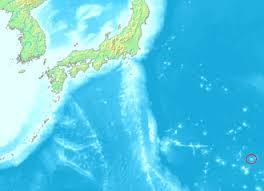
The 6,000-Meter Dream—and the Gravity of Reality
Ryan Xinyuan at China US Focus (opens in a new tab) reports Japan has pulled mud from 6,000 meters beneath the Pacific, declaring a future of rare earth independence in the process. It sounds like a breakthrough. It is not, at least not yet, Xinyuan correctly delineates
Frankly, Japan’s Minamitorishima project is more political theater than an industrial solution, driven by China’s tightening export controls and Tokyo’s need to project supply chain resilience. Yes, Japan still depends heavily on China for the most critical step—processing rare earths into usable materials.
On Firm Ground
Several points align with known supply chain realities, as Rare Earth Exchanges understands them. Yes, Chinese refining dominance remains the key supply-chain chokepoint. As routinely reported, ~85–90% of global rare earth processing. This is the real bottleneck—not mining. Plus, Japan’s dependency is reduced, but not eliminated. Falling from ~90% to ~60–70% reliance is credible and widely documented. Finally, the acute vulnerability of the heavy rare earths is evident: Elements like dysprosium and terbium are almost entirely processed in China.
This is the “last mile problem”—and it is decisive.
Where the Narrative Overreaches
The article leans heavily into a political motive. For example Claims of “resource populism” and election timing may be directionally plausible but not provable. The framing risks underestimating strategic intent: governments routinely fund uneconomic projects to secure future capability.
This is not irrational. It is an industrial policy.
The Brutal Economics Investors Cannot Ignore
The most important signal is cost:
- Estimated $70,000 per ton vs. ~$3,600 historical benchmarks
Even allowing for market shifts, this gap is enormous. Without subsidies, this is not commercially viable.
And critically: Japan still lacks large-scale refining capacity.
Why This Matters: The Real Game Isn’t Mining
Deep-sea mud is not the story. Processing is.
If Japan cannot convert raw material into separated oxides, metals, and magnets, it remains dependent, no matter how deep it digs.
Final Take: Signal, Not Solution
This project is best understood as strategic signaling with long-term optionality, not near-term supply disruption. Investors should watch one thing: Will Japan invest downstream—or keep digging upstream dreams?


0 Comments
Discuss this article