
Highlights
- China's NDRC met with BASF to signal continued openness to foreign investment in chemicals and advanced manufacturing, but on state-defined terms aligned with the 15th Five-Year Plan priorities.
- BASF, the world's largest chemical company, represents strategic importance as it controls industrial chemistry foundational to EV batteries, semiconductors, and rare earth processing—deepening China's supply chain dominance.
- The meeting reinforces China's model: foreign capital is welcomed, but participation requires alignment with national priorities in green development, digital transformation, and supply chain upgrading.
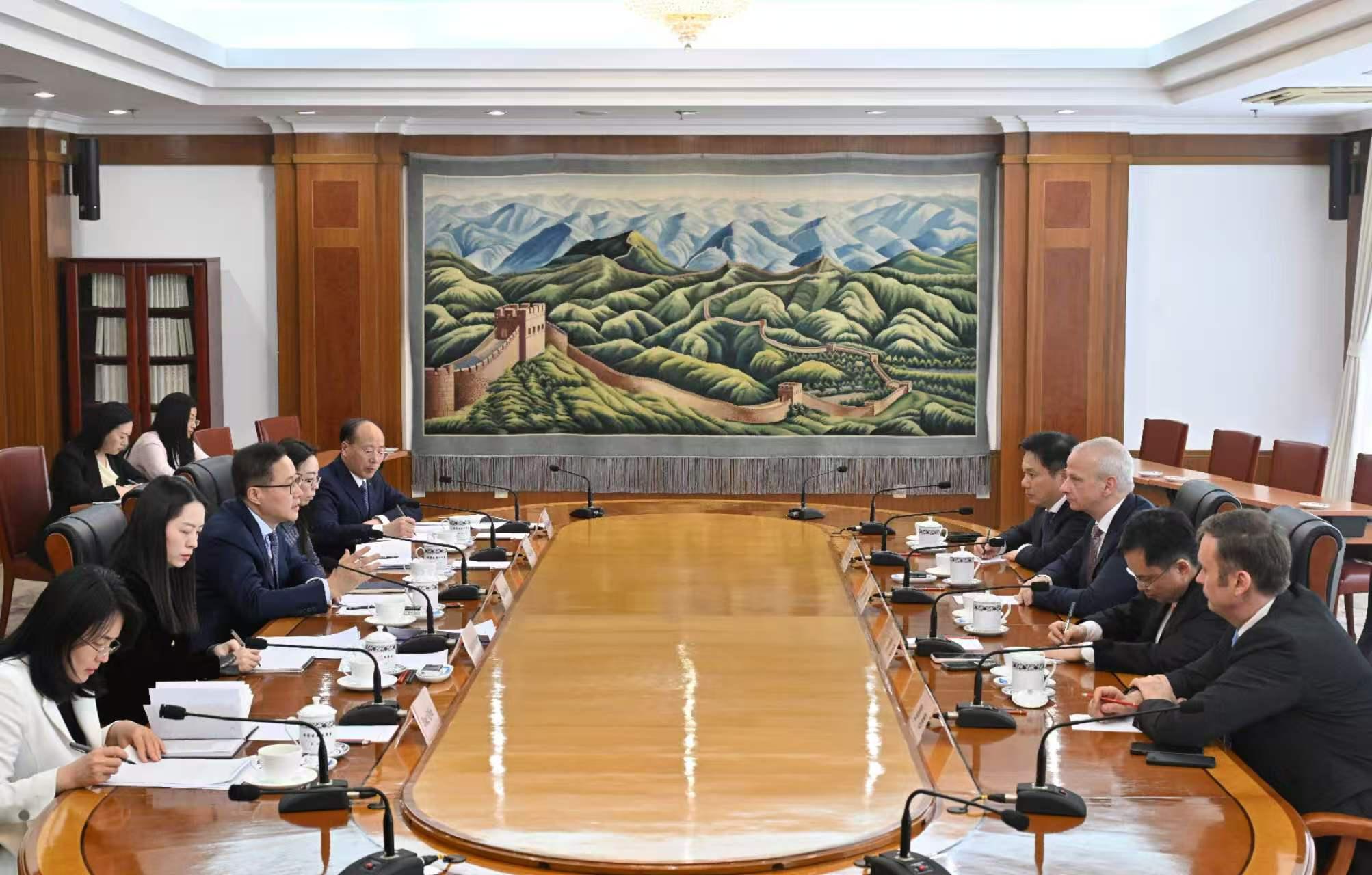
China’s top economic planner met with leadership from BASF in Beijing, signaling continued openness to foreign investment—especially in strategic industries like chemicals, materials, and advanced manufacturing. Vice Chairman Shen Zhulin of the National Development and Reform Commission (NDRC) pointed to priorities in the upcoming “15th Five-Year Plan”: green development, digital transformation, expansion of domestic demand, and high-level opening. For American and European readers, the message is clear: China is still open—but on increasingly structured, state-defined terms.
The Real Offer: Market Access Meets Strategic Alignment
Chinese officials encouraged BASF, based in Ludwigshafen, Germany, to expand investment, deepen innovation, and move up the value chain. This is less about generic investment promotion and more about strategic alignment—foreign firms are expected to support China’s push into sustainability, advanced manufacturing, and supply chain upgrading.
BASF’s response reinforces that alignment. The company reiterated long-term confidence in China and signaled continued expansion tied to green and sustainable industrial development.
BASF: Why This Meeting Carries Weight
This is not a symbolic meeting with a marginal player. BASF is the world’s largest chemical company by revenue, with deep capabilities across petrochemicals, catalysts, battery materials, coatings, and specialty chemicals. It is already heavily invested in China, including a multibillion-dollar integrated “Verbund” site in Zhanjiang designed to anchor long-term production and innovation in Asia.
That matters because BASF sits at the chemical foundation of modern industry—from EV batteries and rare earth separation reagents to semiconductors and advanced materials. When BASF commits capital and technology, it effectively strengthens the industrial base of the host country.
In practical terms: this meeting is about whether China continues to pull core industrial chemistry deeper into its domestic ecosystem—and whether Western firms remain willing participants.
Why This Matters: Chemicals Are the Hidden Backbone
Chemicals underpin nearly every strategic supply chain—batteries, rare earth processing, semiconductors, and defense materials. If BASF expands in China:
- China further consolidates its midstream and downstream dominance
- Western firms deepen operational exposure to Chinese markets
- Questions around technology diffusion and dependency intensify
This is the quiet layer of competition: not just who mines resources—but who controls the chemistry that turns them into usable products.
No Breakthrough—But a Clear Direction of Travel
No deal was announced. But the direction is unmistakable. China is reinforcing a model where:
- Foreign capital is welcome
- Participation requires alignment with national priorities
- Industrial policy shapes the operating environment
For investors, this is not noise—it is policy continuity with sharper edges.
Source Note: This item originates from Chinese government-affiliated media distributed via state-linked channels. It reflects official positioning and should be independently verified before informing investment or strategic decisions.


0 Comments
No replies yet
Loading new replies...
Moderator
Join the full discussion at the Rare Earth Exchanges Forum →