
Highlights
- Brazil ranks #1 globally in niobium production (90%) and #2 in rare earth reserves (23%), positioning itself as a critical alternative to China for strategic minerals supply chains.
- Despite extraordinary mineral wealth generating $49.7B in 2024 revenue, Brazil remains largely an upstream supplier, lacking refining, processing, and manufacturing capabilities.
- The Geological Survey of Brazil's 2026 report maps vast untapped reserves but underscores a key challenge: without investment in downstream industries, Brazil risks being resource-rich yet value-poor.
In An Overview of Critical and Strategic Minerals Potential of Brazil (2026), led by Izaac Cabral Neto and Maisa Bastos Abram of the Geological Survey of Brazil (SGB-CPRM), alongside a broad national team of geoscientists, Brazil is positioned as one of the world’s most mineral-rich nations, with strong reserves in rare earths, lithium, nickel, graphite, and especially niobium. The report compiles geological mapping, production data, and exploration programs to argue Brazil could become a cornerstone of global supply chains—yet it also reveals a critical gap: despite vast resources, Brazil remains largely an upstream supplier with limited processing and industrial scale.
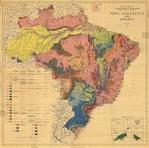
Study Methods: Mapping a Nation’s Subsurface
The report is not a single experiment but a comprehensive national synthesis. It integrates geological mapping, geochemical surveys, airborne geophysics, and mineral production data collected across decades. Programs like PlanGeo (2025–2034) and DEEP Brazil expand mapping coverage and subsurface imaging to reduce exploration risk and identify new deposits.
Importantly, Brazil uses a Geoscientific Knowledge Index (GKI) to quantify how well different regions are understood—highlighting both opportunity and uncertainty.
Key Findings: Abundance Meets Underdevelopment
Brazil’s mineral endowment is extraordinary:
- #1 globally in niobium (~90% production, ~94% reserves)
- #2 in rare earth reserves (~23% globally)
- Top-tier reserves in nickel, graphite, manganese, and lithium
The country produces 96 mineral commodities and generated ~$49.7B in mining revenue in 2024.
Yet the contradiction is clear:
- Rare earth production remains minimal despite large reserves
- Lithium, graphite, and nickel are growing—but still largely export-oriented raw materials
- Brazil imports key inputs like fertilizers, exposing midstream weakness
Implications: A Strategic Alternative to China—If Built Correctly
For global markets, Brazil represents one of the most credible “ex-China” supply options for critical minerals. Its clean energy matrix (≈50% renewable) adds ESG appeal.
But the report implicitly underscores a deeper issue: geology alone does not equal supply chain power.
Without investment in:
- Separation and refining
- Chemical processing
- Magnet and battery manufacturing
Brazil risks repeating the familiar pattern—resource-rich, value-poor.
Limitations & Contested Ground
The report is government-led and inherently promotional in tone. It emphasizes potential more than execution risk.
Key limitations include:
- Reliance on aggregated and sometimes inconsistent global datasets
- Limited economic analysis (cost curves, project viability)
- Understated challenges in permitting, infrastructure, and capital formation
Notably, discrepancies between USGS and Brazilian reserve estimates signal uncertainty in classification standards.
What Comes Next
The path forward is clear:
Brazil must move from mapping to manufacturing.
Watch for:
- Domestic refining capacity buildout
- Strategic partnerships (U.S., EU, Japan)
- Policy incentives for downstream industries
If executed, Brazil could reshape global supply chains. If not, it will remain a critical but incomplete player.
Citation: Geological Survey of Brazil (SGB-CPRM), An Overview of Critical and Strategic Minerals Potential of Brazil, 2026 Edition


0 Comments
No replies yet
Loading new replies...
Moderator
Join the full discussion at the Rare Earth Exchanges Forum →