
Highlights
- Brazil invites global investment into its critical mineral sector while requiring processing, refining, and manufacturing to remain domestic, signaling a new resource nationalism model.
- Serra Verde's 2024 oxide production and MagBras R&D program mark Brazil's entry into rare earth supply chains, positioning it as a Western Hemisphere alternative to China.
- Despite policy ambition, Brazil faces challenges in bureaucracy, energy costs, and technical capacity that may delay midstream rare earth operations until 2028 or beyond.
Richard Mann’s Rio Times report captures a historic pivot: Brazil is inviting global investors into its rare earth and critical mineral sector—but under distinctly Brazilian terms. The message from Brasília is unmistakable: capital welcome, control domestic. Mann’s portrayal of this new assertiveness aligns with official statements from the National Council for Mineral Policy, which reconvened in October to define a 2050 roadmap for “strategic minerals.” The emphasis on in-country value capture—processing, refining, magnet manufacturing—is factual and reflects a broader industrial shift long overdue in Latin America’s extractive history.
What Holds True—and Why It Matters
The article correctly spotlights Serra Verde’s oxide production in Goiás, which indeed began commercial operations in 2024, marking Brazil’s first meaningful entry into the global rare earth supply chain. It also accurately notes that ionic-clay prospects in Minas Gerais are advancing—these deposits, similar to those in southern China, are lower-cost and environmentally friendlier to process. The MagBras program and its R$73 million funding for magnet R&D also check out, representing a modest but symbolically important “mine-to-magnet” commitment.
Mann’s larger point—that Brazil can serve as the Western Hemisphere’s second pillar in a dangerously concentrated supply chain—is both compelling and well-grounded. The United States and Europe are indeed seeking partners beyond China, and Brazil, with its niobium track record and industrial capacity, is a natural candidate.
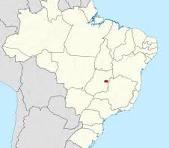
Brasilia—Will rules outpace readiness?
Where Optimism Meets Oversimplification
Still, the narrative veers toward boosterism. The “clear condition” that processing stay local oversimplifies the challenge: Brazil’s bureaucracy, energy costs, and licensing delays have historically choked midstream ambitions. Unlike niobium, rare earth refining requires not just policy but specialized chemical expertise, environmental oversight, and off-take certainty—none of which yet exist at scale.
The claim that Brazil could become a “rule-setting supplier” within 24 months stretches credibility. Permitting, financing, and technology transfers move at geological speed; even with political will, midstream plant commissioning before 2028 would be ambitious.
Although Rare Earth Exchanges (REEx) has chronicled state enthusiasm for investment and partnership, from Minas Gerais to Rocha da Rocha critical mineral and rare earth province.
The Investor’s Lens
For investors, the key takeaway is structural, not speculative. Brasília’s approach—anchoring value chains locally—signals a new model of resource nationalism that rewards partnership over extraction. The opportunity is real, but it demands patience, technical know-how, and policy stability. Brazil’s rare earth awakening could reshape hemispheric supply resilience—if Brasília’s rules don’t outpace its readiness.
Source: Richard Mann, “Brazil’s Rare Earths Push: Investment Welcome, Rules Made in Brasília,” The Rio Times, October 17, 2025.
©!-- /wp:paragraph -->


0 Comments