
Highlights
- Bengaluru-based Chara Technologies secured $6M Series A funding to scale production of rare-earth-free electric motors from 20,000 to 100,000 units annually, challenging China's rare-earth magnet dominance.
- The startup's innovative switched-reluctance and flux-motor designs eliminate dependency on neodymium and dysprosium, using advanced electromagnetic engineering instead of permanent magnets.
- Success could establish India as a third-pole EV supply chain hub beyond China and the West, offering critical-mineral independence for global electric mobility markets.
In a quiet corner of Bengaluru, Chara Technologies (opens in a new tab) is daring to rewrite one of the great truisms of modern electrification: that magnets made from neodymium, dysprosium, and terbium—the very elements anchoring China’s rare-earth supremacy—are essential forhigh-performance motors. The Indian deep-tech firm just raised $6million in Series A funding, led by Arkam Ventures (opens in a new tab) with support from Exfinity, Kalaari, and IIMA Ventures, to prove otherwise.
The money according to accounts in Impact Alpha (opens in a new tab) will fund a new factory and testing center in Bengaluru, boosting output fivefold—from 20,000 to 100,000 motors per year—and expand its portfolio into lighter, higher-speed electric-motor systems that rely on clever electromagnetic design rather than permanent magnets.
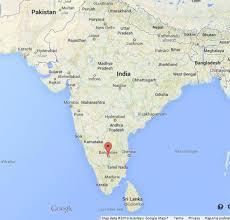
Bengaluru, a New Non-Rare Earth Magnet Hub in the Making?
What’s Real, What’s Remarkable
For once, the hype aligns with hard physics. Chara’s rare-earth-free motor architecture—built on switched-reluctance and flux-motor topologies—is a credible path toward decoupling EV and industrial supply chains from Chinese magnet exports. Rare-earth-free doesn’t mean low-tech; it means tighter control algorithms, precision electronics, and advanced lamination design replacing rare-earth torque density.
India, long an assembly-based player in the EV sector, may now field its own end-to-end drivetrain manufacturer, as investor Rahul Chandra notes, capable of supplying domestic OEMs hungry for local powertrain content under Delhi’s “Make in India” program.
The timeline, however, invites scrutiny. Scaling from 20 k to 100 k units is ambitious for an early-stage company in a materials-intensive industry. There’s no mention yet of large OEM supply agreements or export contracts—suggesting that while the engineering breakthrough is real, commercial traction remains aspirational.
Why It Matters Beyond India
Chara’s rise carries global resonance. A scalable, competitive rare-earth-free motor platform would directly challenge themagnet-based monopoly that sustains China’s strategic leverage. For Western policymakers and investors, this signals a potential third-pole supply chain—neither Beijing nor Detroit, but Bengaluru—emerging in the race for critical-mineral independence.
If Chara succeeds, it could reshape the economics of electric mobility and renewable-power generation, proving that innovation, not ore, defines the next frontier of energy technology.
©!-- /wp:paragraph -->


0 Comments
Discuss this article