
Highlights
- China is building coordinated financial infrastructure that channels credit, equity, and policy tools directly into high-priority innovation sectors through “tech finance” mechanisms.
- The 15th Five-Year Plan positions finance as an extension of industrial policy, using re-lending facilities, equity pilots, M&A financing, and specialized bonds to accelerate technology scaling.
- China's model compresses time-to-market for capital-intensive sectors, creating strategic pressure on Western systems that excel at early-stage innovation but struggle with funding scale-up.
China is tightening the linkage between capital markets and strategic technology. In a joint meeting led by the People’s Bank of China (opens in a new tab), the Ministry of Science and Technology, financial regulators, and securities authorities, senior officials outlined a coordinated push to scale “tech finance”—a system designed to channel credit, equity, and policy tools directly into high-priority innovation sectors.
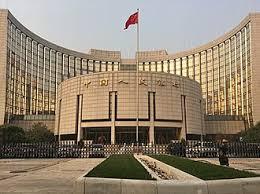
From Policy Slogan to Financial Plumbing
Officials emphasized measurable progress: expanded lending to small and mid-sized tech firms, growth in technology insurance, and rapid development of a dedicated “technology board” in bond markets. Venture capital and private equity activity are also rising, signaling deeper integration between state guidance and market-based funding.
The message seems clear enough—China is building financial infrastructure tailored to innovation, not retrofitting legacy systems.
The “15th Five-Year Plan” as a Capital Allocation Engine
The meeting positions the upcoming “15th Five-Year Plan” as a decisive phase for achieving “high-level technological self-reliance.” That translates into a more engineered financial system: targeted credit tools, equity investment pilots via financial asset managers, M&A lending, and specialized bond issuance—all directed toward strategic sectors.
This is not passive support. It is active capital steering at the national scale.
Tools of Precision—Directed Liquidity Meets Industrial Policy
Key instruments include:
- Re-lending facilities for tech innovation and equipment upgrades
- Equity investment pilots by state-linked financial institutions
- Expanded M&A financing for consolidation and scaling
- Specialized bond markets for technology firms
The aim: improve capital efficiency and ensure funding reaches technologies aligned with national priorities—AI, semiconductors, and likely rare earth processing and advanced materials.
Why This Matters for the West
While no mission-critical news is announced, the structural implications appear significant. China is refining a model where finance becomes an extension of industrial policy, reducing funding gaps that often stall Western projects between pilot and scale.
For the U.S. and allies, this raises a strategic concern: while Western systems excel at early-stage innovation, China is building a coordinated pipeline to fund, scale, and industrialize those breakthroughs faster—especially in capital-intensive sectors like rare earths and advanced manufacturing.
The Trade-Off—Efficiency vs. Distortion
There are risks. Directed capital can misallocate resources, inflate bubbles, or crowd out private decision-making. Information asymmetry and political signaling may distort true project viability. Yet if execution holds, China’s model could compress time-to-market and reinforce its dominance in midstream and downstream industrial layers.
Bottom Line
China is not just investing more—it is attempting at investing smarter, faster, and more cohesively. The battleground is shifting from innovation itself to how effectively it is financed and scaled. In that way, the U.S. has some marked advantages in its far more advanced capital markets.
Disclaimer: This report is based on information published by the Chinese government sources. As these are state-affiliated entities, the information should be independently verified.


0 Comments
No replies yet
Loading new replies...
Moderator
Join the full discussion at the Rare Earth Exchanges Forum →