
Highlights
- China's 15th Five-Year Plan emphasizes new materials and industrial scale.
- Massive overcapacity in EVs, steel, and clean-tech threatens to saturate markets and hollow out demand for upstream critical minerals.
- A surplus crisis looms as China's hybrid economic model produces far beyond consumption, risking a Marxian trap of collapsing prices, eroding profits, and potential depression despite state intervention.
- The plan's silence on rare-earth extraction and supply-chain resilience suggests China may repeat its overcapacity mistakes in critical minerals.
- Creating downstream demand risk if end-markets falter under surplus stress.
On October 28, Beijing released the “Suggestions … for the 15th Five-Year Plan for National Economic and Social Development.” The plan lays out a sweeping set of major projects: industrial innovation clusters (new energy, new materials, aerospace, low-altitude economy), deep real-economy/digital-economy integration, culture/education/housing upgrades, ecosystem restoration, and national-defense science-tech. Rare earths and critical minerals are implicitly present (in the “new materials” and “strategic emerging industries” language), yet they are not explicitly named, which matters given China’s mounting overcapacity across multiple sectors.
Table of Contents
Economic distortions have a human echo: the same systemic imbalances that glut factories now threaten to hollow out the social contract in China.
A Surplus Shadow: Overproduction Haunts China’s Growth Model
Beyond the grand slogans, the underside of China’s industrial rise is now exposed. Multiple credible analyses show that China is grappling with massive overcapacity: not just in steel or solar panels, but increasingly in clean-tech manufacturing and electric vehicles (EVs). For example:
- The think-tank MERICS reports (opens in a new tab) that China’s steel overcapacity persists and may increase, and that the passenger-vehicle industry is already showing signals of a new overcapacity wave.
- Reuters reports (opens in a new tab) that China’s EV sector is “gripped by oversupply”, with factories churning out more than domestic buyers absorb; a brutal price war is now eroding profitability.
- Analysts estimate the EV industry overcapacity at 5–10 million vehicles per year beyond what consumption can absorb. Reuters (opens in a new tab)
And of course, China’s residential—and increasingly, commercial—real estate bubbles continue to be relentlessly “managed” through an opaque shell game of refinancing, rollovers, and quiet state intervention. The Rare Earth Exchanges (REEx) network inside China remains highly attuned to this undercurrent. While we must preserve strict confidentiality regarding our channels, we can confirm that China’s upper-middle class and elites are actively seeking to move capital offshore—by any means available. Some pursue legal avenues through cross-border investment quotas or foreign-asset programs; others operate in the gray, even illicit, zones that proliferate when domestic assets lose credibility and state trust erodes.
In the meantime, the state of class polarization would have Mao Zedong rolling over in the grave. A palpable example: being poor and rural in China means far less access to state-of-the-art healthcare than in the United States. One physician/investor and REEx community member in Chengdu, on condition of anonymity, informed us that the American system, when it comes to health access, is more socialistic than China’s!
China’s Hybrid Paradox: A Machine That No Longer Knows When to Stop
China has engineered the most audacious economic experiment in modern history — a fusion of capitalism’s ambition, communism’s command, and socialism’s rhetoric. For decades, thanks to the USA opening up its markets (starting with Nixon and Kissinger), that volatile cocktail fueled a miracle: cities rising from dust, wealth multiplying at exponential speed, and a political class claiming both revolutionary virtue and market mastery.
But every model contains its breaking point. The system that once defied gravity now risks being crushed by its own scale. From a capitalist’s lens, China is producing as if demand were infinite — building factories, condos, and EVs at a pace the world cannot possibly absorb. From a Marxist’s view, the logic is even more damning: the productive forces have outstripped the relations that govern them.
The result is the oldest story in political economy, replayed on a grand digital stage — supply without buyers, ambition without restraint, and faith without feedback.
The market is whispering what the politburo refuses to hear: the boom has matured into glut, and the cost of deflation will not be measured in data points but in human lives and lost confidence. Depression times are dangerous for leaders.
In its race to be everything at once — capitalist innovator, socialist guardian, communist overseer — China may have perfected the form of modern contradiction. A state that conquers the business cycle only to become trapped inside its own endless expansion.
Why This Matters for Rare Earths & Critical Minerals
From the supply-chain vantage of rare earths and critical minerals, the overproduction problem has several corollaries:
| Chinese Overproduction Factors | Summary |
|---|---|
| Downstream demand may disappoint | If major sectors like EVs, batteries, and new energy technologies begin to slow or lose profitability (because of supply gluts and price wars), then the upstream demand for magnets, specialty alloys, and critical materials may likewise flatten or reverse. |
| Upstream policy risk rises | Overcapacity breeds pressure for consolidation, shutdowns, and state intervention. For critical minerals, this means Chinese policy might shift from “scale up at all cost” to “rationalize and optimize.” That could alter global supply-chain dynamics. |
| Export push intensifies | With domestic demand saturated, Chinese manufacturers may push excess capacity abroad—triggering trade friction, dumping accusations, and retaliatory tariffs. This is relevant for rare-earth downstream industries that are globally integrated |
| Involution” threatens innovation logic | Chinese President Xi Jinping has warned of “involution” – the phenomenon of investing ever more for ever diminishing returns. He singled out EVs, AI and computing power as sectors at risk. Financial Times (opens in a new tab) For rare-earth supply chains, the implication: the relentless drive for scale must give way to smarter, higher-value production—or risk becoming a drain rather than a driver. |
The Rare Earth Test Case: Scale Bias vs Strategic Restraint
The 15th Five-Year Plan emphasizes “new materials” and “strategic emerging industries.” On the surface, this aligns with rare-earth magnet manufacturing, downstream processing, and high-value materials. But the plan’s silence on raw-material extraction, refining bottlenecks, and supply-chain resilience is conspicuous. In a context where overcapacity is already a drag elsewhere, the risk is that China’s rare-earth strategy becomes another build-big-hope pattern—not a calibrated upgrade path. That’s a major problem with Xi’s command-and-control ethos.
For global investors and supply-chain watchers: do not assume “new materials” always equals unlimited demand for rare earths. The curve of supply > demand may bite upstream in unanticipated ways. A surge in magnet-making capacity or rare-earth refining in China may hit a wall if the end-markets (EVs, wind, aerospace) falter under surplus stress.
Provocative Thought: Will China’s Rare-Earth Revolution Become Its Next Burden?
The dialectic first identified by Karl Marx—investment drives production, production saturates markets, crisis ensues—seems to be re-emerging in China’s modern incarnation. With the 15th Five-Year Plan doubling down on scale and innovation, the danger is that rare earths get caught in the same trap: an overshoot of capacity in search of demand, particularly if downstream sectors falter. The plan may well mark a turning point—if it allows for restraint and quality over sheer scale—but its language still suggests “more, faster” rather than “smart, strategic.”
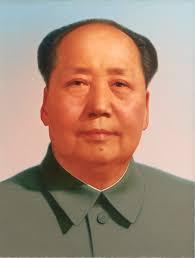
Mao looks down from above as modern China wrestles with the contradictions he once vowed to resolve — where even healthcare for the rural poor can seem far more cutthroat capitalist than America’s system.
China’s widening class divide is a bitter irony—proof that the contradictions Marx diagnosed and Mao once vowed to erase have not vanished but evolved, metastasizing within the very system built to suppress them. Today, both China and the United States wrestle with their own late-stage ailments: inequality, debt, and polarization—mirror images of two empires confronting different versions of the same decay.
So how will these mounting words—visions, doctrines, and declarations—collide or coalesce to truly transcend the challenges that define the human condition?
Caution
The 15th Plan sketches ambition more than it enforces obligation. It offers slogans, not guarantees. Data on rare earths remain opaque, and global downstream demand may shift faster than Beijing’s planners can adapt. Beneath the glossy rhetoric of innovation lies a harsher arithmetic: China’s overproduction machine is still running full tilt, churning out capacity far beyond consumption.
In the short term, that excess props up employment and GDP optics. But in the medium run, it risks creating the classic Marxian trap — a surplus crisis of capital and commodities. When supply towers over demand, prices collapse, profits evaporate, and the illusion of endless growth gives way to the specter of deflation or even depression. Factories keep producing to avoid closure, banks keep lending to avoid default, and the state keeps intervening to avoid reckoning.
The 15th Plan, for all its talk of “high-quality development,” reads as both a manifesto and a warning label. If Beijing cannot reconcile production with demand (and they’ll have to work hard to prime the demand pump globally), or ambition with balance, the next great depression may not begin in the West — but in the heart of the system that promised it could never happen again.
©!-- /wp:paragraph -->


0 Comments
Discuss this article