
Highlights
- The U.S. committed $565 million through DFC to Brazil's Serra Verde rare earth project, marking a strategic shift from rhetoric to action in securing critical mineral supply chains outside China's control.
- Serra Verde's Pela Ema operation is already producing rare earth oxides and actively unwinding Chinese offtake agreements, positioning as one of the few operational assets pivoting toward Western buyers.
- Backed by Denham Capital, Energy & Minerals Group, and Vision Blue Resources, Serra Verde targets 6,500 tonnes annually by 2027, but value realization depends on securing non-China processing pathways.
The United States has committed $565 million through the U.S. International Development Finance Corporation (DFC) (opens in a new tab) to Brazil’s Serra Verde rare earth project—one of the clearest signals yet that industrial policy is replacing rhetoric in the global race for critical minerals. The financing supports expansion of the Pela Ema operation, includes priority offtake provisions for U.S.-aligned buyers, and provides an option for Washington to take a minority equity stake . Just as important, Serra Verde has accelerated the unwind of its Chinese offtake agreements, positioning itself among the very few producing assets actively pivoting toward Western supply chains. For investors, this is not a development story—it is a producing operationbeing strategically repositioned.
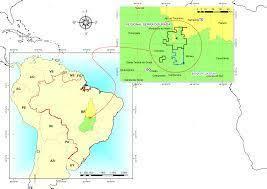
The Asset That Already Exists
Serra Verde stands apart because it is operational—something rare in this sector. Located in Minaçu, Goiás, the Pela Ema deposit began commercial production in early 2024 and remains Brazil’s only active rare earth mine. It produces a mixed rare earth carbonate containing both light and heavy elements—neodymium (Nd), praseodymium (Pr), dysprosium (Dy), and terbium (Tb)—critical inputs for permanent magnets used in EVs, wind turbines, defense systems, and advanced electronics.
Geologically, PelaEma is one of the largest known ionic clay deposits globally, hosted in weathered granitic saprolite. This enables shallow, low-intensity open-pit mining without wet tailings, lowering environmental impact and operational complexity. Production is targeted to reach ~6,500 tonnes of rare earth oxides annually by 2027, supported by a ~25-year mine life and potential expansion beyond 10,000 tonnes longer term.
Following the Capital: Who Really Controls the Supply?
The investor base underscores the project’s strategic weight. Serra Verde is backed by Denham Capital (opens in a new tab), Energy & Minerals Group (opens in a new tab), and Vision Blue (opens in a new tab) (led by former Xstrata CEO Mick Davis (opens in a new tab)). With the DFC now involved, the project moves beyond private equity into state-backed industrial policy.
This is not passive financing. It is capital structured around supply control—linking funding to offtake priority and geopolitical alignment. In practical terms, Washington is not just supporting production; it is positioning to influence where the material flows.
The Quiet Exit: Unwinding China’s Grip
The most consequential shift is Serra Verde’s move away from China. Long-term agreements with Shenghe Resources—once expected to span nearly a decade—have been shortened to expire by the end of 2026. New offtake agreements are expected to align with Western buyers or processors.
This places Serra Verde alongside MP Materials in a small but meaningful cohort attempting to rebalance away from Chinese commercial channels—a trend gaining momentum as Western capital becomes more competitive.
The Friction Beneath the Narrative
Serra Verde delivers what most rare earth projects cannot: production, scale, and exposure to heavy rare earths outside China. But key constraints remain.
Separation capacity—and therefore pricing power—still largely sits outside the United States, often in China-linked or adjacent jurisdictions. Ionic clay deposits, while easier to process, are typically lower grade and demand strict cost discipline. Meanwhile, Brazil’s openness to foreign capital comes with an inherent tension: how much strategic control will remain domestic over time?
Final Take: A Real Win—But Not the Endgame
This is what a credible rare earth “win” looks like: a producing asset, strategic capital, and shifting offtake alignment. But it is not independence—it is repositioning within a system still heavily influenced by China.
Pele Ema SWOT
Serra Verde’s Pela Ema rare earth project represents one of the few tangible supply chain developments outside China: a producing asset with a clear path to scale, but still navigating the realities of ramp-up and downstream dependence. The operation began commercial production in 2024 and is targeting a two-trajectory approach—first stabilizing at ~5,000 tonnes per annum, then expanding to ~6,500 tpa of total rare earth oxides by the end of 2027, with optional Phase II upside later in the decade.
Its strengths are clear: it produces magnet-critical elements (Nd, Pr, Dy, Tb), benefits from ionic clay geology that simplifies extraction, and is backed by strategic capital, including a $565M financing package from the U.S. government with equity optionality. The project also benefits from long-life resource potential, relatively favorable environmental characteristics (no wet tailings), and growing geopolitical relevance as Western supply chains seek alternatives to China.
However, investors should focus equally on the constraints. Pela Ema’s product is a mixed rare earth carbonate (MREC), meaning value capture still depends on downstream separation, where China and adjacent jurisdictions dominate. The project is not yet at full run-rate, and ramp execution risk remains real.
Environmental and social compliance obligations flagged in DFC-linked diligence, as well as local land and permitting complexities, introduce ongoing operational risk.
Strategically, the unwind of Chinese offtake agreements creates pricing and partnership upside, but also leaves commercial contracts in flux. The core takeaway: Serra Verde is a rare example of execution in a sector full of promises—but its ultimate value will be determined not by production alone, but by its ability to secure non-China processing pathways and deliver stable output at scale by 2027.
In rare earths, the scoreboard is simple in one way at least: not who announces, but who produces, processes, and ultimately controls the flow of material.
Investor Profile
| Firm | Summary & History | Focus & Strategy | Key Leadership | Capital/AUM | REEx Insight |
|---|---|---|---|---|---|
| Denham Capital | Founded in 2004, global energy transition investment firm with deep roots in natural resources and infrastructure. Early backer of Serra Verde (since ~2010), shepherding project from exploration to production. | Private equity, infrastructure, and credit across mining, energy, and sustainable infrastructure. Strong focus on critical minerals tied to decarbonization. | Stuart Porter (CEO); Carl Tricoli (Founder, mining lead) | ~$12B+ capital raised since inception | Anchor investor and control position. Denham is the long-cycle builder—critical in moving Serra Verde from concept to producing asset. Signals institutional patience and execution credibility. |
| Energy & Minerals Group (EMG) | U.S.-based private investment firm focused on large-scale energy and mining assets. Joined Serra Verde in 2023 alongside Vision Blue. | Targets $150M–$1B equity investments in energy and minerals, focusing on hard assets essential to global industrial systems. | John Raymond (Co-Founder & CEO) | ~$13B regulatory AUM (as of 2022) | Scale capital and asset discipline. EMG brings large-ticket financing capability and preference for de-risked, near-production assets—validating Serra Verde’s maturity. |
| Vision Blue Resources | Founded in 2020 by Sir Mick Davis (former Xstrata CEO) to capitalize on energy transition metals. Entered Serra Verde as strategic growth investor | Focus on battery and critical minerals supply chains; invests in scalable, near-term production assets with downstream relevance. | Sir Mick Davis (Founder & CEO) – Former CEO of Xstrata, one of the most successful mining executives of the past two decades Senior team includes former executives from major mining, finance, and industrial firms (e.g., BHP, Anglo American, Glencore ecosystem equivalents) | $650 million raised | While smaller than mega-funds, Vision Blue is highly concentrated capital, deployed selectively into strategic assets (e.g., Serra Verde, graphite, vanadium, silicon metal). |


0 Comments
No replies yet
Loading new replies...
Moderator
Join the full discussion at the Rare Earth Exchanges Forum →