
Highlights
- China's engineering state applies the same centralized infrastructure model to rare earth supply chains, controlling 80% of processing and 90% of magnet output globally.
- Industrial overcapacity in ghost cities and bridges served a strategic purpose: keeping rare earth processors and smelters running to maintain material dominance and price leverage.
- PBS overlooks how China's engineering ethos fuses physical infrastructure with rare earth policy, using critical minerals as both industrial input and geopolitical instrument.
Steel, concrete and centralized control, what is now China. PBS paints a vivid picture (opens in a new tab) of modern China as a nation of engineers—bridge builders, railway dreamers, and social experimenters. The Guizhou super-bridges and high-speed rail lines symbolize China’s industrial confidence. Yet behind the shimmering infrastructure lies a deeper subtext: these same engineering instincts extend to resource command, especially rare earths. China’s “engineering state” doesn’t just construct cities; it constructs supply chains. And those chains—spanning from Baotou’s vast rare earth mines to magnet foundries in Ningbo—remain the lifeblood of global electrification.
Table of Contents
Infrastructure and Extraction: The Same Blueprint
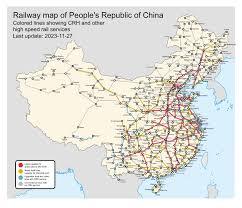
PBS rightly celebrates China’s pace. In 40 years, Beijing built two “Americas’ worth” of highways and a high-speed rail network twenty times Japan’s. But missing from this glossy narrative is that the same state-directed infrastructure model governs critical minerals. The very rare earths power China’s bridges, trains, and turbines its companies dominate—over 80% of processing, 90% of magnet output. What PBS calls “engineering ambition” is also strategic vertical integration. Every superstructure doubles as proof of rare earth self-sufficiency.
China High Speed Rail Map
Debt, Ghost Cities—and the Hidden Subsidy
The broadcast acknowledges the debt trap of overbuilding but misses the geopolitical subsidy beneath it. China’s ghost cities and “bridges to nowhere” were not purely misallocations; they kept smelters, steelworks, and rare earth processors running. For Beijing, industrial overcapacity is a feature, not a bug—it ensures command over materials the West can’t live without. In rare earths, that surplus translates into price leverage and diplomatic capital.
PBS’s Blind Spot: Engineering as Economic Statecraft
PBS’s framing of “engineers versus lawyers” flatters both nations but oversimplifies reality. America’s “lawyerly” paralysis isn’t just red tape—it’s a lack of coordinated industrial policy. Meanwhile, China’s engineering ethos fuses physical infrastructure with policy scaffolding, using rare earths as both input and instrument. The segment lightly touches on “energy security” but skips the crux: China’s pivot to self-sufficiency includes stockpiling and tightening rare earth controls, the true skeleton of its modern “engineering miracle.”
REEx Reflection
REEx reviews PBS’s NewsHour segment as a subtle reflection on China’s engineering-driven governance—but reveals the missing dimension: how this ethos extends to rare earth dominance. It explains that what appears as infrastructure grandeur is also a blueprint for material control, industrial endurance, and strategic leverage in U.S.-China competition.
Citation: PBS NewsHour (Ali Rogan with Dan Wang, Hoover Institution, October 2025).
©!-- /wp:paragraph -->


0 Comments
Discuss this article