
Highlights
- China's rare earth sector is transitioning from scale expansion to higher-value applications, advanced materials, and downstream technological leadership rather than raw material dominance.
- The Chinese Society of Rare Earths is integrating AI and data systems into materials R&D, signaling a shift toward smarter competition beyond traditional mining and processing.
- China is building institutional infrastructure through professional societies that align research, industry, and policy—a strategic approach Western stakeholders should monitor closely.
One of China’s leading rare earth scientific societies is signaling where the industry may be headed next—and Western stakeholders should pay attention. At a March 20 meeting in Beijing, the Chinese Society of Rare Earths reviewed its 2025 work, approved its own “15th Five-Year” development plan, and outlined priorities for 2026. The message was clear: China’s rare earth sector is moving beyond simple expansion toward a model centered on higher-value applications, stronger technical capability, and tighter coordination across science, industry, and policy.
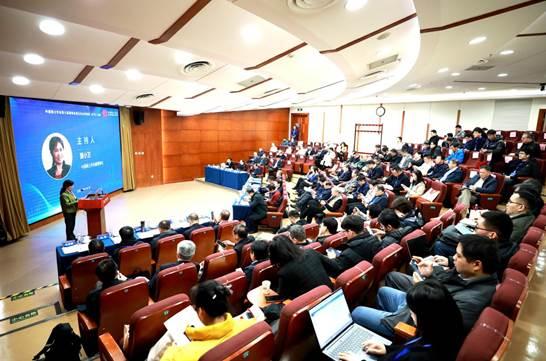
The gathering drew more than 100 directors and representatives from across China, including several members of the Chinese Academy of Engineering. That alone makes it notable. This was not just an academic meeting. It was a window into how China’s rare earth establishment is organizing for the next phase.
From Volume to Value
The most important signal was strategic. Society leaders described China’s rare earth industry as entering a critical transition period—shifting from scale expansion toward quality, efficiency, and technology leadership.
The priorities are familiar but important: advancing high-end applications, strengthening core technologies, promoting smarter and greener industrial development, and converting China’s resource base into lasting technological and industrial advantage.
In plain terms, China wants to capture more value downstream—in advanced materials, magnets, and other higher-margin applications—rather than relying solely on raw-material dominance.
Science, Data, and AI Enter the Frame
A notable element of the meeting was a presentation on the coordination of materials R&D data, production data, and artificial intelligence. That suggests China’s rare earth ecosystem is increasingly thinking in systems terms: not just more output, but faster learning, tighter process control, and more efficient innovation.
For Western readers, this is worth noting. Competition in rare earths is no longer only about mines and processing plants. It is also about data, modeling, and the ability to accelerate materials discovery and industrial optimization.
Building the Institutional Base
The Society also approved its 2025 annual work report, financial report, and new institutional members, including seven new group members, such as the Beijing Aeronautical Materials Research Institute under AECC. It highlighted work in academic exchange, scientific innovation, strategic consulting, think tank development, talent cultivation, science communication, and media platform building.
That matters because in China, professional societies often do more than convene experts. They can help align research priorities, industrial agendas, and policy thinking.
Why the West Should Care
There was no headline technological breakthrough announced here. The significance is organizational and strategic. China is continuing to build not only industrial capacity, but also the intellectual and institutional architecture around rare earths.
For theU.S. and its allies, the lesson is straightforward: the contest is not just over supply. It is also over who shapes the research agenda, develops the technical talent, and translates scientific coordination into industrial advantage.
Source Disclaimer: This report is based on information published by the Chinese Society of Rare Earths, a state-aligned professional organization. The information is directionally useful, but should be independently verified.


0 Comments
No replies yet
Loading new replies...
Moderator
Join the full discussion at the Rare Earth Exchanges Forum →