
Highlights
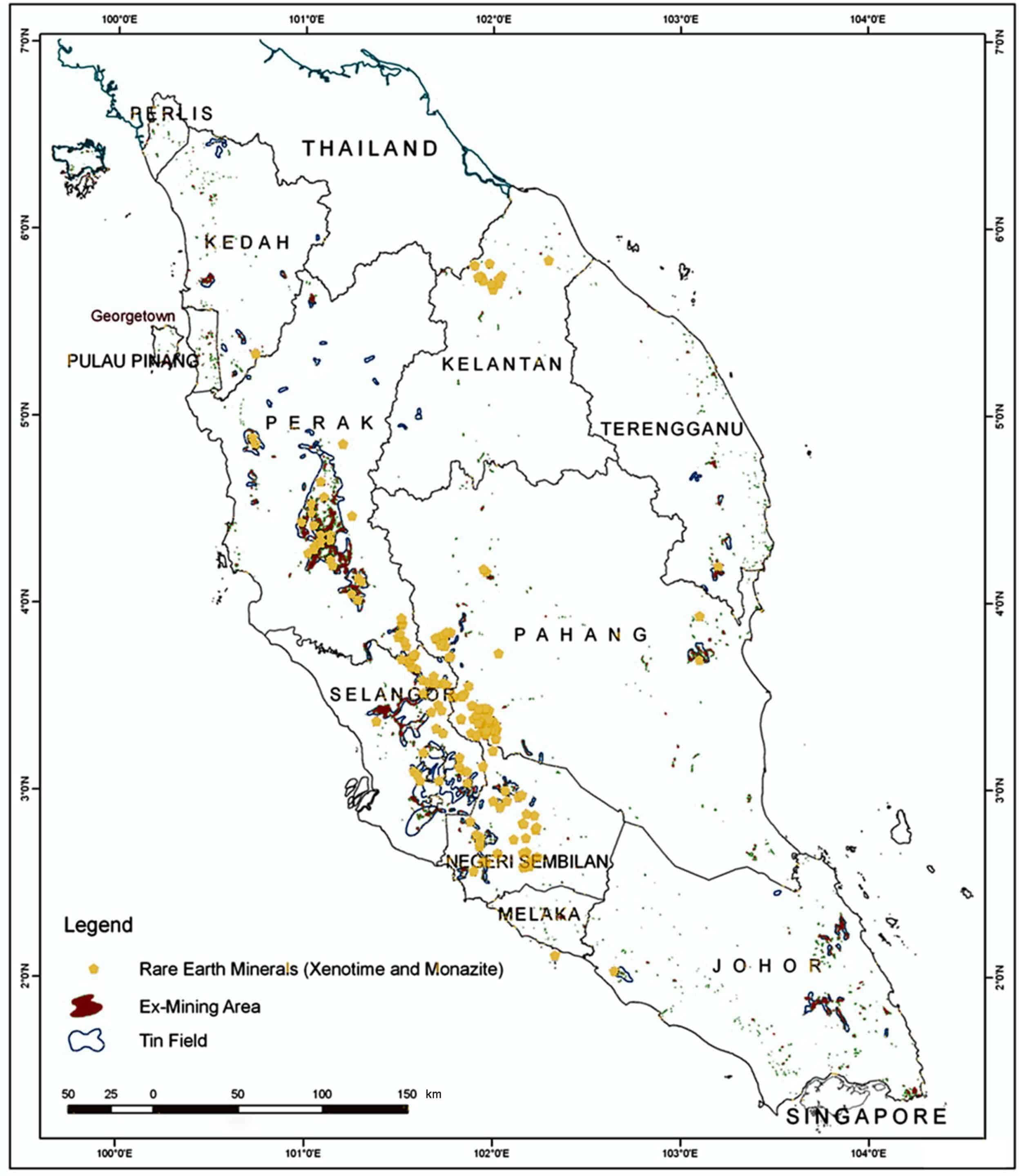
- A comprehensive Geoscience Frontiers study by Dr. Syed Muhammad Ibad maps Malaysia's untapped rare earth deposits in granites, ion-adsorption clays, and coastal placers across Perak, Pahang, and Johor.
- Malaysia maintains an export ban on raw rare earths while pursuing dual partnerships with the US Critical Minerals initiative and Chinese refining technology providers through Khazanah Nasional.
- Research identifies hydrometallurgical expertise and environmental safeguards as critical gaps preventing Malaysia from evolving beyond a raw material supplier to become Southeast Asia's refining powerhouse.
A landmark study published in Geoscience Frontiers (Vol. 15, Issue 6, November 2024) by Dr. Syed Muhammad Ibad (opens in a new tab) of Universiti Teknologi PETRONAS (UTP) (opens in a new tab) and collaborators from Malaysia, India, and Ethiopia delivers the most comprehensive geological and hydrometallurgical assessment yet of Malaysia’s rare earth element (REE) potential. The research—spanning mineralogy, chemistry, and recovery technologies—reveals a country rich in secondary and alternative REE deposits, poised to become a regional powerhouse if science and policy align.
Table of Contents

Their conclusion, published last November, is both encouraging and cautionary: Malaysia holds significant concentrations of rare earths in granites, ion-adsorption clays, shales, and coastal placers, but lacks the large carbonatite reserves found in China or Australia. With targeted technology transfer and rigorous environmental safeguards, Malaysia could evolve into a refining and processing hub rather than remaining a raw-material supplier.
Dr. Syed Muhammad Ibad, Lead and Corresponding Author
Methods and Scope
The authors synthesized over 100 prior geological studies and data from the Jabatan Mineral & Geosains (opens in a new tab) (JMG), Academy of Sciences Malaysia (opens in a new tab) (ASM), and Lynas Malaysia (opens in a new tab)—the world’s largest rare earth refinery outside China. They classified Malaysia’s REE occurrences into seven major deposit types: alkaline igneous rocks, pegmatites, placer monazite-xenotime, marine and river sediments, ion-adsorption clays, and shale or coal formations.
The paper also evaluated hydrometallurgical recovery methods—acid and alkaline leaching, solvent extraction, and ion exchange—adaptable for Malaysia’s midstream processing ambitions.
Key Findings: Promise and Dependence
Malaysia’s granites and ion-adsorption clays, particularly in Perak, Pahang, and Johor, show REE concentrations rivaling those of Southern China’s deposits. Yet most of these sites remain under-explored, lacking industrial-scale extraction.
The study reaffirms China’s overwhelming dominance: over 90% of global rare earth refining still occurs there, backed by unmatched expertise in separation and environmental management. Malaysia’s refining sector—anchored by Lynas in Kuantan—relies on Australian ore, illustrating a persistent technology dependency gap.
Hydrometallurgical proficiency, the study concludes, remains the missing link between Malaysia’s exploration potential and industrial maturity.
Policy Context: Science Meets Strategy
The paper’s publication coincides with a moment of geopolitical realignment. On October 26, 2025, the White House announced a new U.S.–Malaysia Critical Minerals Partnership, aimed at building transparent, resilient supply chains. And as Rare Earth Exchanges reminded this evening, in parliament, Trade Minister Tengku Zafrul Aziz reaffirmed that Malaysia’s ban on raw rare earth exports remains intact. The policy: No unprocessed ores or concentrates will leave the country—Kuala Lumpur intends to “add value before export” and attract partners to invest in domestic refining and manufacturing.
At the same time, Malaysia’s sovereign wealth fund, Khazanah Nasional (opens in a new tab), is reportedly in discussions with Chinese technology providers to establish a joint rare earth refinery. Such a collaboration could accelerate technology transfer, but risks deepening strategic dependence on Beijing’s know-how.
Implications and Limitations
The study validates Malaysia’s geological potential while reinforcing its industrial strategy: the country’s comparative advantage lies in midstream and downstream manufacturing—refining oxides, alloying metals, and fabricating magnets.
Still, challenges persist:
- Data Gaps: Malaysia lacks a unified national inventory of REE reserves.
- Environmental Risk: Ion-adsorption mining can severely impact soils and waterways if not tightly regulated.
- Economic Viability: Smaller, dispersed deposits may struggle to attract sustained investment.
- Geopolitical Balancing: Engaging both the U.S. and China in the same strategic sector demands diplomatic dexterity.
A Dual-Track Future
If Malaysia integrates its universities, investors, and government agencies, it could build a vertically integrated REE ecosystem—from mapping to magnets. Success will depend on transparent governance, environmental diligence, and equitable technology-sharing.
As Rare Earth Exchanges reviewed this evening, Malaysia’s export ban on raw rare earths remains the cornerstone of its policy, ensuring domestic value creation. Whether the nation leans toward U.S. strategic alignment or leverages Chinese expertise, Malaysia’s next moves could define Southeast Asia’s role in the global clean-tech mineral economy—as both a bridge and a buffer between competing powers.
Citation: Syed Muhammad Ibad et al., “The Upstream Rare Earth Resources of Malaysia: Insight into Geology, Geochemistry, and Hydrometallurgical Approaches,” Geoscience Frontiers, Vol. 15, Issue 6, November 2024.
DOI: 10.1016/j.gsf.2024.101899 (opens in a new tab)


0 Comments
No replies yet
Loading new replies...
Moderator
Join the full discussion at the Rare Earth Exchanges Forum →