
Highlights
- India's Geological Survey launched 458 mineral exploration projects in 2025-26, including 230 for critical minerals and 92 for rare earths, marking a 30% increase in urgency to secure supply chains.
- Despite exploration momentum, India remains 85-90% dependent on China-controlled midstream processing and lacks clarity on timelines, economic viability, and refining capacity needed for supply chain independence.
- India's push represents strategic catch-up, not disruption—exploration success doesn't equal production capability, and the real competitive advantage lies in processing and conversion, not just mineral discovery.
India’s Geological Survey (opens in a new tab) has sharply increased exploration for critical minerals and rare earth elements, signaling urgency—but not yet capability. The move reflects rising geopolitical pressure to secure supply chains, yet major gaps remain in processing, refining, and commercialization.
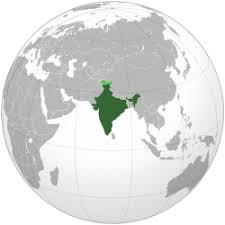
The Hook: A Race Beneath the Surface
While headlines fixate on tariffs and warships, a quieter contest is unfolding underground. As reported in The Hindu (opens in a new tab), India has launched a surge in mineral exploration—458 projects in 2025–26, including 230 focused on critical minerals and 92 on rare earths—a notable escalation in ambition. The question is not whether India is moving—but whether it is moving fast enough.
Reading the Signal: What’s Real
The data is credible and consistent with global trends:
- 30% increase in critical mineral projects signals policy urgency
- Target of ~300 critical mineral projects next cycle reflects scaling intent
- Focus on rare earths (125–150 future projects) aligns with defense, EV, and energy transition demand
This places India firmly in the Great Powers Era 2.0 playbook: nations scrambling to secure upstream resources as supply chains become instruments of statecraft.
But here is the critical distinction: Exploration is not production. A reminder — India, the globe’s most populous nation and now the fourth-largest economy by some measures, is also the world’s largest democracy and the second-largest English-speaking nation.
India is still heavily dependent on China-controlled midstream processing, where ~85–90% of rare-earth separation occurs.
Beneath the Headlines: What’s Missing
The article presents momentum—but omits structural constraints:
- No discussion of processing, refining, or magnet manufacturing capacity
- No clarity on timelines from discovery to production (often 7–15 years)
- No mention of economic viability or grade quality of deposits
This creates a subtle but important distortion: exploration success ≠ supply chain independence.
The REEx Lens: Strategic Catch-Up, Not Breakthrough
India’s push is best understood as strategic catch-up, not disruption.
In contrast to China’s $1.5T global capital pre-positioning, India is still:
- Building its resource base (upstream)
- Lacking midstream control (the real chokepoint)
- Dependent on external partners for technology and processing
Why It Matters
For investors: Follow exploration → but bet on processing.
The winners in the Great Powers Era 2.0 will not be those who find minerals, but those who control the conversion of those minerals into usable materials.
India has entered the race. But the finish line is still far ahead.


0 Comments
No replies yet
Loading new replies...
Moderator
Join the full discussion at the Rare Earth Exchanges Forum →