
Highlights
- The EU established a "special communication channel" with China to fast-track 2,000 rare earth export applications, highlighting Europe's supply chain dependence rather than solving it.
- China controls 85-90% of global rare earth processing capacity, transforming what Brussels calls "dialogue" into a toll gate where Europe negotiates access permit by permit.
- Despite EU diversification efforts with Lynas, Arafura, and REEtec, the gap between political rhetoric and material reality reveals dependence rebranded as diplomacy.
How about a new “special channel” through old chains? The European Union has opened what it calls a “special communication channel” with Beijing to keep therare earth spigot open. According to EU Trade Commissioner Maros Šefčovič, the system allows European firms to fast-track roughly 2,000 export applications caught in China’s licensing bureaucracy—half still pending. On the surface, this looks like practical diplomacy: a lifeline for Europe’s magnet, EV, and wind-turbine industries after Beijing’s export controls rattled global supply chains earlier this year.
Table of Contents
But beneath the technocratic phrasing published in TRT World (opens in a new tab) lies an uncomfortable truth: Europe is negotiating access to its own future one permit at a time.
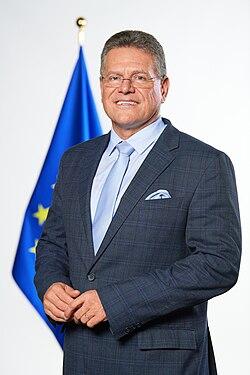
Commissioner Maros Šefčovič, Line Up for your rare earth elements
The Illusion of Partnership
China Daily and state-linked outlets will frame this as “mutual cooperation.” Yet what it really signals is Beijing’s ascendant leverage. China remains the sole producer with the processing muscle and refining depth to supply the world’s permanent-magnet market. The “channel” is not a bridge—it’s a toll gate. Europe may call it dialogue; Beijing knows it’s tribute in another form.
Šefčovič’s diplomatic understatement—that delays could have “a very negative impact on manufacturing”—masks the vulnerability of entire European industries. The EU’s fallback options—Estonian magnet plants, scattered pilot mines—are progressing but nowhere near scale.
Reality Check: Cooperation by Necessity
To Brussels’ credit, it’s also building new supply lines: Lynas in Australia, Arafura’s NdPr project, and Norway’s REEtec are all on the European Commission’s diversification list. Still, China controls about 85–90 percent of global processing capacity, and no “special channel” changes that arithmetic.
What we’re witnessing is dependence rebranded as diplomacy—a polite queue outside the same gate. The tone from Brussels is pragmatic; the tone from Beijing, quietly triumphant.
Summary
This analysis dissects the EU’s newly announced “special channel” for rare earth exports with China, exposing its strategic subtext: a symptom of Europe’s enduring dependency rather than a solution. The piece highlights the gap between political theater and material reality in global magnet supply chains—insight critical for investors tracking European industrial autonomy and Chinese resource statecraft.
©!-- /wp:paragraph -->


0 Comments