
Highlights
- Greenland's Tanbreez Project could become one of the world's ten largest rare earth deposits, positioning the Arctic island at the center of Western efforts to break China's mineral dominance.
- Despite vast potential, Greenland faces severe logistical hurdles including only two active mines, no connecting roads, permafrost terrain, and reliance on Danish subsidies and fishing economy.
- Large-scale rare earth extraction in Greenland remains unlikely before the 2030s due to environmental concerns, labor shortages, financing challenges, and extreme Arctic operating costs.
As the West races to unshackle itself from Beijing’s near-total command of rare earths, Greenland rises like a siren from the ice—a glacial expanse shimmering with promise and peril. Its mountains, carved from billion-year-old rock, are said to hold the metallic heartbeat of modern civilization: neodymium for turbines, terbium for screens, lanthanum for jet engines. It is both myth and frontier—half geology, half geopolitics. And who could forget the moment of audacity when President Trump, fresh in power, mused that America might simply buy it? What sounded like bluster now reads as premonition: the Arctic’s mineral kingdom, once beyond reach, is fast becoming the new equator of global power.
Table of Contents
But beneath the Arctic light lies a harder, more jagged truth.
Greenland’s terrain is as unforgiving as its promise is vast. With only two active mines, no connecting roads, and an economy reliant on fishing and Danish subsidies, the island is a logistical nightmare wrapped in permafrost. Infrastructure, environmental permitting, and social license remain enormous hurdles. Yet global urgency—especially after China’s 2025 export controls—has transformed Greenland’s frozen soil into the latest theater of the rare earth cold war.
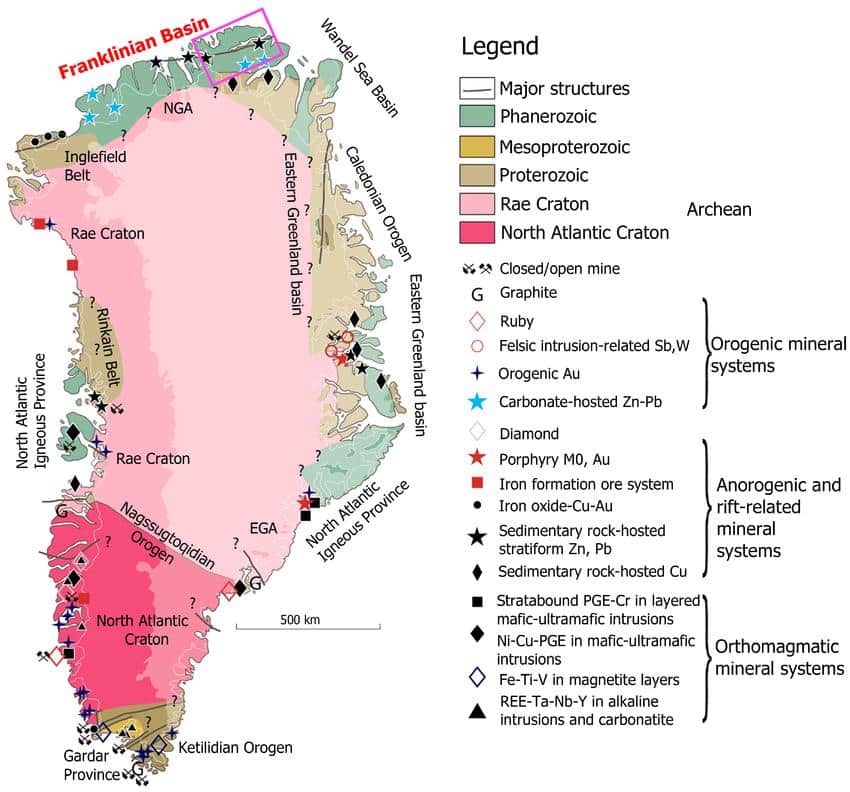
Between the Ice and the Ironies
At the center is the Tanbreez Project, a sprawling deposit that could rank among the world’s ten largest. Australian magnate Tony Sage boasts “ore for thousands of years,” a line part optimism, part salesmanship. Veteran geologists agree the deposit is rich, but financing and feasibility are far from assured. Arctic drilling costs millions; every barrel of diesel, every screw, must be flown or shipped in.
Meanwhile, Greenland’s leaders walk a tightrope—eager for investment, wary of losing sovereignty. Trump’s past remarks about “buying Greenland” are remembered less as humor than as prophecy: whoever secures Greenland’s minerals, secures a piece of tomorrow’s industrial base.
The Real Temperature Reading
Greenland indeed has immense rare-earth potential, and Western governments—from Washington to Brussels—are actively funding feasibility studies and Ex-Im loans. Yet speculation via sources such as BBC (opens in a new tab) about a rapid mining boom is premature. Environmental pushback, labor shortages, and the region’s fragile infrastructure make large-scale extraction unlikely before the 2030s. Investors must keep this perspective in mind.
Still, tone matters. Greenland is now being spoken of not as a frozen wilderness, but as a geopolitical pressure valve—a place where Western autonomy in the rare earth chain might someday thaw.
©!-- /wp:paragraph -->


0 Comments
Discuss this article