
Highlights
- Japan and the U.S. are launching a joint deep-sea mining demonstration in January 2026.
- The initiative aims to extract rare earth-rich sediment from 6,000 meters below the ocean near Minamitorishima Island.
- The project seeks to counter China's near-monopoly on rare earth refining.
- Surveys indicate that abyssal clays contain extremely high concentrations of critical elements like neodymium, dysprosium, and terbium.
- The estimated potential yield is tens of millions of tons, essential for electric vehicles (EVs), wind turbines, and defense systems.
- Despite its political significance, the commercial viability remains unproven due to enormous engineering, environmental, and regulatory challenges.
- This initiative represents a long-term strategic vision rather than an immediate supply solution.
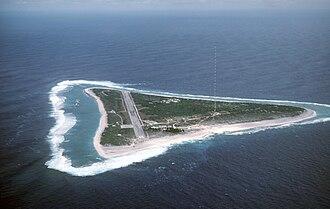
Could this be a new critical mineral and rare earth strategic frontier---the rich deposits underneath the ocean? Japan and the United States are teaming up to mine rare earth–rich mud near Minamitorishima Island (opens in a new tab), a remote Pacific outpost about 1,950 km southeast of Tokyo. The joint venture—announced by Prime Minister Sanae Takaichi—signals a new phase in allied cooperation: tapping seabed mineral deposits to counter China’s near-monopoly on rare earth refining and separation.
Table of Contents
The plan begins with a demonstration test in January 2026, retrieving sediment from 6,000 meters deep. Surveys indicate these abyssal clays are densely loaded with key rare earth elements (REEs), including neodymium, dysprosium, and terbium—vital inputs for electric vehicles, wind turbines, and precision-guided defense systems.
What’s Real and What’s Reach
The Japan Times report, citing Bloomberg, reflects genuine government intent backed by earlier Japanese surveys from the University of Tokyo and JAMSTEC. Those studies found extremely high REE concentrations in this region—potentially tens of millions of tons of rare-earth oxides.
However, the engineering and environmental hurdles remain enormous. Deep-sea mining at 6,000 meters requires next-generation robotics, extreme-pressure handling, and complex permitting frameworks under both Japanese and international maritime law.
Commercial viability is unproven; energy costs and environmental risk could outweigh the immediate value of extraction. While political momentum is real, commercial deployment is speculative until technologies mature and international rules evolve.
Why It Matters for the Global Supply Chain
For the rare earth sector, this initiative underscores a strategic truth: Japan and the U.S. are no longer waiting for terrestrial diversification alone. By exploring subsea resources, Tokyo and Washington are testing a frontier that could, in time, rival China’s dominance in refining and separation.
If successful, Minamitorishima’s resource base could complement projects like Arafura’s Nolans and Energy Fuels’ White Mesa, signaling a distributed, multi-domain supply strategy—from desert to deep ocean. But such a state is years away, and in the meantime, refining rare earth elements continues to be the world’s number one challenge---the Chinese bottleneck.
Thus investors should temper enthusiasm with realism: the ocean floor is not a mine yet—it’s an experiment.
The Bottom Line
Japan’s deep-sea mining test near Minamitorishima is a bold geopolitical and technological gambit—symbolically potent, scientifically intriguing, but commercially distant. For now, it represents vision more than volume, an early chess move in a long strategic game over rare earth independence.
© 2025 Rare Earth Exchanges™ – Accelerating Transparency, Accuracy, and Insight Across the Rare Earth & Critical Minerals Supply Chain.


0 Comments