
Highlights
- Lindian Resources reaffirms community-driven development at Kangankunde, one of Africa's largest undeveloped carbonatite-hosted rare earth deposits, engaging local stakeholders in Balaka.
- The Kangankunde rare earth project ranks in the global Top 10 Tier-1 light rare earth assets with 260Mt at 2.2% REO, featuring high NdPr concentrations essential for EV motors and wind turbines.
- Malawi's Kangankunde represents a scalable, ESG-compliant model for African critical minerals, aligned with U.S., EU, and Japan diversification strategies away from China-dominated supply chains.
Lindian Resources (opens in a new tab)(ASX: LIN) has reaffirmed its social and environmental commitments as itprepares to advance the Kangankunde rare earth project (opens in a new tab)—one of Africa’s largest undeveloped carbonatite-hosted deposits. At a recent stakeholder dinner in Balaka, attended by district officials and civil society leaders, the company emphasized its “community-driven development” ethos. Executive Director Daniel Britz (opens in a new tab) underscored that Lindian’s values—safety, respect, and sustainability—guide every operational decision, from exploration to production planning.
Table of Contents
Kangankunde rare earth project
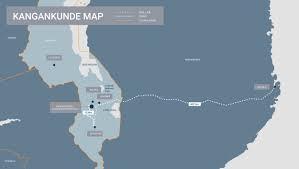
A Giant in the Making
According to the Rare Earth Exchanges (REEx) global rankings, Lindian’s Kangankunde project sits firmly in the Top 10 Tier-1 light-rare-earth assets worldwide, boasting an estimated resource exceeding 260 Mt at 2.2 % REO, with a heavy concentration of NdPr oxides—critical for permanent magnets used in EV motors and wind turbines. The project’s geological advantage lies in its near-surface mineralization, favorable metallurgy, and low thorium levels, which collectively promise a simpler processing pathway than many global peers.
Why Malawi Matters
In the emerging post-China diversification race, Malawi represents more than a mining frontier—it’s a test case for how African nations can anchor equitable, ESG-compliant rare earth production. Kangankunde’s proximity to road, power, and port infrastructure linking to Nacala (Mozambique) positions it as one of the few scalable, inland African projects capable of rapid commercialization. For the United States, Japan, and the European Union—each seeking stable NdPr supply—Lindian’s progress aligns with new critical-minerals financing initiatives such as the U.S. DFC’s $465 million loan to Brazil’s Serra Verde.
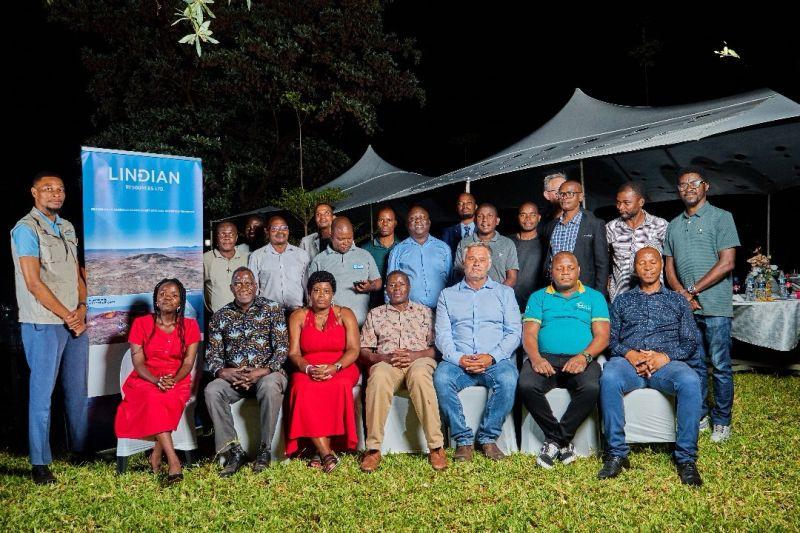
Stakeholders and the Social License to Operate
The Balaka dinner highlights an often-underappreciated determinant of project success: social license. Lindian’s approach mirrors global best practices seen at Lynas in Australia and Rainbow’s ESG-focused projects in South Africa. By engaging local leadership early, Lindian is setting the tone for long-term alignment between government, investors, and communities—a cornerstone of enduring rare-earth development.
The Takeaway
Kangankunde isn’t just a promising mine; it’s a symbol of a new model for African critical-minerals development—technically advanced, socially embedded, and geopolitically significant. Investors tracking REEx’s Light Rare Earth Element Project/Deposit Ranking should keep Lindian Resources firmly on their radar. On our current list, they rank 16th, but note that the new rankings will be published soon.
©!-- /wp:paragraph -->


0 Comments