
Highlights
- China's measured rhetoric on rare earth exports masks a deliberate strategy of sustained policy ambiguity, using selective controls as calibrated leverage rather than outright embargo.
- Beijing has transformed rare earths into policy instruments, demonstrating it can disrupt supply chains selectively while maintaining “mutual benefit” rhetoric that conditions stability on restraint from all parties.
- The greatest market risk isn't sudden disruption but strategically sustained uncertainty that shapes behavior, pricing, and diversification efforts while Western assumptions about China's brittle dominance prove premature.
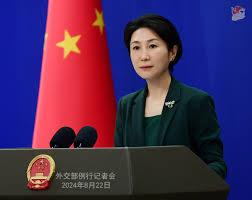
When Mao Ning (opens in a new tab), a Chinese Foreign Ministry spokesperson, stepped before reporters this week and cited (opens in a new tab) in Global Times, her remarks on rare earth exports were measured, almost antiseptic. China and the United States, she said, share “mutually beneficial” economic ties and should work toward “greater stability.” It was the sort of language that suggests continuity, even reassurance.
But the real message lay in what was not said.
There was no commitment to lift existing controls. No denial that restrictions could return. And when pressed on specifics, a familiar refrain: inquiries should be directed elsewhere—that is, the powers that be in Beijing. The ambiguity was not accidental. It rarely is. For markets attuned to signals rather than slogans, the meaning was clear enough: policy risk remains present, contained, but unresolved.
Leverage, Calibrated
Over the past year, China has demonstrated a new posture toward rare earths. Export controls introduced in 2025 extended beyond raw materials to include processing technologies, components, and even foreign-made products incorporating Chinese inputs. Enforcement has not been absolute. It has been selective, episodic, and reversible.
That pattern matters.
Rare earths are no longer merely traded goods. They have become instruments of policy—deployed sparingly, but with precision. Beijing has shown that it can tighten supply without fully severing it, disrupting just enough to remind markets—and governments—where dependence lies.
This is not the blunt force of an embargo. It is something subtler: control exercised through calibration.
A Message Wrapped in Courtesy
The language of “mutual benefit” carries its own implication. It is both a reassurance and a reminder: the relationship works, but not symmetrically. “Stability,” in this context, reads less like a promise than a condition—one that depends on restraint from both sides. Put plainly, Beijing appears to be saying: cooperation is preferable, but alternatives exist.
And they are credible.
Markets Confront a Different Kind of Risk
For investors and manufacturers, the consequences are not abstract. They are structural.
Supply is no longer governed solely by geology or cost curves. It is entangled with trade policy, national security, and technological rivalry---in the emerging Great Powers Era 2.0. Even in the absence of new restrictions, the possibility of intervention shapes behavior—pricing contracts, building inventories, and accelerating efforts to diversify supply.
Yet diversification remains slow. The bottlenecks are well known: separation, refining, and magnet production. These are not easily replicated, nor quickly scaled. In the meantime, uncertainty itself becomes a market force.
The Misreading in the West, Especially in Washington DC
There is a persistent belief in Washington and beyond that China’s dominance in rare earths is brittle, that new mines and new alliances will dilute its influence. That may yet prove true—but not soon.
What Beijing’s posture suggests instead is confidence: enough to avoid escalation, enough to act if necessary, and enough discipline to let ambiguity do the work of pressure.
This is not a weakness. It is strategic patience.
The Signal Beneath the Statement
Nothing in Mao Ning’s remarks altered policy. That was not their purpose. They were a reminder that the policy exists—and can be adjusted. China, in effect, is positioning rare earths as a managed pressure point: not perpetually tightened, but never out of reach.
For markets, the implication is stark. The greatest risk is not sudden disruption, though that remains possible. It is something more difficult to quantify: uncertainty, deliberately sustained and potentially over longer periods of time. And that, more than any embargo, is what shapes behavior.


0 Comments
No replies yet
Loading new replies...
Moderator
Join the full discussion at the Rare Earth Exchanges Forum →