
Highlights
- Baogang Group executives met with China's chief geologist to discuss Bayan Obo mine optimization, emphasizing "protective development" and strategic resource utilization rather than expanded extraction.
- The meeting signals China's coordinated model linking state industry, national research institutions, and strategic policy to extract maximum value from existing rare earth resources.
- China's organizational advantage in rare earths continues to widen as Western nations struggle with fragmented supply chains, despite no new discoveries or investments being announced.
On April 9, senior executives from Baogang Group—China’s steel and rare earth giant—sat down with one of the country’s top geological minds. Meng Fanying, the company’s chairwoman, and Li Xiao, its general manager, met with Wang Denghong, chief geologist of the Chinese Academy of Geological Sciences and head of its Institute of Mineral Resources, according to a report carried by the China Rare Earth Industry Association.
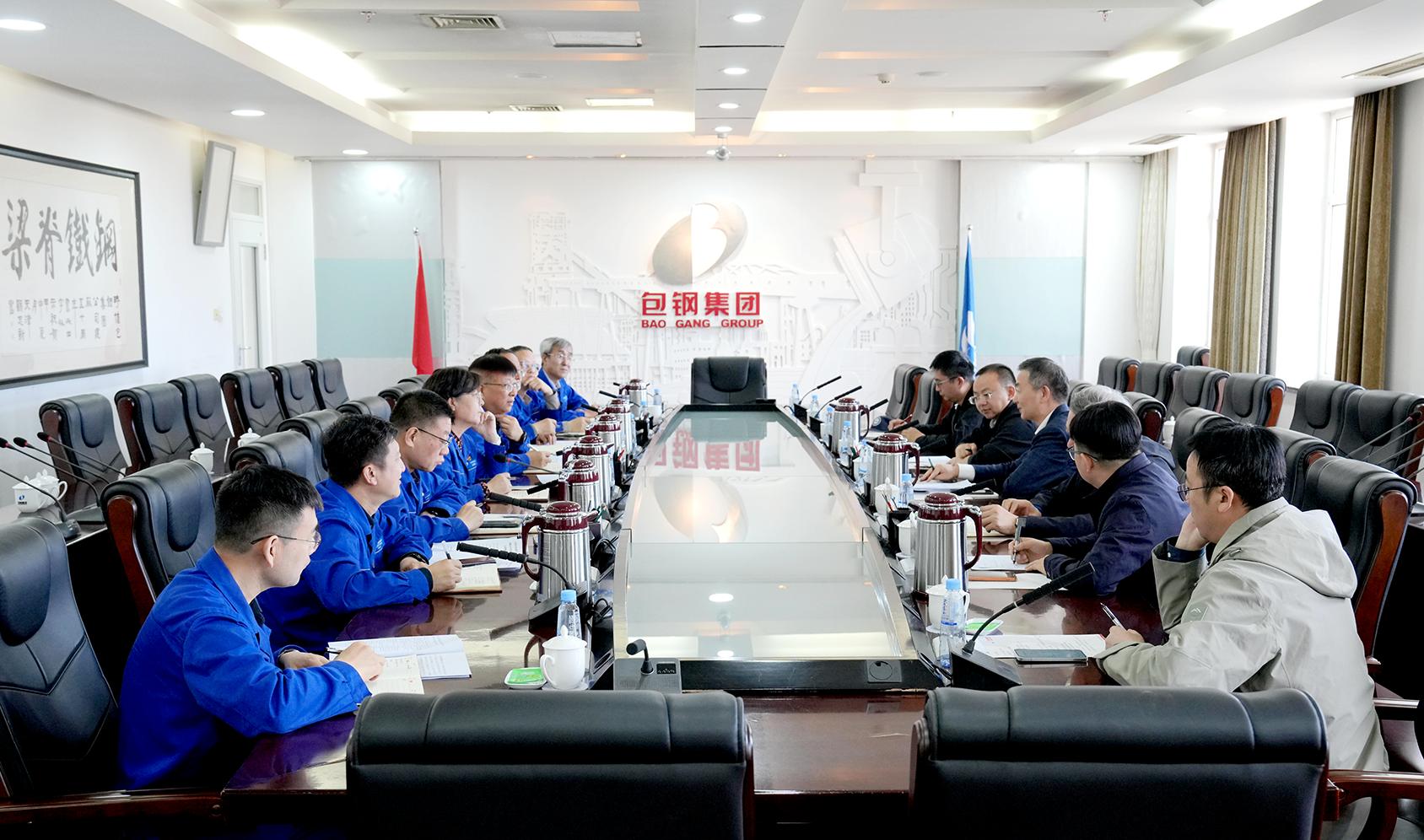
The announcement was brief, even routine in tone. But in China’s state-directed industrial system, such meetings rarely exist in isolation. They tend to signal something larger: alignment—between science, industry, and national strategy.
A Mine That Still Anchors a Strategy
At the center of the discussion was Bayan Obo, the vast Inner Mongolian deposit that remains one of the world’s most consequential sources of rare earth elements.
Meng described it in familiar but revealing terms: a “strategic resource treasure house.” She emphasized Baogang’s focus on “protective development,” “high-quality utilization,” and “standardized management”—phrases that reflect Beijing’s long-running effort to balance extraction with control.
The language suggests a shift in emphasis, not a change in direction. Bayan Obo is no longer just about output. It is about how efficiently and strategically those resources are used.
Meng also called for deeper cooperation to advance the construction of China’s “two rare earth bases,” a policy concept aimed at consolidating and upgrading the country’s core rare earth industrial regions.
Science Meets Industry
Wang, for his part, outlined what the research establishment brings to the table: advances in mineral formation theory, exploration techniques, and resource evaluation.
His message was less about discovery than optimization—improving how existing resources are understood, processed, and integrated into industrial use.
That distinction matters.
China is not simply searching for more rare earths. It is working to extract more value from what it already controls, tightening the link between scientific insight and industrial output.
Why This Matters Beyond China
There was no announcement of a new discovery, no updated reserve figures, no investment commitments.
And yet the signal is clear.
China continues to reinforce a model in which:
- State-backed industry
- National research institutions
- Strategic resource policy
operate in concert.
For the United States and Europe, still working to rebuild fragmented supply chains, the contrast is difficult to ignore. China’s advantage is not only geological. It is organizational.
A Quiet Signal
The meeting produced no headline breakthrough.
But in a sector where control is built incrementally—through coordination, not declarations—it may be the more telling development.
Literal Translation of the Core News
“Meng Fanying and Li Xiao met with Wang Denghong… Both sides discussed deepening multi-dimensional cooperation, improving the comprehensive utilization of Bayan Obo mine resources, and better serving national strategic resource security needs.”
Disclaimer: This news item originates from media tied to a Chinese state-owned entity and reflects official positioning within a state-influenced industrial system. The information should be independently verified where possible.


0 Comments
No replies yet
Loading new replies...
Moderator
Join the full discussion at the Rare Earth Exchanges Forum →