
Highlights
- Central Asia and the South Caucasus are transitioning from geopolitical buffer zones to strategic prize territories as rare earth elements and critical minerals become the new drivers of global power, much like oil defined the 20th century.
- Great powers, including China, the US, and Europe, are competing for influence in the region, creating a bifurcated supply chain reality where resource-rich nations are becoming contested ground between Chinese consolidation and Western “ex-China” development strategies.
- The region’s future depends on moving beyond raw material extraction to develop refining, processing, and manufacturing capabilities, as “deposits do not create power—processing does” in the race for industrial relevance.
A growing body of analysis suggests that rare earth elements—once obscure inputs in advanced manufacturing—are reshaping global geopolitics. As attention shifts from hydrocarbons to critical minerals, regions like Central Asia and the South Caucasus are moving from the periphery of global affairs toward its strategic core. The implications span energy transition, defense supply chains, and great power competition.
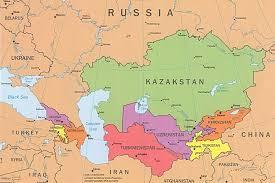
Source: Topchubashov Center
From Oil to Rare Earths: A Shift in Strategic Gravity
For much of the 20th century, oil defined geopolitical relevance. Nations in the Middle East rose from relative obscurity to global prominence as hydrocarbons powered industrial economies and military systems.
Today, a similar transformation may be underway—but with a different set of materials.
The Rare earth elements (REEs) and critical minerals essential for electric vehicles, wind turbines, semiconductors, and advanced weapons systems are increasingly viewed as the “oil of the 21st century.”
According to multiple analyses reviewed by Rare Earth Exchanges over the past year, this shift is drawing global attention to regions historically considered secondary players in world affairs. Central Asia and the South Caucasus, long treated as geopolitical buffer zones, are now emerging as strategic prize territories.
A Region Awakens: Resource Wealth Meets Strategic Opportunity
Countries like Kazakhstan, Azerbaijan, and their neighbors possess significant deposits of rare earths and critical minerals. Kazakhstan, in particular, is cited by the U.S. Geological Survey as holding some of the largest reserves in the region.
This resource base is catalyzing a shift in regional thinking.
Rather than repeating the historical pattern—exporting raw materials while importing finished goods—leaders and analysts across the region are increasingly focused on capturing more value domestically. This includes:
- Developing, refining, and separating capabilities
- Building downstream manufacturing ecosystems
- Leveraging foreign investment without ceding control
As Rare Earth Exchanges has repeatedly emphasized, “the real value is not in the mine—it’s in the midstream and downstream.”
Great Powers Return: China, the West, and the New Competition
The renewed interest in these regions is not occurring in a vacuum.
China, which currently dominates approximately 85–90% of global rare earth processing, views Central Asia as a natural extension of its supply chain strategy under initiatives like the Belt and Road. Meanwhile, the United States and Europe—seeking to reduce dependence on China—are actively exploring partnerships and investment opportunities.
Rare Earth Exchanges has noted that this dynamic is creating a “bifurcated supply chain reality”, where:
- China consolidates control over existing processing capacity
- The West attempts to build parallel, “ex-China” systems
- Resource-rich regions become contested ground for both models
In this framework, Central Asia and the Caucasus are no longer passive actors—they are strategic swing regions.
Regional Cooperation: A New Strategy Emerges
One of the more notable developments is the push for regional coordination.
Historically, countries in Central Asia and the South Caucasus have often competed for foreign investment. Now, there is growing recognition that fragmentation weakens their bargaining position.
As highlighted in regional commentary, there is increasing interest in:
- Coordinated development strategies
- Shared infrastructure projects
- Unified negotiation frameworks with external powers
Rare Earth Exchanges has framed this as a potential “regional counterweight to great power asymmetry”, allowing smaller nations to extract more favorable terms from both Western and Chinese partners.
The Risk: Resource Wealth Without Industrial Power
Despite the optimism, significant risks remain.
Rare earth supply chains are notoriously complex. As REEx has documented extensively:
- Mining is only the first—and often easiest—step
- Separation and refining require decades of expertise
- Downstream manufacturing demands scale, capital, and technical precision
Without mastering these stages, resource-rich nations risk becoming commodity exporters in a high-tech world—a modern version of the “resource curse.”
A New Center of Gravity—But Not Yet a New Power Bloc
The transformation of Central Asia and the South Caucasus is real—but incomplete.
These regions are gaining attention, investment, and strategic relevance. They are being courted by global powers and are beginning to assert their own agency. But the ultimate outcome will depend on whether they can move beyond extraction into industrial capability.
Rare Earth Exchanges has summarized the moment succinctly:
“Deposits do not create power. Processing does.”
Conclusion: The 21st Century’s Quiet Geopolitical Shift
The rise of rare earths is reshaping not just supply chains, but the global map itself.
Central Asia and the South Caucasus are no longer geopolitical afterthoughts. They are becoming arenas of competition, cooperation, and strategic recalibration.
Whether they emerge as independent industrial players or remain resource suppliers in a new great power game will define not only their future but also the balance of power in the decades ahead.


0 Comments
No replies yet
Loading new replies...
Moderator
Join the full discussion at the Rare Earth Exchanges Forum →