
Highlights
- Lindian Resources raised $100M for Malawi's Kangankunde rare earths project, targeting debt-free production of mixed rare earth carbonate (MREC) by Q4 2026 with early offtake agreements.
- While the project adds upstream supply diversity, MREC is only an intermediate product requiring separation—likely in China—meaning Malawi won't control the full value chain.
- This represents credible mining progress but not strategic supply chain independence; the real power lies in downstream processing capabilities, not just extraction.
A century ago, empires chased gold. Today, investors chase magnets. Lindian Resources (OTCMKTS: LINIF (opens in a new tab)) $100 million raise to develop the Kangankunde rare earths project in Malawi signals renewed global appetite for critical minerals. The company claims a debt-free path to production by late 2026, backed by equity financing and early offtake agreements. The plan includes building a mixed rare earth carbonate (MREC) facility—an intermediate processing step that adds value beyond raw ore exports .
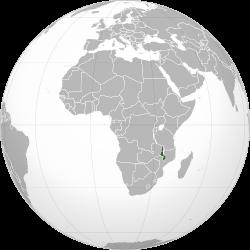
Put simply: Malawi may soon produce rare earth material used in electric vehicles and wind turbines—but it won’t yet control the full supply chain.
The Kangankunde Rare Earths Project in Malawi is a high-grade development-stage project, not yet an active, producing mine. As of early 2026, it is in an accelerated construction phase, with the first production of rare earth concentrate targeted for the fourth quarter of 2026
The Fine Print: What This Actually Achieves
Let’s separate signal from narrative.
- Funding appears real and fully subscribed
- Timeline to concentrate/MREC production is plausible
- Offtake agreements provide early revenue visibility
- The project adds new upstream supply diversity
But here’s the catch:
MREC is not a finished product.
It is an intermediate that still requires separation—typically in China.
The Missing Middle: Where Power Actually Lives
This is the industry’s uncomfortable truth:
Mining is visible. Processing is power.
The article correctly highlights downstream ambition, but stops short of the hard reality:
- No disclosed in-country separation capability
- No evidence of heavy rare earth separation at scale
- No clarity on where dysprosium and terbium will actually be refined
In Rare Earth Exchanges™ terms:
This is upstream progress, not supply chain independence.
Narrative Momentum vs Industrial Reality
The piece leans heavily into transformation language—“breakthrough,” “global positioning,” “economic engine.”
Some of that is justified. Malawi gains:
- Foreign exchange potential
- Royalties and tax flows
- Strategic relevance
But there are notable omissions:
- Processing dependency risk
- Time-to-scale (often underestimated by years)
- Market volatility in rare earth pricing
- Technical complexity of moving beyond MREC
This is not misinformation—but it is selective framing.
Why This Matters in the Great Powers Era 2.0
Kangankunde is a classic case study:
- Resource exists ✔
- Capital arrives ✔
- Initial processing planned ✔
- But what about full value chain control?
In today’s geopolitical landscape, that last step defines power.
Bottom Line for Investors
This is a credible, well-funded mining story—but not yet a strategic supply chain breakthrough.
The real question is not:
Can Malawi mine rare earths?
It is on the way:
Can it process them—and who ultimately controls that step?


0 Comments
No replies yet
Loading new replies...
Moderator
Join the full discussion at the Rare Earth Exchanges Forum →