
Highlights
- Africa is exercising strategic agency in critical minerals markets, rejecting passive narratives while navigating China's system-level dominance in processing and beneficiation despite internal heterogeneity.
- African producers seek alternatives to China's market dominance which suppresses prices, but Western responses remain incomplete with limited midstream processing capacity outside Europe-Japan corridors.
- The core tension: Africa's path to value chain independence may require navigating through existing dependencies, as markets reward execution over narratives and upgrading requires industrial-scale infrastructure.
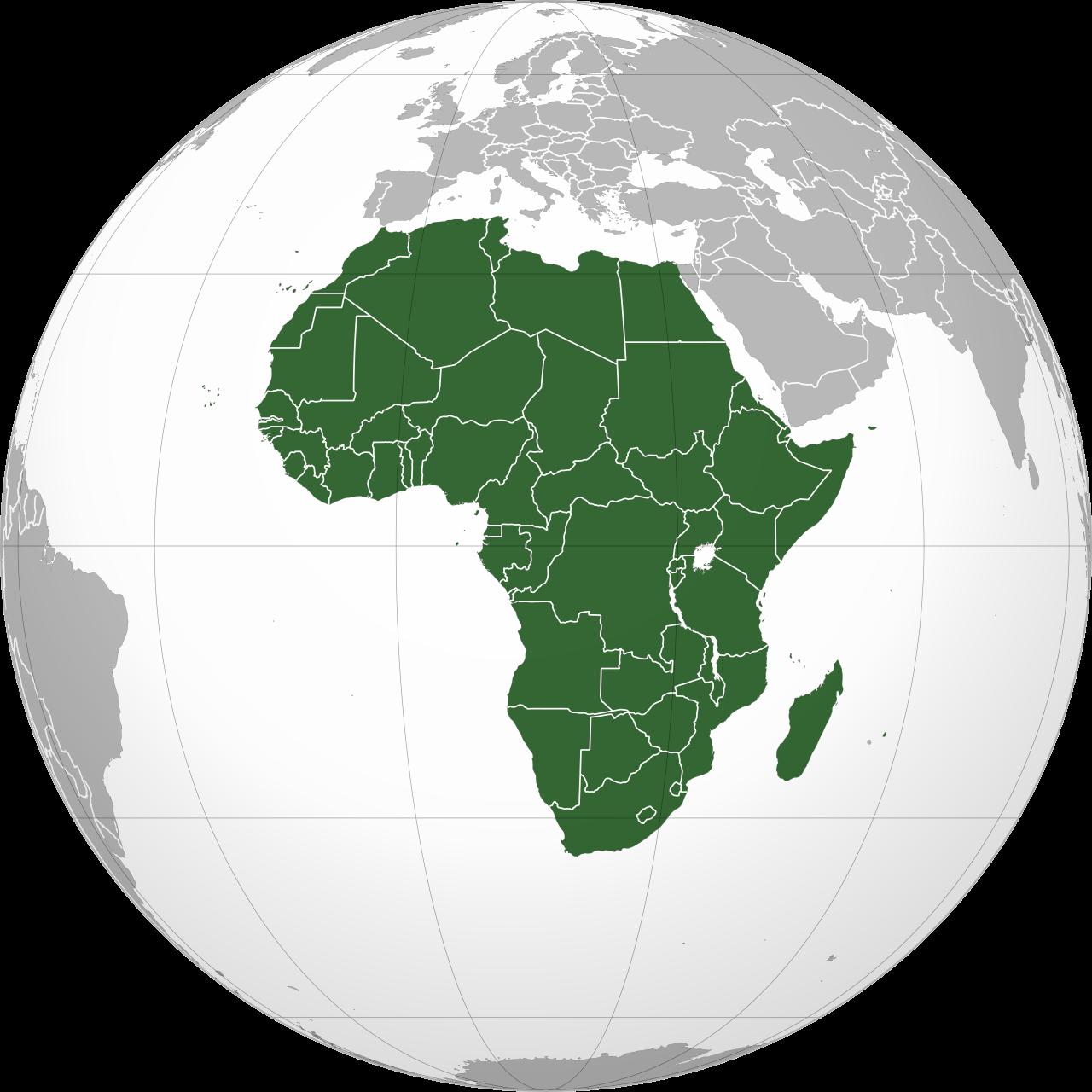
Africa is not waiting to be chosen—it is choosing. The policy paper from Southern Transitions called Positioning China in Africa’s Upgrading Pathways (opens in a new tab) argues that the dominant narrative—China as a monolithic threat and Africa as a passive supplier—is analytically flawed. Instead, it advances a more complex thesis: China is a heterogeneous system of actors, African countries exercise agency, and the future lies not in binary alignment but in “strategic plurality”—engaging multiple partners to maximize value capture. This framing is accurate—and overdue. But it is also only half the story.
China: Heterogeneous Actor, Systemic Force
The authors are careful: China is not a single coordinated entity. It includes state-owned enterprises, private firms, and financiers with divergent incentives and risk appetites. That is correct. However, the paper also acknowledges—though more softly—that China operates with system-level coherence across value chains, particularly in processing and manufacturing. It dominates beneficiation and downstream production, and remains the primary destination for African mineral exports.
Core Tension:
China is internally diverse, yet externally dominant.
Plurality at the micro level, concentration at the system level.
Africa’s Agency: Expanding—but Bounded
The paper strongly—and rightly—rejects the “passive Africa” trope. African states are negotiating, leveraging demand, and pursuing upgrading strategies such as refining and manufacturing.
However, the authors themselves highlight a structural constraint:
- China is the largest export market for African ores
- Many economies remain dependent on single-mineral export models
- Institutional and industrial capacity vary widely across countries
Rare Earth Exchanges™ has seen this firsthand: multiple African groups have approached us seeking pathways to U.S. and European markets for rare earths and critical minerals. The motivation is clear—China’s market dominance has kept prices persistently suppressed, squeezing margins and limiting the economic upside for producers. Producers in Africa want options.
Core Tension:
Africa has agency in negotiation—but limited leverage in structure.
Choice exists, but within asymmetric constraints.
Cooperation vs. Competition: The Paper’s Core Tension
The authors place significant emphasis on international cooperation—technology transfer, multilateral frameworks, and coordinated upgrading pathways. This is faithful to their thesis. The paper itself admits the current reality is fragmentation, bilateralism, and contested interests, not coherent cooperation.
Core Tension:
Cooperation is the proposed solution.
Competition is the operating reality.
This is not a flaw—it is the central unresolved tension in the paper.
What the Paper Softens—but Doesn’t Ignore
The analysis is thoughtful, but its tone is measured—perhaps deliberately so.
China’s Gravitational Pull
The paper frames Africa–China dynamics as interdependence with opportunity. That is partially true. But in practice, the relationship remains asymmetrical: China anchors demand, dominates processing, and sets the economic tempo.
The West’s Partial Response
Western actors are rightly criticized for extractive patterns, but the deeper issue receives only passing attention. U.S. and European capital still tilts heavily toward upstream extraction, with comparatively limited commitment to building midstream processing capacity. That is beginning to shift, as Rare Earth Exchanges has recently chronicled—but notably, the most coherent progress is emerging outside of America, particularly in the Europe–Japan–Malaysia corridor and the Australia–Japan network, which appear more deliberately engineered for near-term success.
The Missing Middle
Upgrading is the stated goal. But without industrial-scale refining, separation, and manufacturing, it remains largely theoretical. This is the critical gap: without the midstream, value capture does not shift.
The Real Strategic Tension
Beneath the paper’s balanced tone lies a harder contradiction:
- Africa seeks to move up the value chain
- China brings scale, capital, and integration
- The West offers alternatives—but often incomplete
- Markets reward efficiency, not fairness
Core Tension:
The path to independence may run through dependence.
That is the reality the paper approaches—but stops short of fully confronting.
Bottom Line for Investors
The direction is clear: Africa is gaining agency, and a more multipolar landscape is emerging.
But markets do not reward narratives—they reward execution. Until large-scale processing, refining, and manufacturing capacity is built, the structure holds: Africa is negotiating more, but still capturing less.


0 Comments
No replies yet
Loading new replies...
Moderator
Join the full discussion at the Rare Earth Exchanges Forum →