
Highlights
- Japanese consortium led by Daikin, Shin-Etsu, Hitachi, and Tokyo Eco Recycle to recover neodymium magnets from AC compressors, targeting commercial operations by 2027
- Japan's first commercial-scale rare earth magnet recovery from HVAC systems represents a strategic shift toward recycling as industrial policy and supply chain resilience
- A scalable circular supply model could reduce China's dominance in magnet production by building a parallel supply channel from waste streams
Japan is taking a pragmatic step toward supply chain resilience. Daikin Industries (opens in a new tab), Shin-Etsu Chemical (opens in a new tab), Hitachi (opens in a new tab), and Tokyo Eco Recycle (opens in a new tab) have jointly announced a plan to recover rare earth magnets from commercial air conditioning compressors.
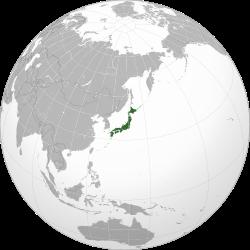
The consortium aims to develop automated extraction equipment in 2026 and scale operations by 2027, targeting the recovery of several metric tons of neodymium-based magnets annually. Each partner plays a defined role: Daikin will handle compressor collection, Tokyo Eco Recycle and Hitachi will manage magnet extraction, and Shin-Etsu, one of the top rare earth magnet makers on the Rare Earth Exchanges™ ex-China rankings, will reprocess recovered materials into new magnets.
This initiative represents Japan’s first commercial-scale framework for recovering rare earth magnets from HVAC systems—an overlooked but meaningful source of embedded NdFeB material. More importantly, as reported by Shanghai Metals Market (opens in a new tab), it reflects a broader strategic shift: recycling as industrial policy, not just sustainability.
For Rare Earth Exchanges readers, the signal is clear. While Western efforts remain focused on upstream mining and midstream processing, Japan is building a parallel supply channel through circularity. That matters in a market where China still dominates primary processing and magnet production.
The volumes are modest today—but the model is scalable. If replicated across appliances, EV motors, and industrial systems, recycling could evolve into a meaningful second-source layer.
Bottom line: Japan is not waiting for mine-to-magnet independence—it is engineering it from the waste stream up.


0 Comments
No replies yet
Loading new replies...
Moderator
Join the full discussion at the Rare Earth Exchanges Forum →