
Highlights
- Critical Metals Corp secures 92.5% ownership of Greenland's Tanbreez rare earth project, but first production isn't expected until 2028-2029 at earliest.
- Despite improved concentrate grades to 2.96% TREO, eudialyte processing remains unproven at commercial scale with no finalized separation flowsheet.
- Greenland's rare earth potential is real, but lacks infrastructure, refining capacity, and faces billion-dollar capex needs—ownership is not supply chain readiness.
A new announcement (opens in a new tab) claims Critical Metals Corp (opens in a new tab). now controls 92.5% of Greenland’s Tanbreez rare earth project, positioning it as a cornerstone Western supply asset. The story is compelling—but investors should understand this clearly: ownership is not production, and Greenland is still years—if not a decade or more—away from meaningful rare earth output.
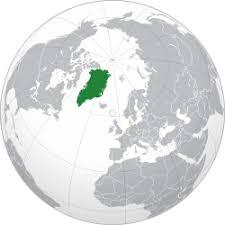
The Ice Is Melting—But Not Fast Enough
The deal is real. Greenland approved the transfer, consolidating control of Tanbreez—often described as one of the largest undeveloped rare earth deposits. The project boasts heavy rare earth elements (HREEs), deepwater access, and improved infrastructure. These are genuine strategic advantages. But here’s the disconnect: this is still a development-stage asset targeting first production around 2028–2029. That timeline alone tells investors everything.
Metallurgy, Not Headlines, Wins This Game
The release highlights a “~40% improvement” in concentrate grade to 2.96% TREO. That sounds impressive. It may be.
But:
- 2.96% TREO is not high-grade by global standards
- Eudialyte (the host mineral) is notoriously complex to process
- No finalized flowsheet, no commercial separation proof
In rare earths, metallurgy is destiny—and Tanbreez is not yet proven at scale.
The Quiet Omissions Investors Should Notice
The narrative leans hard on:
- “One of the world’s largest deposits”
- “Cornerstone Western supplier”
- “De-risked path to production”
Yet it omits:
- Full capex requirements (likely billions over time)
- Separation and refining strategy (the real bottleneck)
- Commercial partner commitments beyond the early-stage offtake discussions
Ownership clarity ≠ supply chain readiness.
REEx Reality Check: Greenland Isn’t the Promised Land—Yet
Yes, Greenland matters. Yes, Tanbreez is strategically interesting.
But the rare earth supply chain reality remains unchanged:
- Mining is the easy part
- Processing and magnet production remain China-dominated
- Western projects routinely miss timelines and budgets
A More Critical POV
Even tougher critics of the Greenland play don’t deny that Greenland has rare earth deposits—rather, they argue they are not economically viable today. The core point is that Greenland represents geological promise, not industrial reality: many deposits are hosted in complex minerals like eudialyte that are difficult and costly to process; the region lacks basic infrastructure such as roads, power, and ports; and, most critically, it has no rare earth separation capacity—an area still dominated by China.
While projects like Tanbreez are real and strategically interesting, and Western governments are paying attention, the narrative that Greenland will soon become a cornerstone of global supply is seen as overstated and driven by geopolitics and promotion as opposed to palpable fact. In practical terms, the bottlenecks are not resource size but metallurgy, logistics, financing, and downstream processing. The bottom line: rare earths exist in Greenland, but until they can be economically mined, processed, and brought to market at scale, they do not meaningfully impact the global supply chain.
Bottom Line
So yes this latest announcement is accurate—but incomplete. It marks progress in ownership, not execution. Greenland’s rare earth potential is real, but the path to production is long, expensive, and technically uncertain to say the least. Investors should treat this as early-stage positioning—not near-term supply disruption.


0 Comments
No replies yet
Loading new replies...
Moderator
Join the full discussion at the Rare Earth Exchanges Forum →