
Highlights
- European Resources (ERE:ASX) more than doubled the mineral resource at Finland's Korsnäs rare earth project to 15.4 million tonnes at ~1.0% TREO, containing 138 million kg of rare earths including critical magnet materials NdPr for EVs and wind turbines.
- The expansion positions Korsnäs as a potential cornerstone asset in Europe's effort to reduce reliance on China for rare earth refining and magnet production, leveraging Finland's stable jurisdiction and infrastructure.
- Despite the resource doubling, the project remains classified as inferred and early-stage—discovery is not supply, and Europe must still convert resources into processing plants and magnet manufacturing to achieve true supply chain independence.
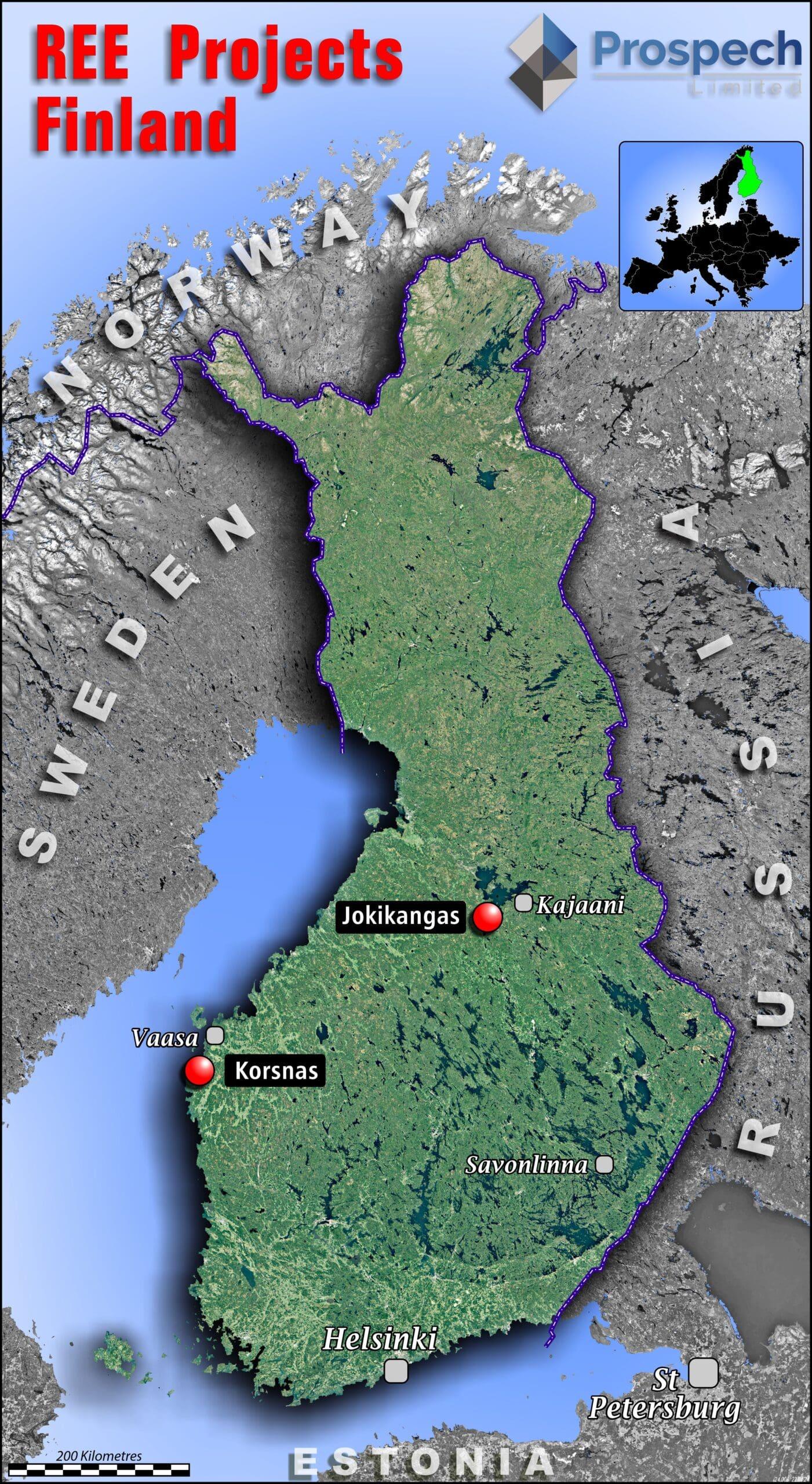
Australian-listed European Resources Ltd (ERE:ASX) (opens in a new tab) has more than doubled the mineral resource estimate (MRE) at its Korsnäs rare earth project in western Finland, lifting it to 15.4 million tonnes at ~1.0% total rare earth oxides (TREO) using a 0.5% cutoff grade. This marks a sharp increase from roughly 7.1 million tonnes in 2024, effectively doubling the contained rare earth inventory in under 18 months.
The upgrade is driven by new drilling, re-analysis of historical coresamples, and improved geological modeling, which together expanded theknown footprint and continuity of mineralization.
What’s Inside the Deposit: Magnet Metals Matter
The Korsnäs deposit contains approximately 138 million kilograms of rare earths, including critical magnet materials such as neodymium and praseodymium (NdPr)—essential for electric vehicles, wind turbines, and defense systems.
Importantly, the project appears to be light rare–earth–dominant, with meaningful NdPr content, making it more commercially relevant than deposits dominated by lower-value elements like cerium or lanthanum.
This is not just “more rock”—it’s potentially strategic magnet feedstock.
Why This Matters: Europe’s Supply Chain Play
The expansion positions Korsnäs as a potential cornerstone asset in Europe’s efforts to reduce reliance on China, which currently dominates rare-earth refining and magnet production.
- The EU has identified rare earths as critical to industrial and defense resilience
- Finland offers stable geology, infrastructure, and permitting frameworks
- Korsnäs could evolve into a regional supply node for magnet materials
But here’s the catch:
The resource remains classified as “inferred”, meaning it is early-stage, not yet economically proven, and still far from production.
No Breakthrough—But a Strategic Signal
There is no technological breakthrough in this announcement. The significance is strategic, not technical:
- The project demonstrates how modern analysis of legacy mining districts can unlock new value
- It highlights Europe’s growing urgency to localize critical mineral supply chains
- It signals increasing investor and policy alignment around rare earth independence
Still, discovery is not supply. As analysts note, the real test will be whether Europe can convert resources into processing, separation, and magnet manufacturing capacity.
Bottom Line: Progress, Not Independence
Korsnäs is a meaningful step forward—but not a solution.
Europe has doubled its resources. It has not yet built a supply chain.
Until projects like this move from inferred resources to permitted mines, processing plants, and magnet production, China’s structural dominance remains intact.
Profile
The Korsnas REE project surrounds an old mine at Korsnas, which was mined between 1959 and 1972, yielding 0.87Mt of ore averaging 3.6% Pb, allanite, and a few other REE minerals, which made the deposit prospective for REE. During pilot production of a REE concentrate in the early 1970s, the ore proved to contain 0.83% RE2O3. The occurrence is in a north-south trending fault zone filled with a vein comprising coarse-grained calcite, feldspar, diopside, and REE-bearing apatite.
The total REE content of samples taken by previous mine operators ranges from 0.7% to 2.2%, with LREE dominating the REE budget. Eu content is high, ranging from 66 to 242 ppm, and Th content ranges from 107 to 604 ppm.
The Company
European Resources Ltd (ASX: ERE), formerly Prospech Limited, is a Sydney-based mineral exploration company repositioning itself as a European-focused supplier of critical minerals essential to the energy transition. With 100% ownership across its project portfolio, the company is advancing assets in Finland and Slovakia, including the growing Korsnäs rare-earth project, alongside cobalt, lithium, and precious metals prospects such as Hodruša-Hámre and Nová Baňa.
Listed on the ASX since 2020 and rebranded in December 2025, European Resources is targeting exposure to battery metals and magnet feedstocks—rare earths, lithium, cobalt, copper, gold, and silver—aligned with Europe’s push for supply chain independence.
Led by CEO Jason Beckton, (opens in a new tab) the company is leveraging Finland’s favorable mining jurisdiction and Slovakia’s historic mineral belts to position itself as an early-stage but strategically relevant player in Europe’s emerging domestic critical minerals ecosystem.


0 Comments
No replies yet
Loading new replies...
Moderator
Join the full discussion at the Rare Earth Exchanges Forum →