
Highlights
- China's Chang'e 5 mission identified two new lunar minerals—magnesium and cerium Chang'e stone—officially recognized by the International Mineralogical Union, bringing the world's total known lunar minerals to just eight.
- Both minerals belong to the rare earth phosphate family with no Earth analogs, containing elements like cerium that are critical for modern electronics and defense systems.
- The discovery signals China's strategic integration of space exploration with materials science, positioning knowledge of extraterrestrial rare earths as a foundation for future mining technologies and geopolitical advantage.
Chinese scientists have identified two previously unknown lunar minerals—“magnesium Chang’e stone” and “cerium Chang’e stone”—from samples collected by the Chang'e 5 mission. The discoveries were formally recognized by the International Mineralogical Union, marking China’s second and third confirmed lunar mineral findings since 2022.
Globally, this brings the total number of known lunar minerals to just eight—underscoring how rare and scientifically valuable such discoveries are.
Ideal crystal diagram of cerium-magnesium Chang'e stone
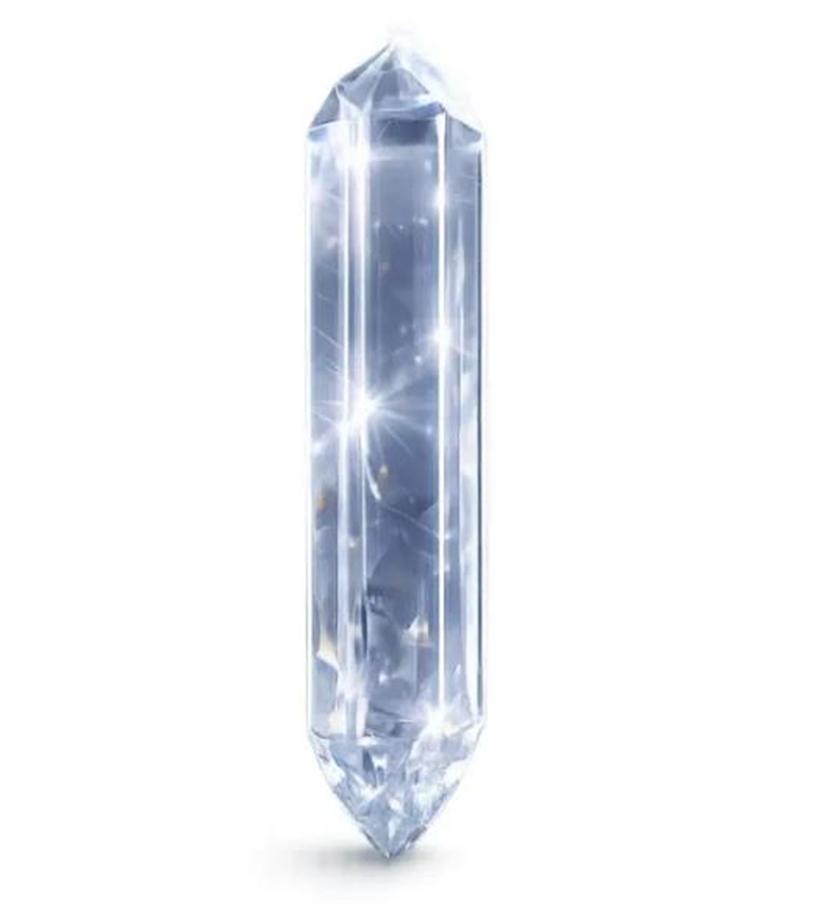
Rare Earth Chemistry—On the Moon
Both newly identified minerals belong to the rare-earth phosphate family—a detail that elevates this from academic curiosity to a strategic signal.
These minerals, measured in micrometers and embedded in lunar dust and basalt fragments, contain elements like cerium—part of the rare-earth group, critical for modern technologies ranging from electronics to defense systems.
Notably, the minerals have no direct analog on Earth, suggesting unique formation conditions and potentially new insights into planetary chemistry.
Why This Matters Beyond Science
At first glance, this is a scientific milestone. But the implications extend further:
- Resource Mapping: Understanding rare earth distribution beyond Earth could shape long-term space resource strategies
- Geopolitical Signaling: China continues to link deep space exploration with materials science—two pillars of future industrial power
- Technological Edge: Advanced characterization of extraterrestrial materials may unlock new material science pathways
The discovery also reinforces a broader pattern: China is integrating space exploration with strategic resource positioning.
Breakthrough or Early Signal?
There is no immediate commercial application. These minerals are microscopic and not extractable at scale—yet. However, the breakthrough lies in knowledge, not volume. Mapping rare earth behavior in extraterrestrial environments could inform future mining technologies, both on Earth and beyond.
For the U.S. and its allies, the takeaway is not alarm—but awareness.
The race is not just from materials—it’s for understanding them first.
The Bigger Picture: Science as Strategy
China’s announcement, timed with its national “Space Day,” highlights how scientific achievements are increasingly intertwined with national strategy. Each incremental discovery builds a foundation for future capabilities—scientific, industrial, and geopolitical.
Bottom Line
Two microscopic minerals may seem insignificant—but they represent something larger:
The next frontier of critical materials may not be on Earth at all.
Disclaimer: This news originates from Xinhua News Agency. As with all state-affiliated sources, the information should be independently verified and interpreted within the context of broader scientific and geopolitical analysis.


0 Comments
No replies yet
Loading new replies...
Moderator
Join the full discussion at the Rare Earth Exchanges Forum →