
Highlights
- Samarium-cobalt (Sm-Co) and samarium-iron (Sm-Fe) magnets are reemerging as credible alternatives to neodymium magnets, offering superior heat resistance above 140°C and reducing reliance on heavy rare earths like dysprosium and terbium.
- A 2026 Toshiba review shows experimental Sm-Fe systems now rival neodymium in magnetic strength and thermal stability, with samarium produced as a byproduct of neodymium refining—enabling scalable supply chain integration.
- Adoption will be selective for high-stress applications like EVs, wind turbines, and aerospace where heat resistance and supply security outweigh cost, marking a strategic diversification rather than replacement of neodymium technology.
A 2026 review by Shinya Sakurada (opens in a new tab) of Toshiba’s Materials & Frontier Research Center (opens in a new tab) outlines a quiet but significant shift in advanced materials science: samarium-based permanent magnets are reemerging as a credible alternative to neodymium-based magnets in high-performance applications. As demand for electric motors surges—and with it reliance on heavy rare earths like dysprosium (Dy) and terbium (Tb)—the study explains how samarium-cobalt (Sm-Co) and emerging samarium-iron (Sm-Fe) systems could reduce supply risk, improve high-temperature performance, and rebalance rare earth usage without sacrificing efficiency in critical applications such as electric vehicles, wind turbines, and industrial systems.
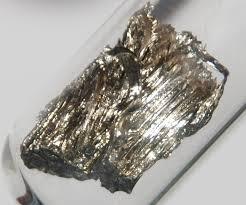
Samarium
Study Methods
This work is a technical review synthesizing decades of research and recent breakthroughs in samarium-based magnet systems. It evaluates material properties—such as magnetic strength, heat resistance, and coercivity—and compares them to conventional neodymium magnets. The review also examines manufacturing advances, including alloy design, microstructure control, and emerging processing techniques that improve performance.
Key Findings
The core insight is simple but powerful: samarium magnets address a key weakness of neodymium magnets—heat and heavy rare-earth dependence. Sm-Co magnets, while older technology, are now achieving record performance levels and outperform heat-resistant neodymium magnets at temperatures above ~140°C. This makes them ideal for high-stress environments such as rail systems and the aerospace industry.
Meanwhile, next-generation Sm-Fe magnets are advancing rapidly. Some experimental systems now rival, and in some cases exceed, neodymium magnets in magnetic strength and thermal stability. Notably, samarium is often produced as a byproduct of neodymium refining, meaning it could scale alongside existing supply chains—an underappreciated advantage.
Limitations
Despite the promise, samarium magnets face challenges. Manufacturing complexity, incomplete understanding of magnetic behavior, and lower performance in certain applications limit widespread adoption. Some advanced Sm-Fe systems remain at laboratory or early commercial stages. Additionally, samarium itself is still a rare earth element, so this is not a complete escape from supply chain risk.
Implications
This study reinforces a critical point for investors and policymakers: the future of magnet technology is diversification, not dominance. Samarium-based systems offer a path to reduce reliance on heavy rare-earth elements, particularly dysprosium, while maintaining performance in demanding environments.
However, adoption will likely be selective—reserved for applications where heat resistance and supply security outweigh cost and manufacturing constraints.
Conclusion
Samarium magnets are not replacing neodymium—they are complementing it. In a world of tightening supply chains and rising geopolitical risk, that distinction matters. The next phase of the energy transition will depend not just on more materials, but on smarter material choices.
Citation: Sakurada, S. (2026). New developments in samarium-based permanent magnets. Toshiba Materials & Frontier Research Center.


0 Comments
No replies yet
Loading new replies...
Moderator
Join the full discussion at the Rare Earth Exchanges Forum →